- The paper presents a novel AIOS Server that enables decentralized communication among autonomous agents, transitioning from traditional websites to AgentSites.
- It employs advanced protocols such as JSON-RPC, DHT, and Gossip for efficient task delegation and robust node discovery.
- Empirical evaluations demonstrate low-latency performance and rapid agent registration, paving the way for scalable applications across various industries.
Planet as a Brain: Towards Internet of AgentSites based on AIOS Server
Introduction
The paper, titled "Planet as a Brain: Towards Internet of AgentSites based on AIOS Server" (2504.14411), proposes an innovative transition from the traditional Internet of Websites to an Internet of AgentSites. The proposed architecture leverages AIOS Server, a decentralized runtime framework designed for hosting autonomous agents to facilitate scalable, structured communications across distributed environments. This paper introduces the practical deployment of the Internet of AgentSites (AIOS-IoA), incorporating components such as AgentHub for agent registration and management and AgentChat for human-agent interactive communication.
Architecture of AIOS Server
The AIOS Server operates as an independent execution environment supporting decentralized interactions among AI agents via the Model Context Protocol (MCP) and JSON-RPC. Each AIOS node functions like an independent WWW server but for AI agents, facilitating peer-to-peer communication without centralized orchestration. This design paradigm significantly enhances system openness, interoperability, and scalability.
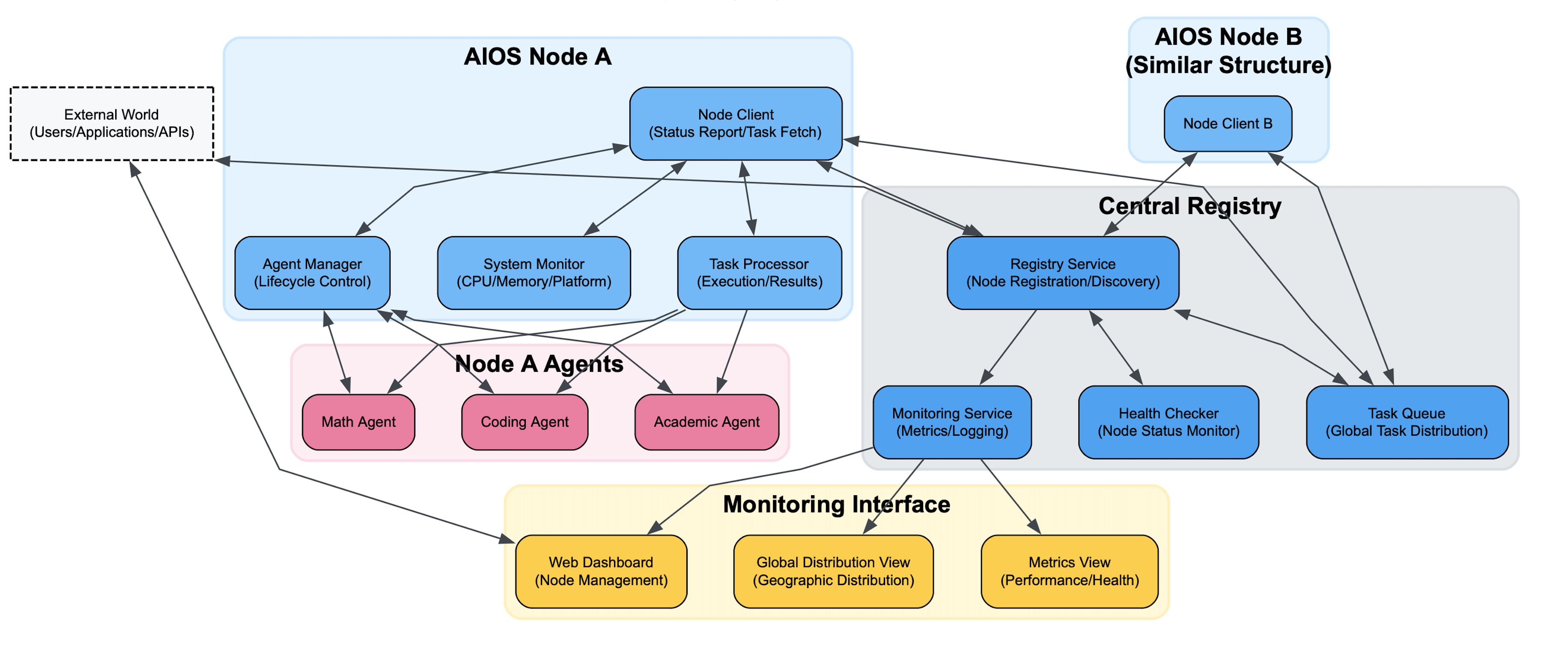
Figure 1: AIOS Server architecture with layers for messaging, agents, and services.
The architecture supports a dynamic agent discovery mechanism based on Distributed Hash Tables (DHT) and a Gossip protocol, providing resilient and scalable agent registry and lookup functionalities.
Communication Protocols
The AIOS framework standardizes communication via two main protocols: the Human-Agent Communication Protocol and the Agent-Agent Communication Protocol.
Human-Agent Protocol
This protocol allows humans to interact with AI agents in a structured manner using JSON-RPC for request-response exchanges. The process involves task initialization, processing, response generation, and iterative refinement if needed.
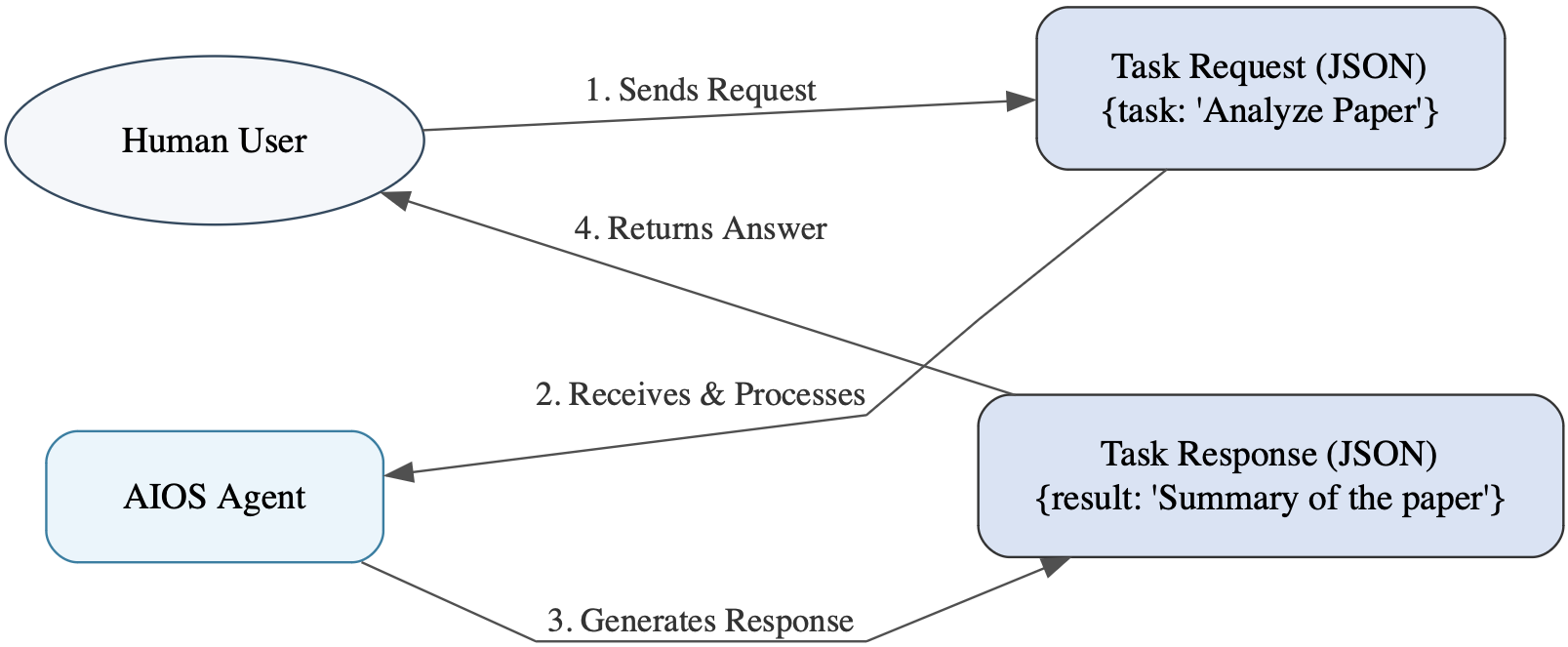
Figure 2: Human-Agent Protocol: Users communicate with AI agents using structured requests.
Agent-Agent Protocol
This enables autonomous agents to collaborate, share tasks, and execute workflows dynamically. The core features include decentralized lookup, intent-based messaging, hierarchical task execution, and IP-based message routing.
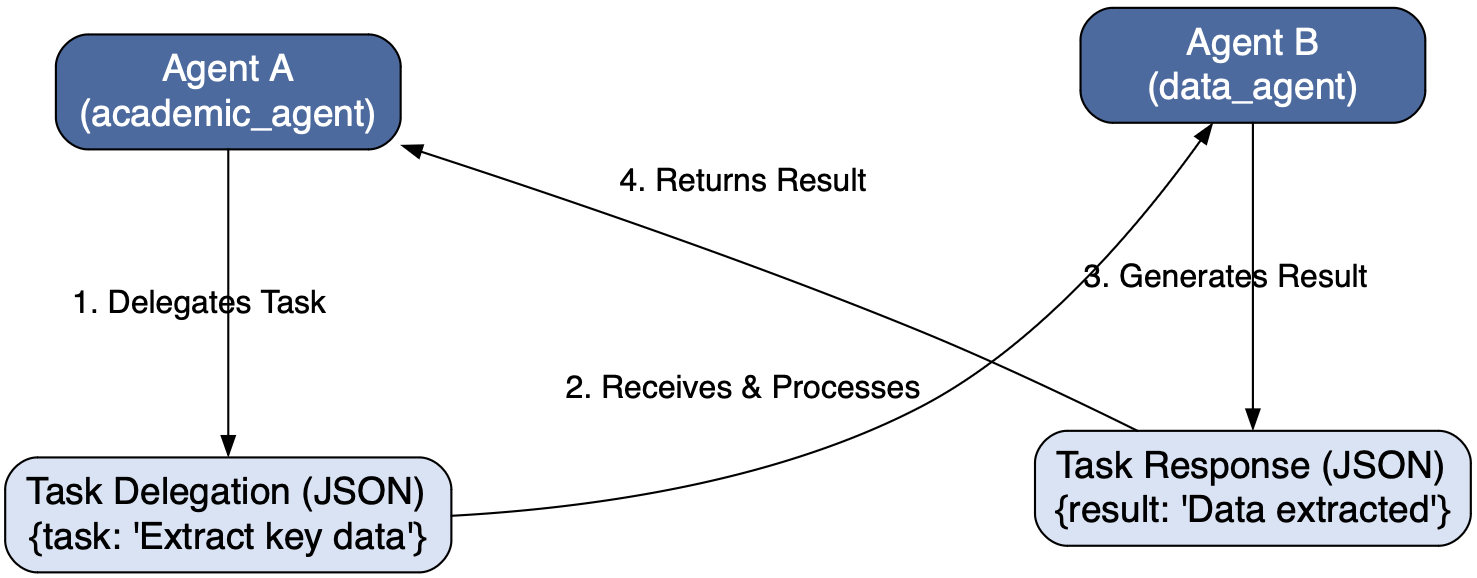
Figure 3: Agent-Agent Protocol: Structured messaging between autonomous agents.
Node Registration and Discovery
The decentralized nature of AIOS is underscored by its node registration and discovery process. Each agent node operates autonomously, reporting its status to registry nodes and participating in a wider network through DHT and Gossip protocols. This ensures high availability, scalability, and fault-tolerance in the agent ecosystem.
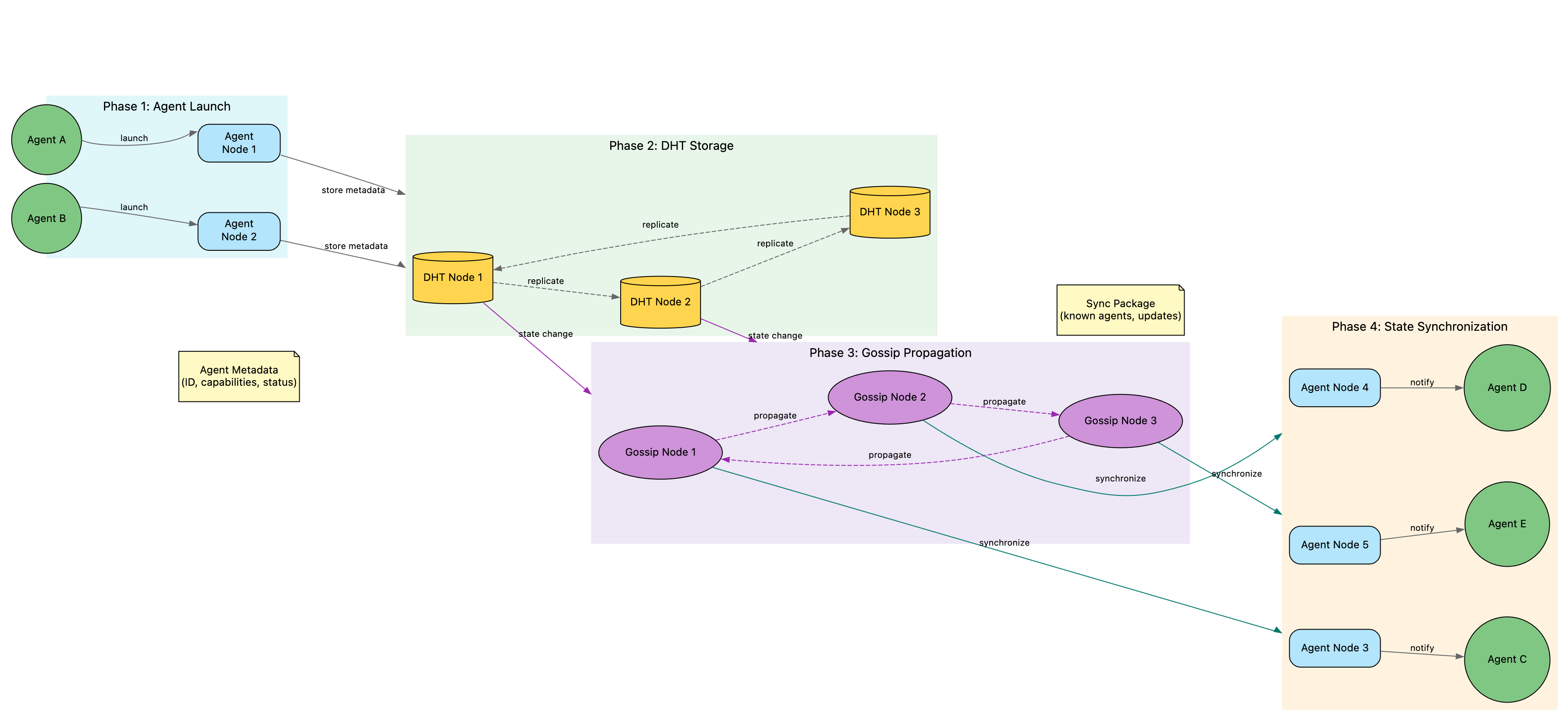
Figure 4: Decentralized agent discovery and metadata propagation pipeline. The system operates in four stages: (1) agents are launched with local agent nodes; (2) metadata is stored and replicated across neighboring nodes via DHT; (3) presence and state changes are propagated using the Gossip protocol; (4) other agent nodes synchronize state and notify agents of network updates.
Empirical evaluations under various deployment scenarios demonstrate the AIOS Server's low-latency communication performance and efficient task delegation. The agent discovery mechanism also showed rapid registration and resilient operation across nodes.
System Applications and Implications
The advancements presented in AIOS provide a robust foundation for the Internet of AgentSites, enabling agents to function as primary entities in the web ecosystem. This framework supports a wide range of applications, from autonomous data processing to complex decision-making workflows across sectors such as finance, healthcare, and logistics.
Conclusion
The paper presents a comprehensive framework for distributed agent management and interaction, emphasizing modularity and interoperability. Future developments are expected to enhance multi-agent task orchestration capabilities and address challenges related to adaptive load balancing, real-time profiling, and resilience in complex environments.