- The paper demonstrates that late interaction mechanisms in Visual Document Retrieval significantly outperform traditional single-vector baselines.
- It employs pre-trained vision-language models to refine query-patch matching, yielding enhanced robustness on standard VDR benchmarks.
- The research highlights computational trade-offs and advocates for further optimizations to scale late interaction strategies across diverse document scenarios.
Detailed Overview of Visual Document Retrieval with Late Interaction
Visual Document Retrieval (VDR) is an advanced area of research focused on the direct encoding and retrieval of document images, circumventing traditional OCR dependencies. The paper "Reproducibility, Replicability, and Insights into Visual Document Retrieval with Late Interaction" (2505.07730) examines VDR methods, particularly emphasizing late interaction mechanisms to enhance retrieval effectiveness. This essay aims to dissect the methodologies, findings, and implications laid out in the work.
Methodology: Late Interaction in Visual Document Retrieval
The study explores the implementation and impact of late interaction mechanisms within VDR, utilizing pre-trained vision-LLMs (VLMs) across multiple visual document retrieval settings. The late interaction approach, as showcased by the ColPali methodology, eschews conventional single-vector approaches, instead leveraging dynamic, token-based interaction with document patches.
The research investigates the reproducibility and replicability of these techniques, demonstrating significant performance improvements when employing late interaction compared to traditional baselines. Computational inefficiencies during inference were noted, inviting further optimization or hardware advancements.

Figure 1: Example of late interaction matching between query and patch tokens; The matching document patch is highlighted by yellow. Query: What Services does Health Team Works Provide?
Evaluation and Robustness
The paper provides evidence that late interaction mechanisms substantially outperform single-vector approaches on VDR benchmarks, such as ViDoRe. By treating documents as sequences of image patches, VDR methods can introduce more nuanced and fine-grained semantic representations within retrieval operations.
Furthermore, the adaptability of VDR models to textual inputs and robustness to increased text-intensive datasets were investigated, suggesting broader applicability and scalability in diverse document retrieval scenarios. The comparison of models indexed using image embeddings versus OCR-based text underscored the promising efficiencies of treating documents as multimodal entities.
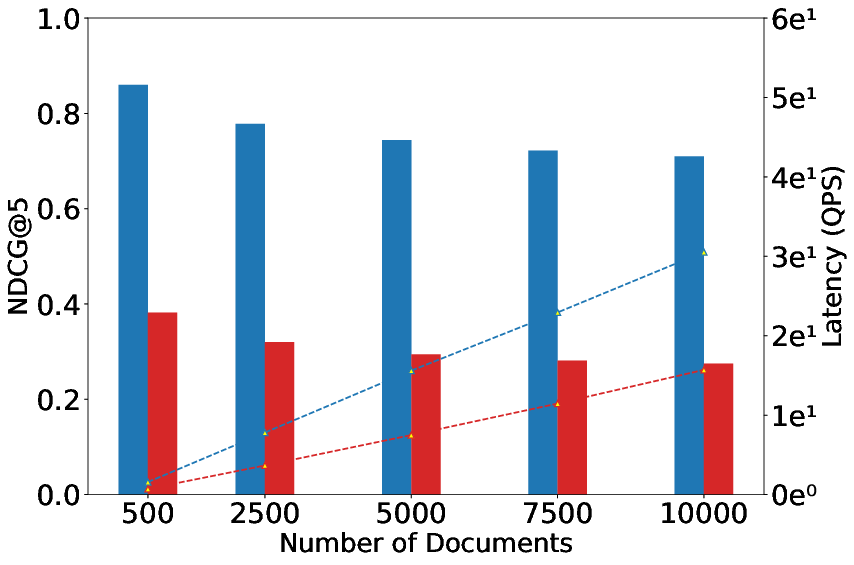
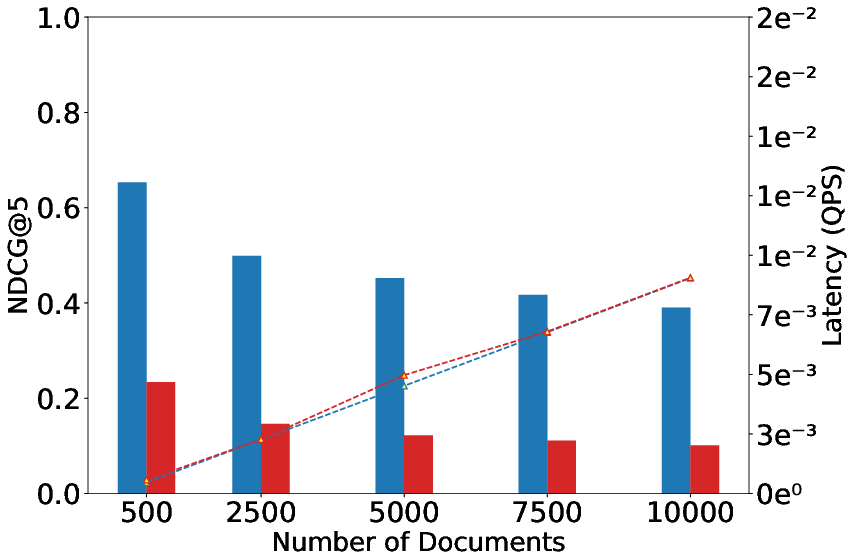
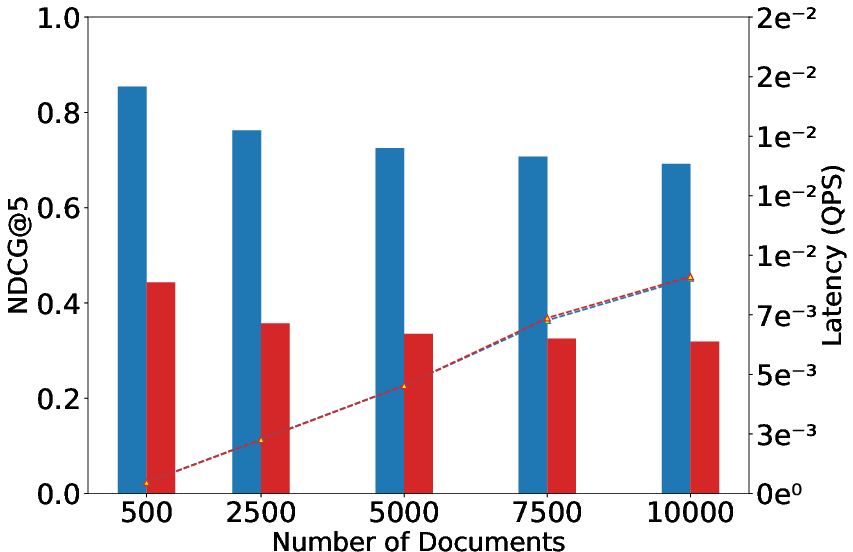
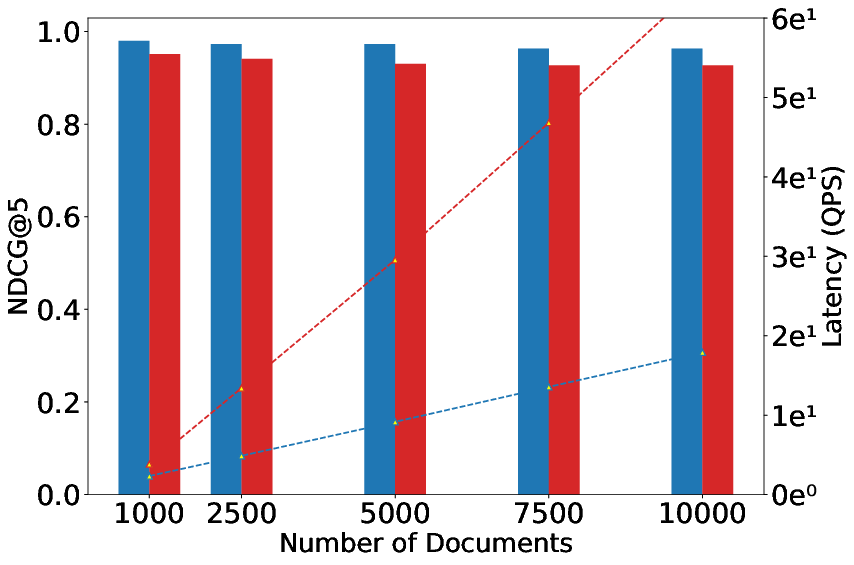
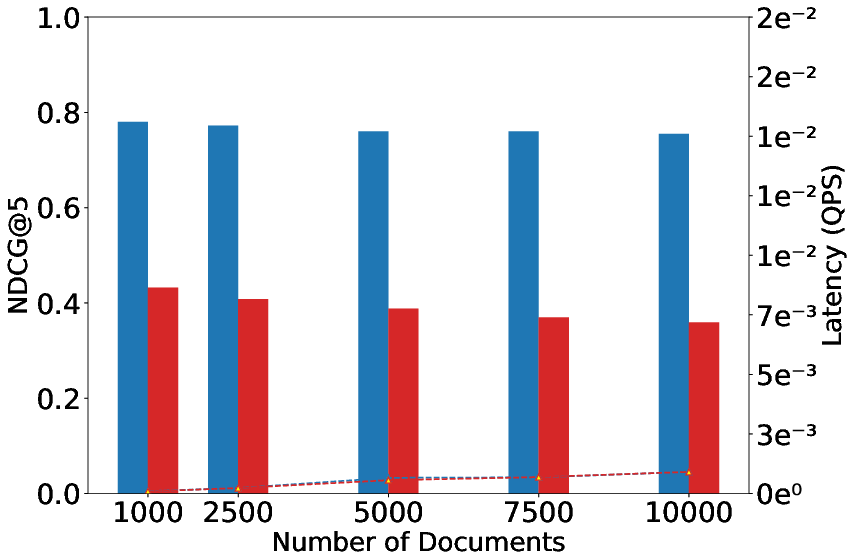
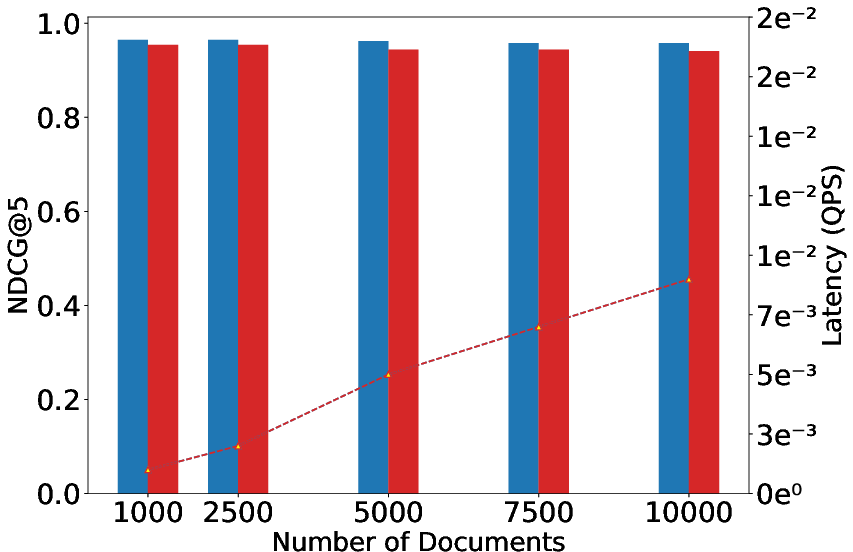
Figure 2: ColQwen2 Evaluation on arXiVQA
Comparative Analysis and Findings
Comparative evaluations between multi-vector models like ColPali and single-vector alternatives highlighted consistent performance gains attributed to late interaction strategies. The research outlines additional practical scenarios where VDR surpasses OCR-based retrieval methods, particularly in zero-shot settings or larger corpus scales.
Despite variance in computational demand, VDR with late interaction efficiently integrates visual and textual modalities, leveraging pre-trained VLMs such as CLIP and PaliGemma to contextualize visual document embeddings more effectively. Notably, large vision-LLMs like Qwen2-VL achieved superior results, substantiating the benefits of advanced model backbones.
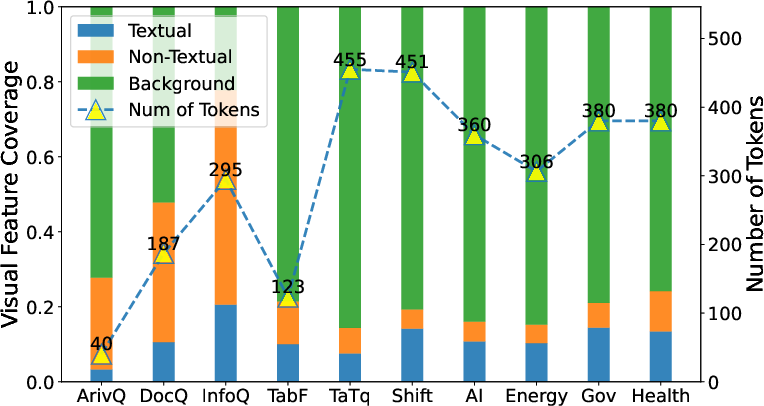
Figure 3: The visual feature distribution of datasets in ViDoRe benchmark.
Insights into Document Retrieval Design
Through detailed analysis, the study reveals the critical contributions of query-patch matching mechanics, aligned with late interaction methods. A pronounced correlation between visual document retrieval effectiveness and text coverage was observed, emphasizing the importance of incorporating multimodal contexts in retrieval processes.
Moreover, differences in semantic matching types—query versus special tokens—were analyzed, suggesting refined prospects for enhancing retrieval robustness and precision. The shifting focus from lexical to abstract matching further underscores the depth of late interaction strategies in advancing VDR methodologies.
Conclusion
The comprehensive analysis presented across reproducibility, replicability, and insights into late interaction within visual document retrieval provides substantial evidence for the paradigm's effectiveness. While computational complexities remain a challenge, the study highlights the vast potential for scalability and enhanced performance when deploying late interaction techniques. Future research is encouraged to explore more fine-grained VDR designs, refining computational efficiencies and expanding the applicability of VDR methods across increasingly diverse archival landscapes.