- The paper introduces a feedback loop that refines uncertainty models using bundle adjustment outcomes to enhance visual-inertial state estimation.
- It employs a dual-pipeline architecture combining real-time pose tracking and map refinement to dynamically adjust uncertainty estimates.
- Experimental results on the EuRoC MAV dataset show a 24% reduction in translation error and a 42% reduction in rotation error compared to static models.
Statistical Uncertainty Learning for Robust Visual-Inertial State Estimation
The paper "Statistical Uncertainty Learning for Robust Visual-Inertial State Estimation" (2510.01648) presented a framework for visual-inertial odometry (VIO) that incorporates statistical uncertainty learning to address the variable reliability of visual measurements. This research introduces a feedback loop where the optimization process informs and refines the uncertainty model, which can subsequently improve the accuracy and robustness of state estimation.
Introduction
Visual-inertial state estimation synergizes visual and inertial data to enhance the accuracy of robot navigation. Traditional VIO systems typically employ fixed, static noise models to estimate uncertainty, failing to capture the dynamic nature of sensor environments. This paper seeks to overcome this limitation by introducing a dynamic, data-driven approach to uncertainty modeling. The proposed framework leverages multi-view geometric consistency and a dual-pipeline architecture to improve visual-inertial odometry accuracy.
System Architecture
The architecture comprises two main pipelines: a real-time pose tracking pipeline employing Perspective-n-Point (PnP) optimization and a map refinement pipeline utilizing sliding window bundle adjustment (BA). The core innovation lies in the statistical uncertainty learning module, which adapts uncertainty assessments based on the statistical analysis of the results from bundle adjustment, thereby creating a feedback mechanism that informs the pose tracking pipeline.
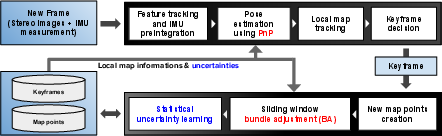
Figure 1: Overview of the dual-pipeline system architecture with uncertainty learning.
Statistical Uncertainty Learning
Framework Overview
The statistical uncertainty learning module uses a closed-loop system where bundle adjustment results are continuously analyzed to refine uncertainty models. This model adapts uncertainty parameters in line with real-time VIO performance, providing a mechanism for continuous improvement in measurement reliability estimations.
Uncertainty Propagation
The adaptive weighting mechanism is rooted in transforming 3D uncertainty estimates into 2D pixel-space information matrices. By projecting world-space uncertainties into the observation plane, the system creates more representative information matrices that are used to weight each observation specifically.
Statistical Learning Workflow
The iterative process starts with initial uncertainty estimates, which are optimized using bundle adjustment. Post-optimization, the framework computes empirical covariances for each optimized landmark and updates uncertainty models. This iterative cycle refines the reliability of visual measurements, resulting in improved system performance.
Experimental Results
The system was tested on the public EuRoC MAV dataset, showcasing significant improvements over baseline methods. By integrating statistical learning into the VIO pipeline, the proposed method achieves, on average, a 24% reduction in translation error and a 42% reduction in rotation error compared to static noise models.
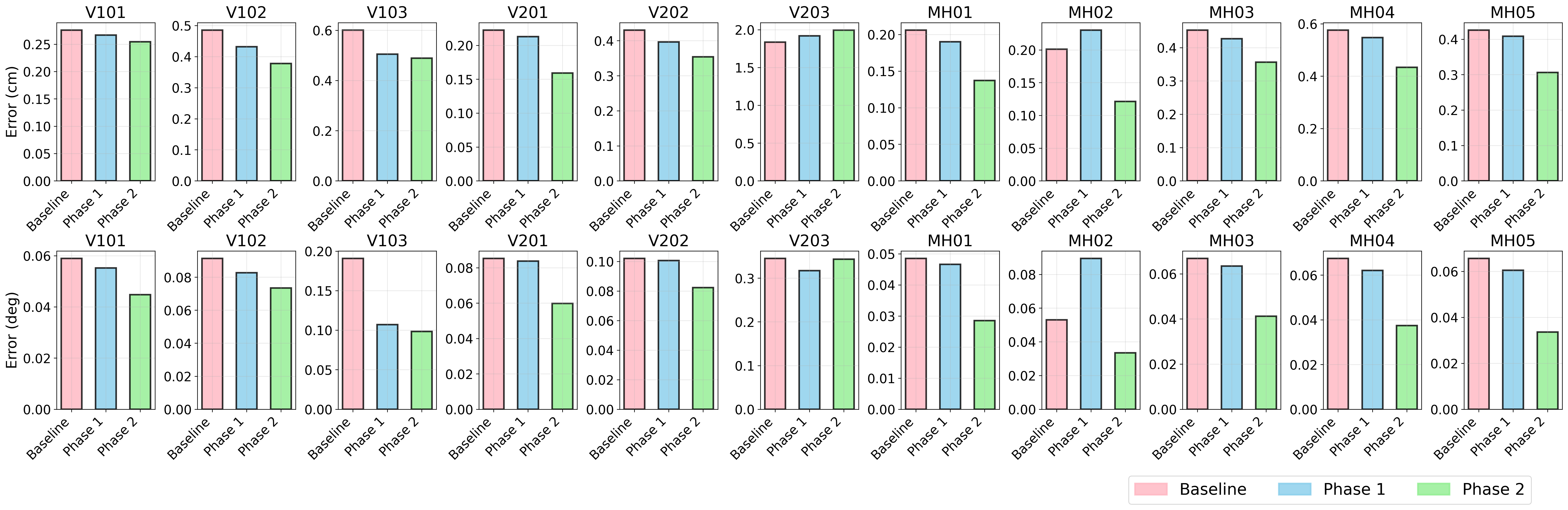
Figure 2: Quantitative evaluation demonstrating improvements in relative pose accuracy.
Discussion
Theoretical and Practical Implications
The implementation of a statistically grounded approach to uncertainty modeling can substantially enhance the resilience and accuracy of VIO systems, especially in complex and dynamic environments. By dynamically adjusting uncertainty models based on real-time data, the system promises wider applicability and robustness across diverse autonomous navigation tasks.
Potential Future Directions
Future work could extend the framework to address dynamic environments with semantic learning, integrate more advanced deep learning models for uncertainty estimation, and enhance the robustness of the method under extreme conditions. Additionally, scaling the approach to operate seamlessly in rapidly changing conditions remains an inviting challenge.
Conclusion
The introduction of statistical uncertainty learning in visual-inertial odometry represents a significant development in state estimation techniques. By replacing static uncertainty assumptions with a data-driven feedback system, the proposed method achieves significant enhancements in accuracy and robustness, marking a potential shift towards more adaptive and intelligent navigation systems. Continued research and development in this domain could lead to more resilient state estimation frameworks, facilitating advancements in autonomous systems' navigation capabilities.