- The paper introduces hypothesis hunting with evolving networks of LLM-based agents that autonomously generate and validate novel scientific hypotheses.
- It demonstrates the ASCollab framework on cancer genomics data, showing improved discovery diversity and quality over independent agent efforts.
- The study highlights dynamic agent collaborations and adaptive evaluation mechanisms as key drivers for broad and cumulative scientific exploration.
Hypothesis Hunting with Evolving Networks of Autonomous Scientific Agents
Introduction to Hypothesis Hunting
"Hypothesis Hunting with Evolving Networks of Autonomous Scientific Agents" (2510.08619) introduces an innovative approach to scientific discovery, termed hypothesis hunting. This process leverages large-scale datasets, such as health biobanks and cell atlases, enabling exploration beyond the traditional constraints of predefined research questions. AScience, the framework proposed in the paper, models discovery as an interaction of agents within evolving networks guided by evaluation norms. Implemented as ASCollab, this system employs LLM-based agents with varying behaviors that self-organize into networks, producing and peer-reviewing scientific discoveries.
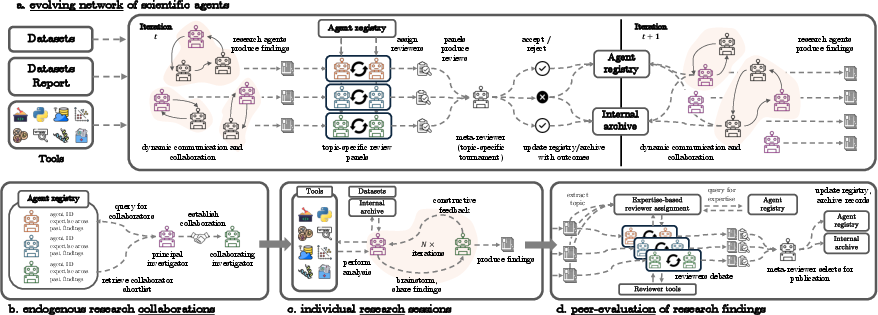
Figure 1: ASCollab evolving network showcasing hypothesis hunting capabilities.
Hypothesis hunting faces challenges in scale and coordination, which human scientists may struggle to overcome due to the vast number of samples and variables. Autonomous systems, through broad exploration and iterative refinement, can address these challenges, surfacing valuable discoveries for human validation.
The AScience Framework
AScience formalizes hypothesis hunting through four components:
- Epistemic Landscape: Encompasses possible research approaches in a structured space, each approach holding intrinsic scientific value.
- Agents: Modeled as heterogeneous scientific entities, each possessing expertise and epistemic behaviors to navigate the landscape.
- Networks: Dynamic systems of interactions among agents, handling attention and collaboration flows.
- Evaluation Mechanisms: Standards defining valuable scientific outputs and governing visibility within the network.
Agents in ASCollab evolve within this framework by adapting strategies based on feedback from networks, idea exchanges, and evaluative norms. This evolution supports open-ended explorations characterized by cumulative knowledge-building rather than goal-driven endpoints.
Implementation and Experiments
The AScience framework is instantiated as ASCollab, facilitating hypothesis hunting across cancer genomics datasets such as TCGA. Agents collaborate and peer-review, leveraging shared standards to produce findings of diverse, high quality, and novelty. Evaluations showcase ASCollab's ability to generate findings that outperform independent agents in terms of diversity and quality.
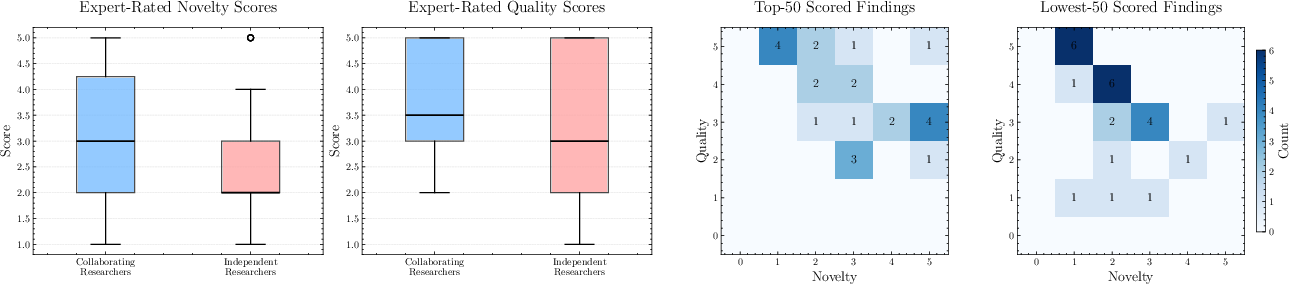
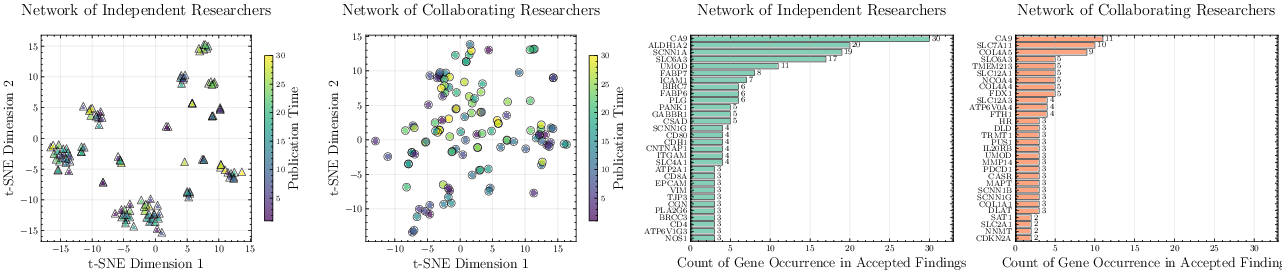
Figure 2: Evaluation outcomes demonstrating novelty, quality, and diversity of research findings.
ASCollab applies advanced tools, including query interfaces for agent registry and internal archives, collaboration mechanisms, and domain-specific computational sandboxes, to execute research sessions. Tools ensure agents retrieve relevant literature, establish collaboration, and conduct scientific analyses with methodological rigor.
Agentic Behaviors and Network Evolution
A distinctive feature of ASCollab is its heterogeneous agent network, where agents vary in epistemic behavior and expertise. This diversity enables broader exploration and balances between exploitation and novelty in discovery processes. Collaboration and agentic behavior evolve dynamically, reflecting reorganization and adaptation to emerging scientific inquiries.
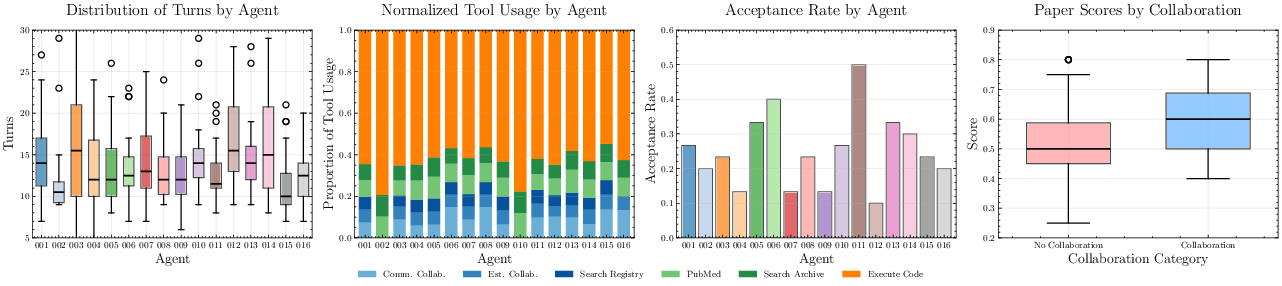
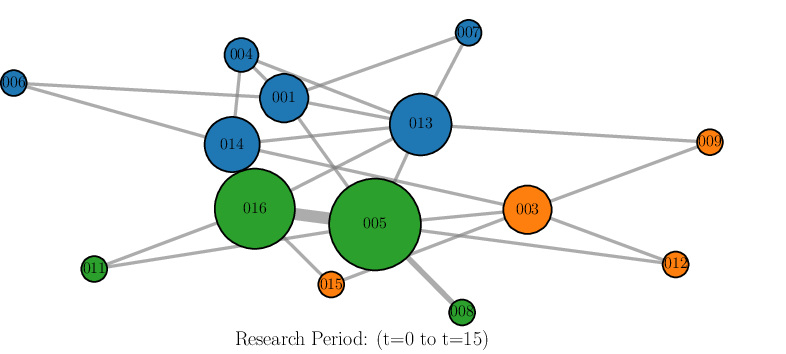
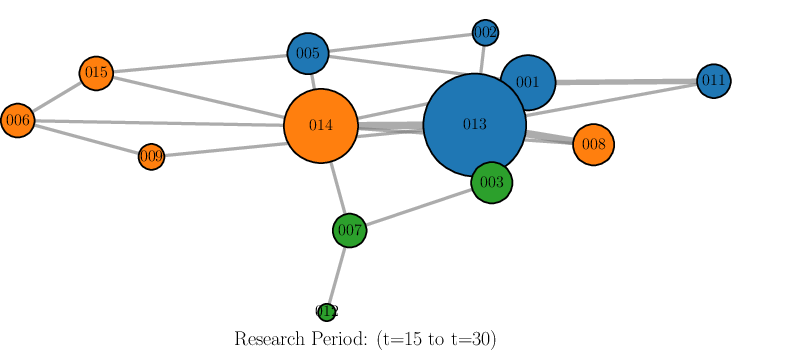
Figure 3: Visualization of agent behaviors and network evolution, highlighting dynamics in agent collaborations.
Agents exhibit varying research styles, focusing on different areas, contexts, and methodologies. This heterogeneity promotes diverse exploratory trajectories, ensuring comprehensive coverage of the research landscape.
Discussion and Implications
ASCollab underscores the importance of social dynamics and collective intelligence modeling in scientific discovery, particularly in hypothesis hunting. By nurturing agent networks that evolve naturally, the system bridges interdisciplinary gaps and enhances exploratory capacities. However, these findings remain hypothesis-driven and require further validation to achieve translational impact.
Future developments may explore expanding ASCollab to non-genomic domains and scaling to larger populations of agents. Moreover, refining evaluation mechanisms and enhancing collaboration structures could further improve discovery efficiency.
Conclusion
"Hypothesis Hunting with Evolving Networks of Autonomous Scientific Agents" offers a paradigm shift in scientific discovery, leveraging autonomous networks for hypothesis generation at scale. By formalizing social research dynamics and promoting cumulative exploration, ASCollab demonstrates potential to accelerate, broaden, and deepen scientific inquiry, paving the way for innovative and impactful research methodologies.