- The paper introduces a dual-branch forecasting network that decouples temporal dynamics and inter-variable correlations for enhanced accuracy.
- It utilizes patch embedding, global self-attention fusion, and frequency-domain correction to mitigate non-stationarity in MTS data.
- Evaluations on seven benchmark datasets demonstrate significant improvements over state-of-the-art models, underlining its industrial applicability.
D-CTNet: A Dual-Branch Channel-Temporal Forecasting Network with Frequency-Domain Correction
Introduction
The increasing complexity of collaborative industrial systems necessitates accurate forecasting of Multivariate Time Series (MTS) data. The dependence on vast sensor networks for real-time data collection imposes a dual challenge on forecasting models: accurately modeling complex inter-variable dependencies while addressing the non-stationary distribution shifts due to dynamic environmental changes. "D-CTNet: A Dual-Branch Channel-Temporal Forecasting Network with Frequency-Domain Correction" proposes an innovative architecture to tackle these challenges and improve reliability in collaborative industrial environments (2512.00925).
Methodology
The proposed D-CTNet integrates a novel patch-based dual-branch design that decouples and learns intra-channel temporal patterns and multivariate correlations through a streamlined architecture.
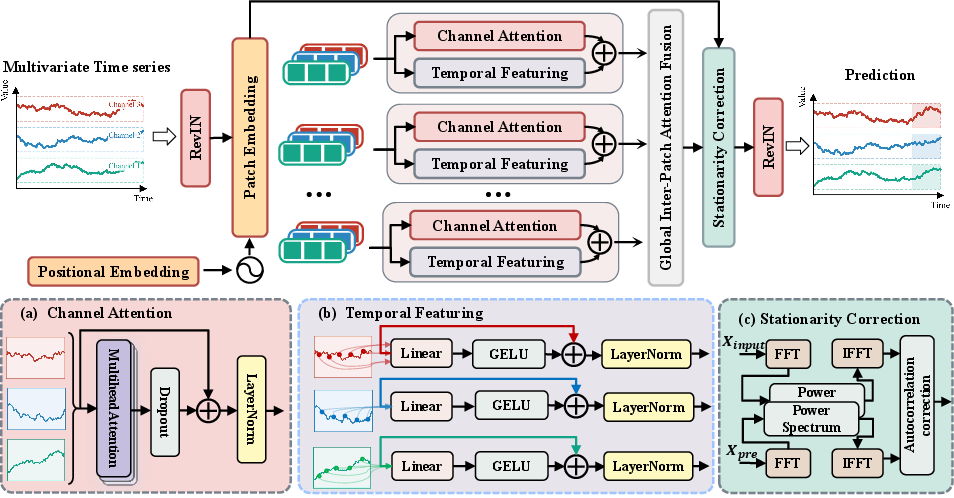
Figure 1: Overall workflow of the proposed D-CTNet. It integrates four stages to model channel-temporal dependencies and mitigate non-stationarity. (1) Patch Embedding and Representation Learning. (2) Dual-Branch Channel-Temporal Modeling: Channel Attention and Temporal Featuring. (3) Global Inter-patch attention. (4) Stationarity Correction.
Patch Embedding and Representation Learning: Input time series are preprocessed using Reversible Instance Normalization and segmented into patches to facilitate local semantic representation and reduce redundancy.
Dual-Branch Channel-Temporal Modeling: This parallel architecture consists of a linear temporal modeling branch for capturing intra-channel temporal dynamics and a channel attention branch to model inter-variable correlations. This design ensures a decoupling in the feature learning process, enhancing both temporal and variable correlation modeling capabilities.
Global Inter-Patch Attention Fusion: Extending beyond local scopes, this module implements a global self-attention mechanism to fuse patch-level information, capturing long-range dependencies critical for industrial MTS data.
Frequency-Domain Stationarity Correction: Adaptive correction mechanisms are employed to align the spectral characteristics of prediction outputs with input data, mitigating non-stationarity-induced generalization losses effectively.
Results and Comparative Analysis
The D-CTNet was evaluated across seven benchmark datasets, including ETTm2, ETTh1, Electricity, and others, demonstrating superior performance in terms of forecasting accuracy. Notably, D-CTNet achieved the lowest Mean Squared Error (MSE) and Mean Absolute Error (MAE) across most datasets and forecast horizons, outperforming state-of-the-art models such as Transformers, GNNs, and MLPs.
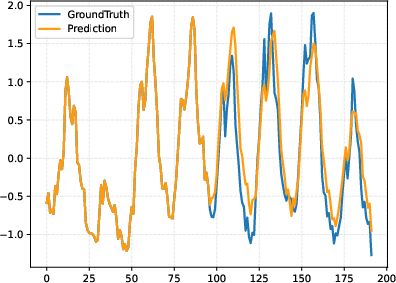
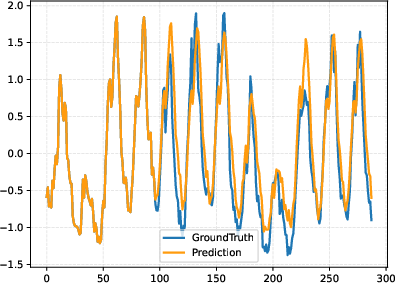
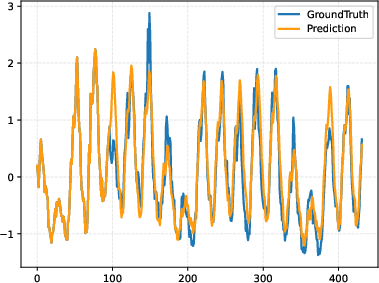
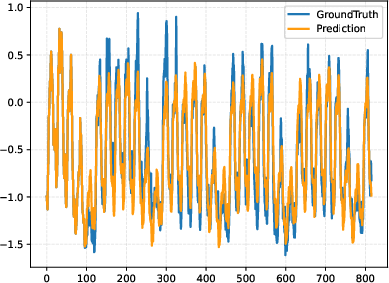
Figure 2: Visualization comparison of forecasting results.
Especially in scenarios with long prediction horizons, such as in the Exchange dataset, the model's ability to accurately forecast demonstrates the effectiveness of the dual-branch and global fusion strategies. The ablation studies further confirm the importance of each component, showing significant drops in performance when modules like global attention fusion or frequency-domain correction are removed.
Implications and Future Directions
The proposed D-CTNet advances time series forecasting in collaborative industrial settings by significantly enhancing the accuracy and robustness against non-stationary data. These advancements provide a robust foundation for applications such as Digital Twin construction and predictive industrial maintenance.
Future work should investigate the deployment of D-CTNet on edge devices to accommodate real-time processing needs in Industrial IoT scenarios, possibly integrating cross-domain functionalities with LLMs to further expand its applicability in smart manufacturing ecosystems and beyond.
Conclusion
D-CTNet represents a significant step forward in addressing the dual challenge of modeling complex temporal and multivariate patterns while mitigating the effects of non-stationarity in MTS forecasting. Its dual-branch architecture, enhanced by global and spectral correction modules, sets a new benchmark for accuracy and reliability in the field. The model promises reliable data-driven insights essential for the advancement of Industry 4.0 technologies and collaborative industrial systems (2512.00925).