- The paper benchmarks the SQD algorithm on quantum hardware by evaluating its capacity to solve the electronic Schrödinger equation for many-body systems.
- It integrates classical preprocessing with LUCJ ansatz-based quantum circuit construction and advanced error mitigation to manage hardware-induced noise.
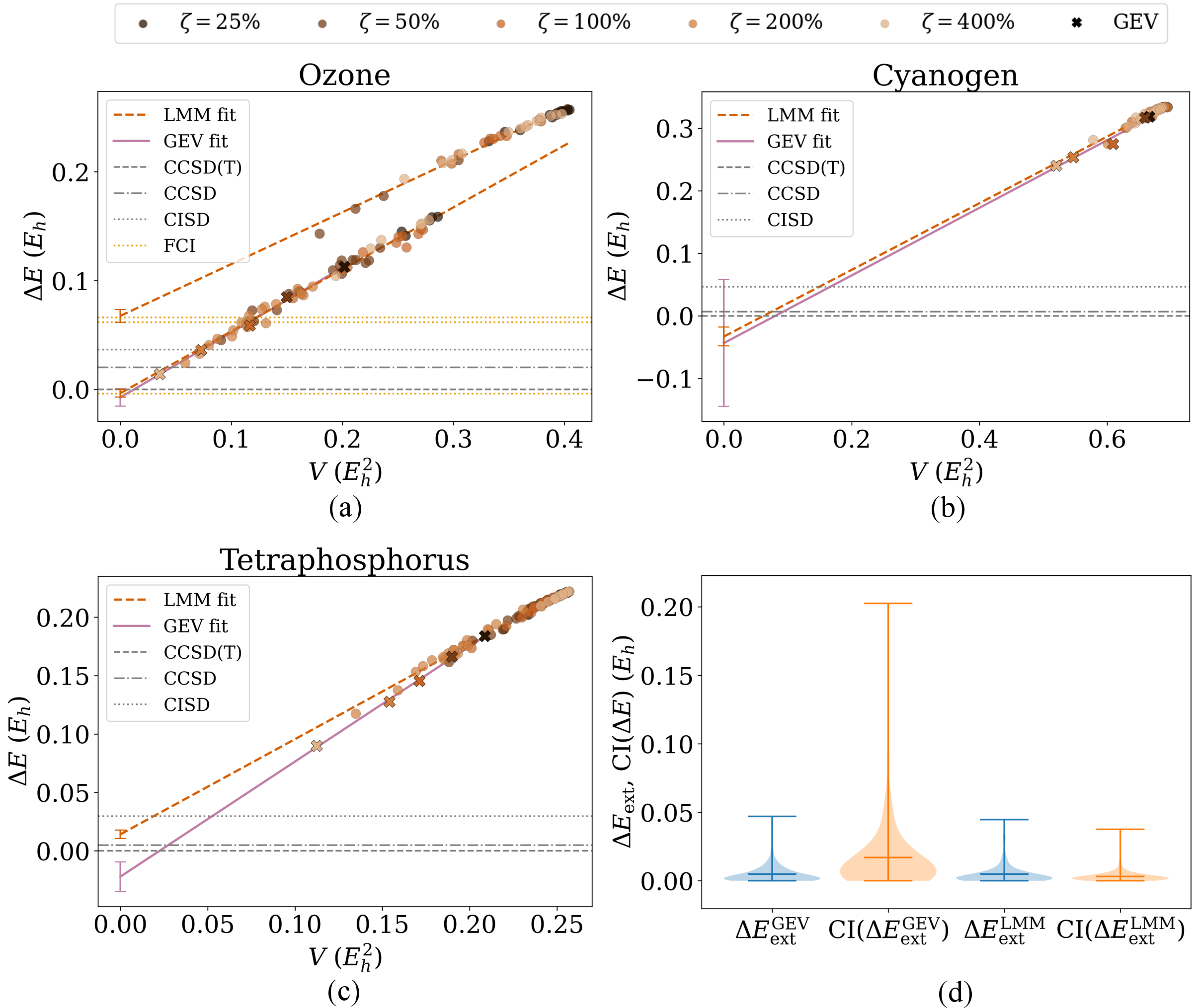
- Energy-variance extrapolation elevates SQD accuracy to CCSD levels, highlighting both its potential and limitations in raw quantum sampling.
Benchmarking Quantum Chemistry Algorithms on Quantum Hardware: Evaluation of Sample-Based Quantum Diagonalization
Overview and Motivation
This work presents a systematic benchmarking of the Sample-Based Quantum Diagonalization (SQD) algorithm for quantum chemistry, executed on the superconducting quantum processor ibm{rensselaer} and supported by high-performance classical post-processing on the AiMOS supercomputer. The evaluation leverages the W4-11 benchmark suite, which encompasses 745 thermochemical reactions and 152 molecules, providing an exhaustive testbed for assessing algorithmic accuracy, resource requirements, error scaling, and chemical coverage.
The challenge lies in accurately solving the electronic Schrödinger equation for many-body systems, where the exponential growth of Hilbert space precludes exact solutions beyond modest electron counts using classical approaches. Quantum algorithms have the potential to overcome this bottleneck, yet current pre-fault-tolerant devices impose significant constraints on circuit depth, gate fidelity, and qubit coherence, requiring hybrid quantum-classical techniques and rigorous benchmarking to establish numerical reliability.
SQD Algorithmic Workflow and Quantum Hardware Integration
The paper employs SQD—a quantum-classical approach wherein determinant configurations (Slater determinants) are probabilistically sampled via quantum circuits, and a classical diagonalization is performed in the subspace spanned by these sampled configurations. The SQD workflow comprises:
- Classical Preprocessing: Hartree-Fock, MP2, CISD, CCSD, and CCSD(T) calculations provide reference energies and furnish amplitude tensors for circuit parametrization.
- Quantum Circuit Generation and Execution: Circuits are constructed using the local unitary cluster Jastrow (LUCJ) ansatz, which leverages low-rank decompositions of CCSD amplitudes to reduce gate complexity and enable heavy-hex hardware connectivity.
- Postprocessing and Error Mitigation: Configuration recovery techniques enforce conservation of electron number and spin projection, mitigating noise-induced state pollution. Final energies are obtained via classical diagonalization of the projected electronic Hamiltonian.
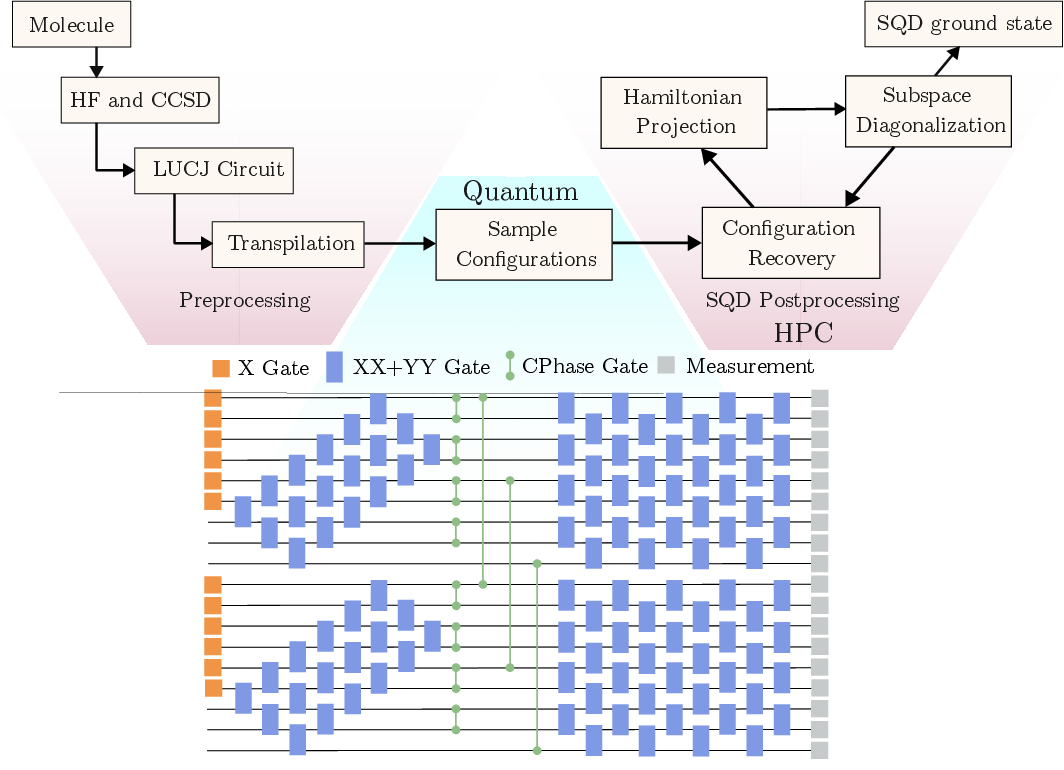
Figure 1: Computational flow of the SQD method, encompassing classical electronic-structure computations, circuit construction and transpilation, quantum device execution, and classical postprocessing.
The study ensures resource commensurability, matching quantum circuit sizes and classical configuration space truncations, allowing direct algorithmic performance comparisons.
Resource Scaling and Quantum Configuration Subspace Selection
The LUCJ ansatz employed in SQD offers favorable gate and depth scaling, with circuit depth D≃2.35Nq and two-qubit gate count ng≃0.98Nq2, where Nq=2M is the qubit count for M orbitals. The selection of sampled configurations is parameterized by d≤ζNCCSD, with ζ sweeping 25% to 400% relative to CCSD parameter space, and NCCSD=O(N2M2).
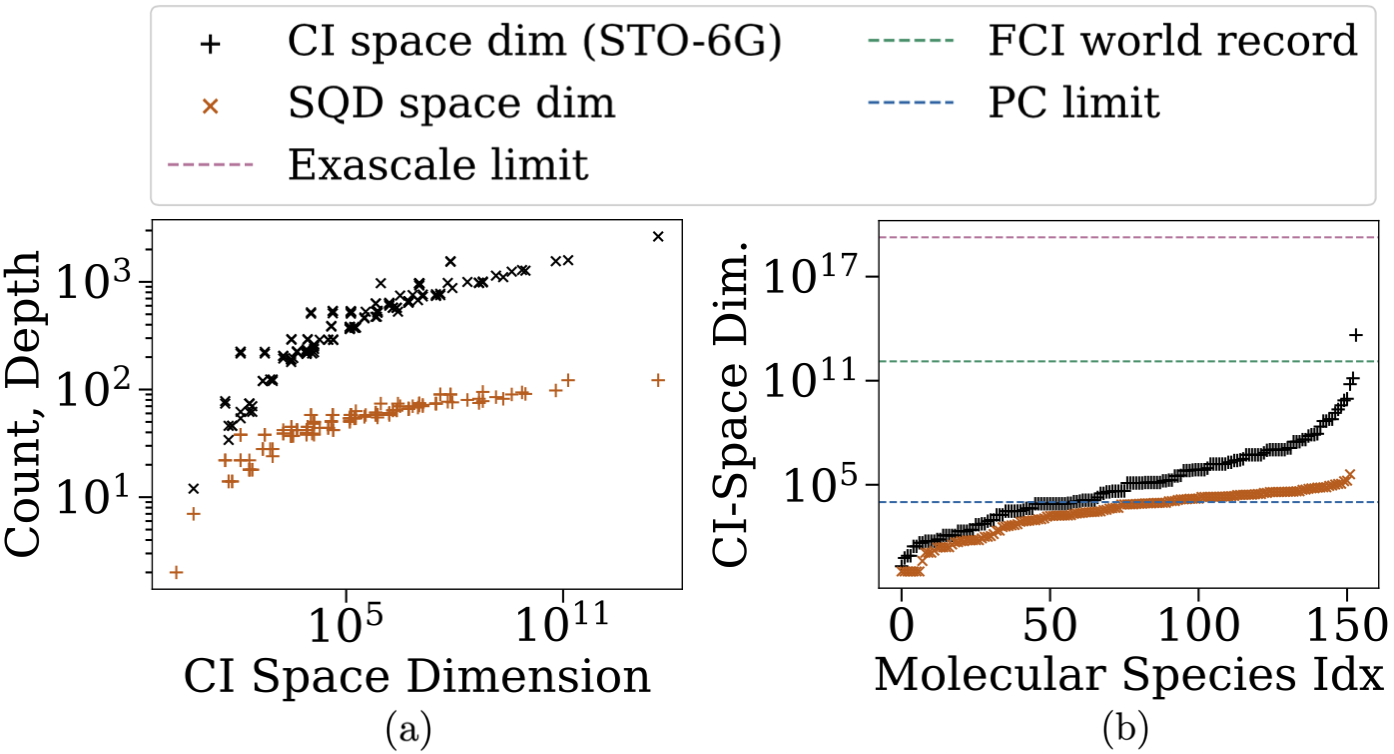
Figure 2: Gate count and depth scaling (a), and achievable configuration subspace dimensions (b), relative to practical and full CI limits.
This systematic scaling allows the study to disentangle quantum noise effects from intrinsic algorithmic truncation and enables critical assessment of SQD against equivalent configuration-interaction spaces in CISD.
Accuracy and Error Propagation across Chemical Domains
Absolute and relative energy errors in ground state and reaction energies are reported across five chemical reaction classes: total atomization (TAE), bond dissociation (BDE), isomerization (ISO), heavy atom transfer (HAT), and nucleophilic substitution (SN).
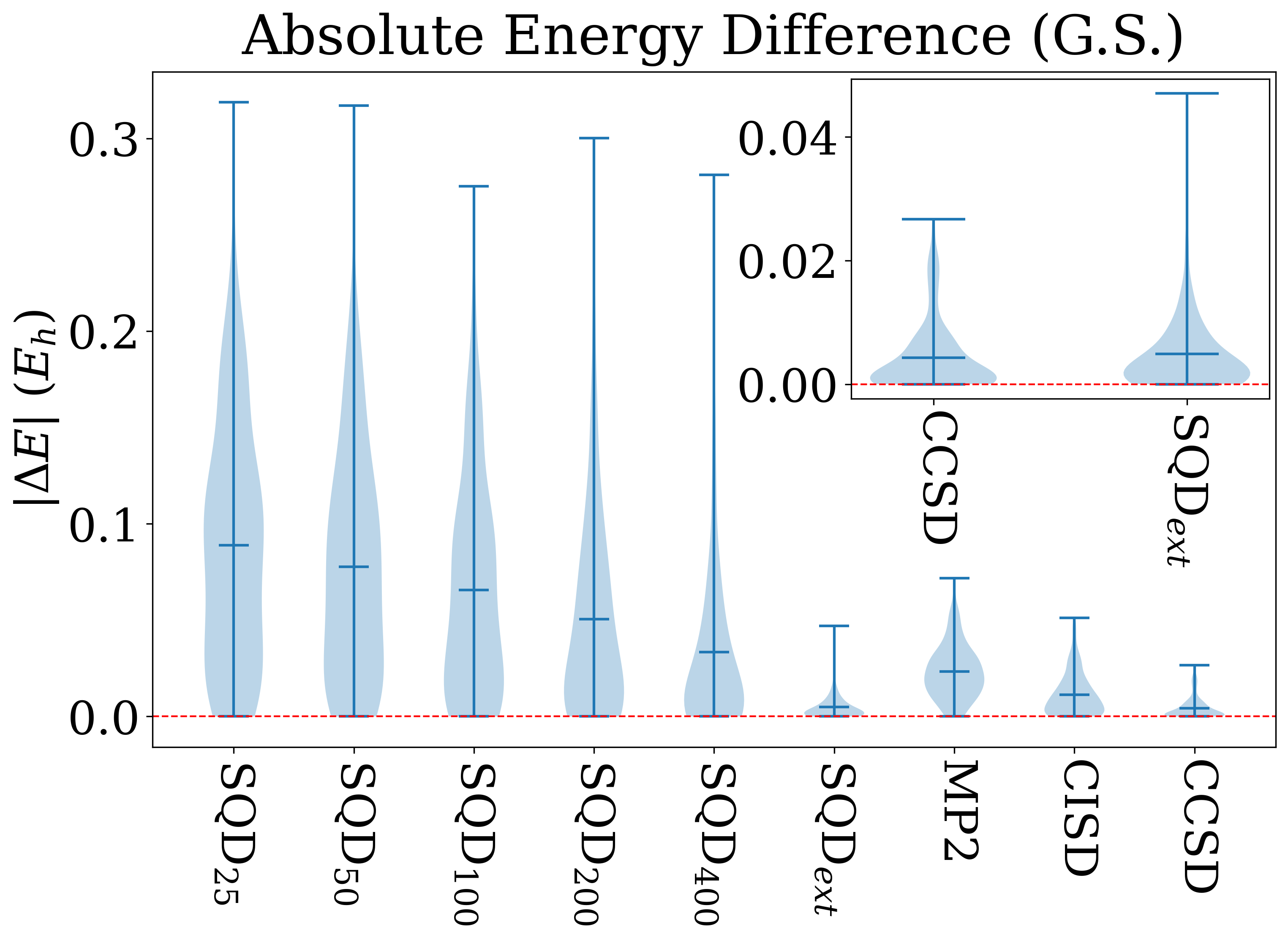
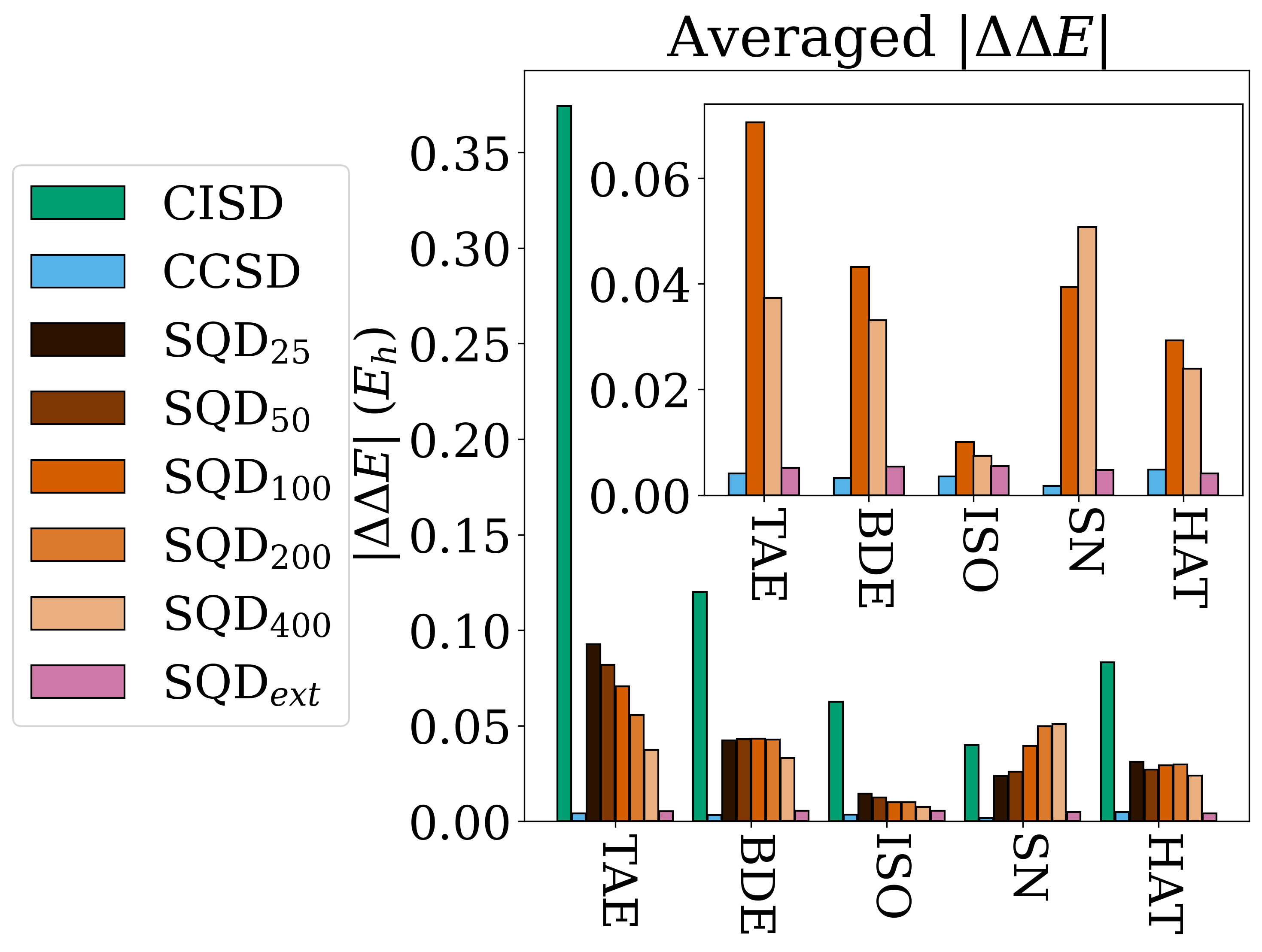
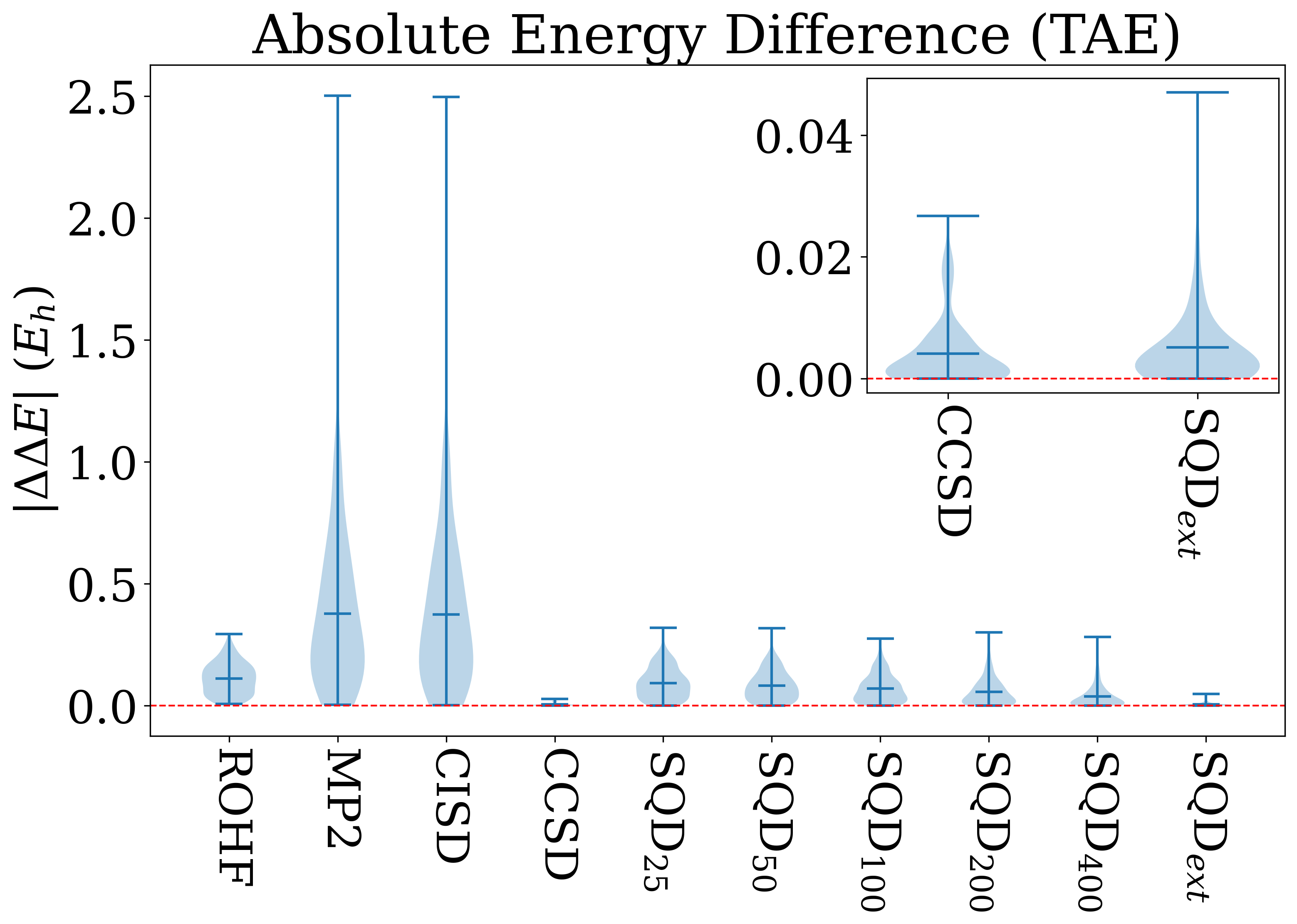
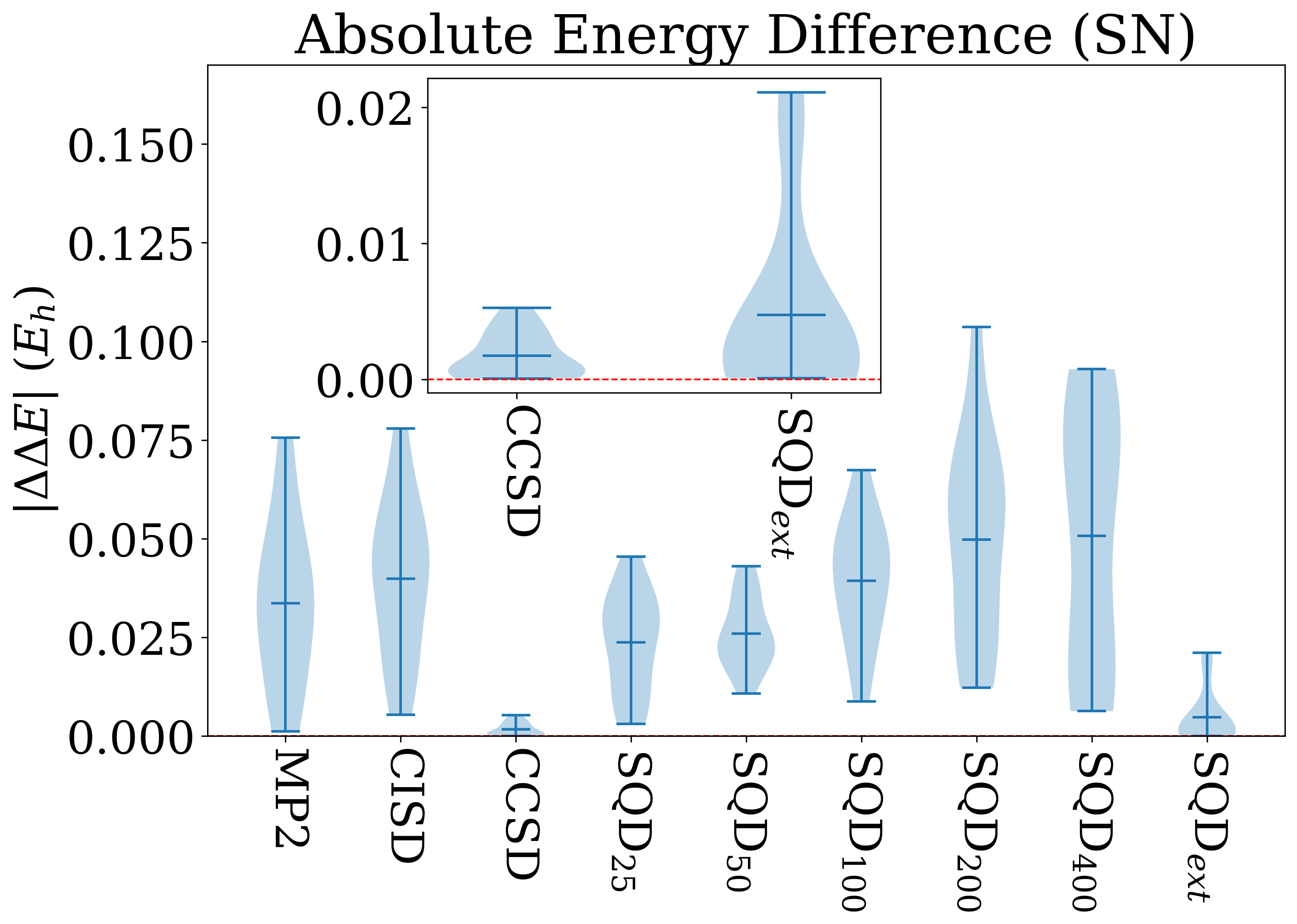
Figure 3: Statistical distributions of ground-state and reaction energy errors and averaged per-reaction-class error metrics for SQD, CCSD, CISD, and MP2.
Key findings:
Extrapolation Techniques and Statistical Reliability
Two extrapolation strategies are benchmarked:
- Linear Mixture Model (LMM): Clustering energy-variance pairs and performing local regressions in each cluster, requiring manual labeling and visual inspection.
- Generalized Eigenvalue Extrapolation (GEV): Automated, constructs lowest-energy linear combinations via regularized generalized eigenvalue problems, yielding linearly extrapolated ground-state energies.
Statistical uncertainties are higher in GEV compared to LMM but more representative of actual performance limits. The presence of outlier molecules for which extrapolation is statistically incompatible with CCSD(T) reference highlights algorithmic boundaries and quantum sampling limitations.
Quantum Sampling, Error Suppression, and Hardware-Induced Limitations
The analysis systematically quantifies hardware-induced errors, specifically violations of electron number and spin conservation due to noise channels. Dynamical decoupling (DD) techniques are shown to improve signal fidelity, with the DD-XY4 sequence offering superior suppression without excess gate overhead.
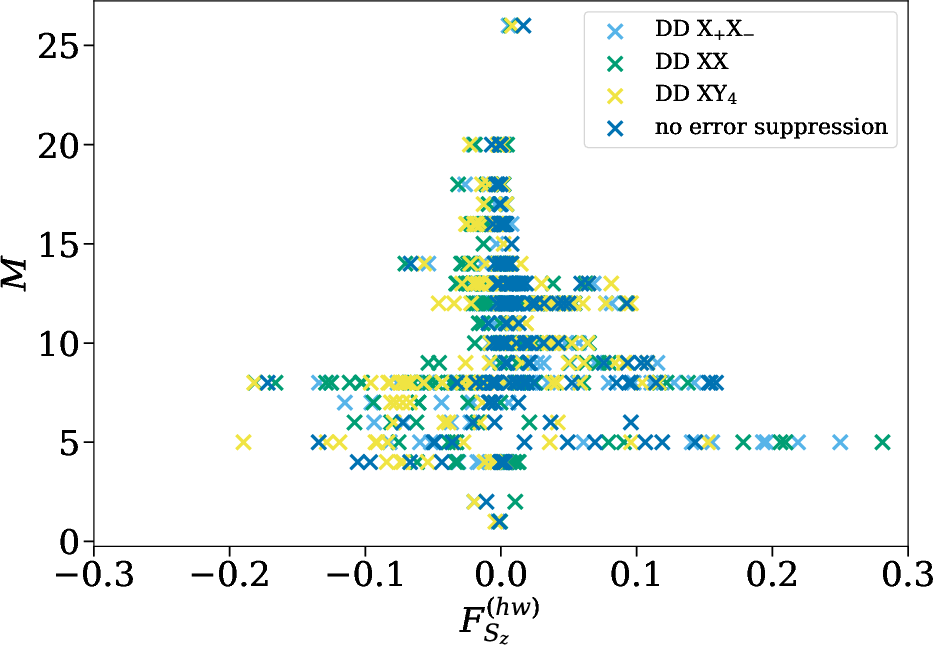
Figure 5: Asymmetry in sampled states due to noise, illustrating improved signal symmetry using advanced dynamical decoupling sequences across orbital counts.
The study characterizes the failure modes of SQD arising from noise-induced spin and particle number violations, thereby attributing part of the residual error to hardware finite fidelity rather than algorithmic structure.
Chemical and Algorithmic Deficiency Analysis
Extensive chemical-domain-specific analyses demonstrate that SQD fails to recover correct energetics in systems with:
- Delocalized π-bonding networks
- Multicenter and near-degenerate states
- Strong charge separation and correlation-sensitive rearrangements (e.g., SN and isomerization pathways)
CCSD shows robust performance, with deficiencies only in a narrow, strongly correlated chemical space. SQD's error mechanism is identified as configuration sampling suboptimality, amplified by quantum noise and configuration recovery limitations.
Practical and Theoretical Implications
This benchmark provides:
- A community resource for systematic device and algorithm evaluation, enabling direct comparison across hardware generations and alternative quantum algorithms.
- A foundation for algorithmic improvements targeting configuration sampling, ansatz design (e.g., more expressive circuits or improved amplitude surrogation), noise resilience, and resource economization.
- Empirical baselines for method development in quantum computational chemistry, emphasizing the necessity of classical postprocessing and error mitigation even as hardware scales.
Future work must address the extension to larger basis sets (e.g., 6-31G), adaptivity in quantum circuit construction, and automated recovery schemes to lower extrapolation sensitivity and improve raw quantum sampling fidelity.
Conclusion
The study establishes rigorous accuracy and precision benchmarks for SQD quantum chemistry algorithms executed on modern superconducting quantum hardware. The necessity of systematic configuration sampling, sophisticated error mitigation, and energy-variance extrapolation is underscored by extensive numerical results. While extrapolated SQD approaches CCSD accuracy in many cases, raw sampling remains suboptimal, and quantum noise imposes statistically significant errors, particularly in electronically complex systems. The results delineate boundaries for practical quantum chemistry on extant hardware and furnish a scalable reference point for future algorithm and device advances.