- The paper provides empirical evidence that approximately 80% of practitioners use GenAI tools to reduce task time and enhance productivity.
- It employs surveys and quantitative data to compare significant benefits, like improved quality and time savings, against challenges such as incorrect outputs and integration issues.
- The research highlights the importance of institutional support and anticipates transformative long-term impacts on software engineering roles.
An Empirical Study of Generative AI Adoption in Software Engineering
Introduction
The paper "An Empirical Study of Generative AI Adoption in Software Engineering" (2512.23327) offers a comprehensive analysis of the integration of Generative AI (GenAI) tools within Software Engineering (SE). The research seeks to elucidate the current status of GenAI adoption, the associated benefits and challenges, the extent of institutional support for these technologies, and the anticipated long-term impacts on SE professionals and the broader community.
The study reveals substantial adoption of GenAI tools, with approximately 80% of surveyed practitioners reporting utilization in their workflows. This high adoption rate aligns with existing data from industry surveys, such as the StackOverflow Developer Survey, indicating the prevalence of GenAI tools like ChatGPT and GitHub Copilot. Implementation tasks dominate the application of these tools, suggesting their critical role in accelerating coding, prototyping, and related activities.
The study identifies barriers to GenAI tool adoption, including a lack of necessary skills and time, perceived irrelevance to current workflows, and concerns regarding tool maturity and output quality. Interestingly, non-users tend to cite skill and time constraints more frequently than trust and accuracy issues, contrasting with broader market findings.
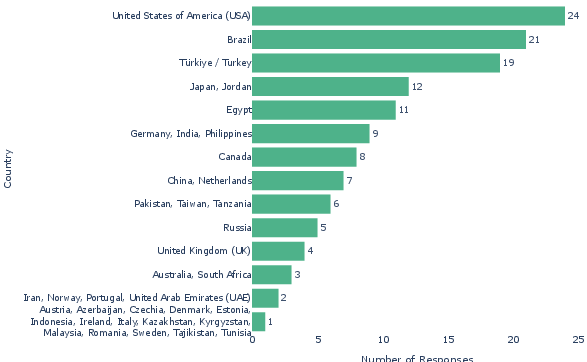
Figure 1: Number of responses per country (N = 204).
Benefits and Challenges of GenAI Use
GenAI tools are primarily recognized for reducing cycle time and enhancing productivity and quality in SE tasks. Practitioners report significant time reductions in completing typical SE activities, with a notable portion indicating task time reductions from eight hours to as little as two hours when using GenAI tools. Quality improvement is another pronounced benefit, perceived by a majority of practitioners who report improvements in artifact quality.
However, these tools are not without challenges. Incorrect and unreliable outputs, difficulties in prompt engineering, and the overhead of output validation highlight some of the critical obstacles practitioners face. Security, privacy, integration issues, and the risk of over-reliance on GenAI solutions are additional concerns highlighted by the study.
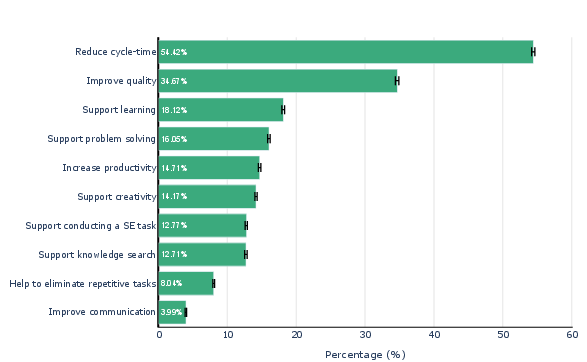
Figure 2: Reported benefits obtained from GenAI tools (N = 149).
The research indicates an emerging trend of institutional support for GenAI tools in organizations, with nearly two-thirds of respondents affirming organizational backing. This support primarily entails providing direct access to tools and integrating them into existing workflows, although training and governance practices are also noted.
The existence of a "shadow AI economy," where individuals independently utilize GenAI tools outside formal organizational provisioning, underscores the pervasive interest and perceived utility of these technologies despite potential governance gaps.
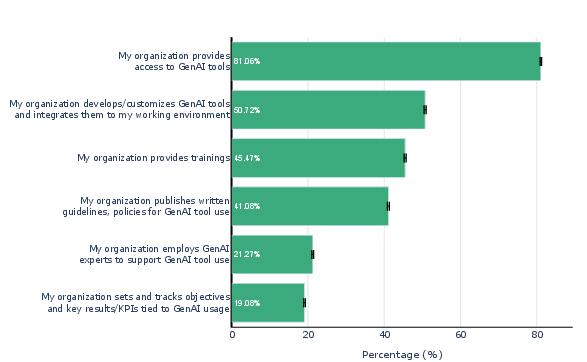
Figure 3: How organizations support GenAI use (N = 132).
Practitioners largely expect GenAI to redefine rather than replace current roles, pointing to a future where collaboration with AI tools will transform, but not eviscerate, traditional SE roles. Despite these positive perceptions at the individual level, concerns persist about broader labor market impacts and potential job contraction due to efficiency gains.
Skills adaptation is a key area of confidence among respondents, with a vast majority expressing readiness to upskill to harness GenAI tools effectively. Economic impacts, such as potential downward pressure on salaries and the effects on workplace social dynamics, remain areas of mixed perceptions among SE professionals.
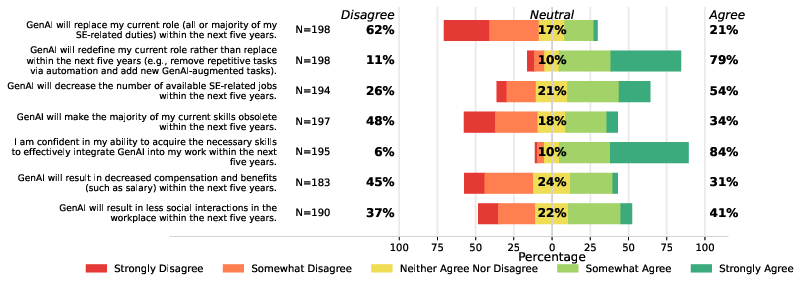
Figure 4: Statements about the potential social impact of GenAI tools (N = 183 – 198).
Conclusion
The paper provides an essential empirical perspective on the integration of GenAI tools within the SE domain, highlighting both immediate operational benefits and longer-term implications for professionals. While the benefits in productivity and quality are clear, the challenges underscore the need for careful management and support at organizational and broader industry levels. The anticipated transformative impact on SE roles and professional dynamics invites continued scrutiny and strategic planning to fully harness the potential of GenAI technologies in the software engineering landscape.