A Generative Model of Conspicuous Consumption and Status Signaling
Abstract: Status signaling drives human behavior and the allocation of scarce resources such as mating opportunities, yet the generative mechanisms governing how specific goods, signals, or behaviors acquire prestige remain a puzzle. Classical frameworks, such as Costly Signaling Theory, treat preferences as fixed and struggle to explain how semiotic meaning changes based on context or drifts dynamically over time, occasionally reaching tipping points. In this work, we propose a computational theory of status grounded in the theory of appropriateness, positing that status symbols emerge endogenously through a feedback loop of social observation and predictive pattern completion. We validate this theory using simulations of groups of LLM-based agents in the Concordia framework. By experimentally manipulating social visibility within naturalistic agent daily routines, we demonstrate that social interactions transform functional demand into status-seeking behavior. We observe the emergence of price run-ups and positive price elasticity (Veblen effects) for both real-world luxury items and procedurally generated synthetic goods, ruling out pretraining bias as the sole driver. Furthermore, we demonstrate that "influencer" agents can drive the endogenous formation of distinct subcultures through targeted sanctioning, and find that similar social influence effects generalize to non-monetary signaling behaviors. This work provides a generative bridge between micro-level cognition and macro-level economic and sociological phenomena, offering a new methodology for forecasting how cultural conventions emerge from interaction.
Paper Prompts
Sign up for free to create and run prompts on this paper using GPT-5.
Top Community Prompts
Explain it Like I'm 14
What this paper is about
This paper asks a simple question: why do some things (like fancy sneakers, designer bags, or even certain behaviors on social media) become symbols of status, while others don’t—and why do these symbols change over time?
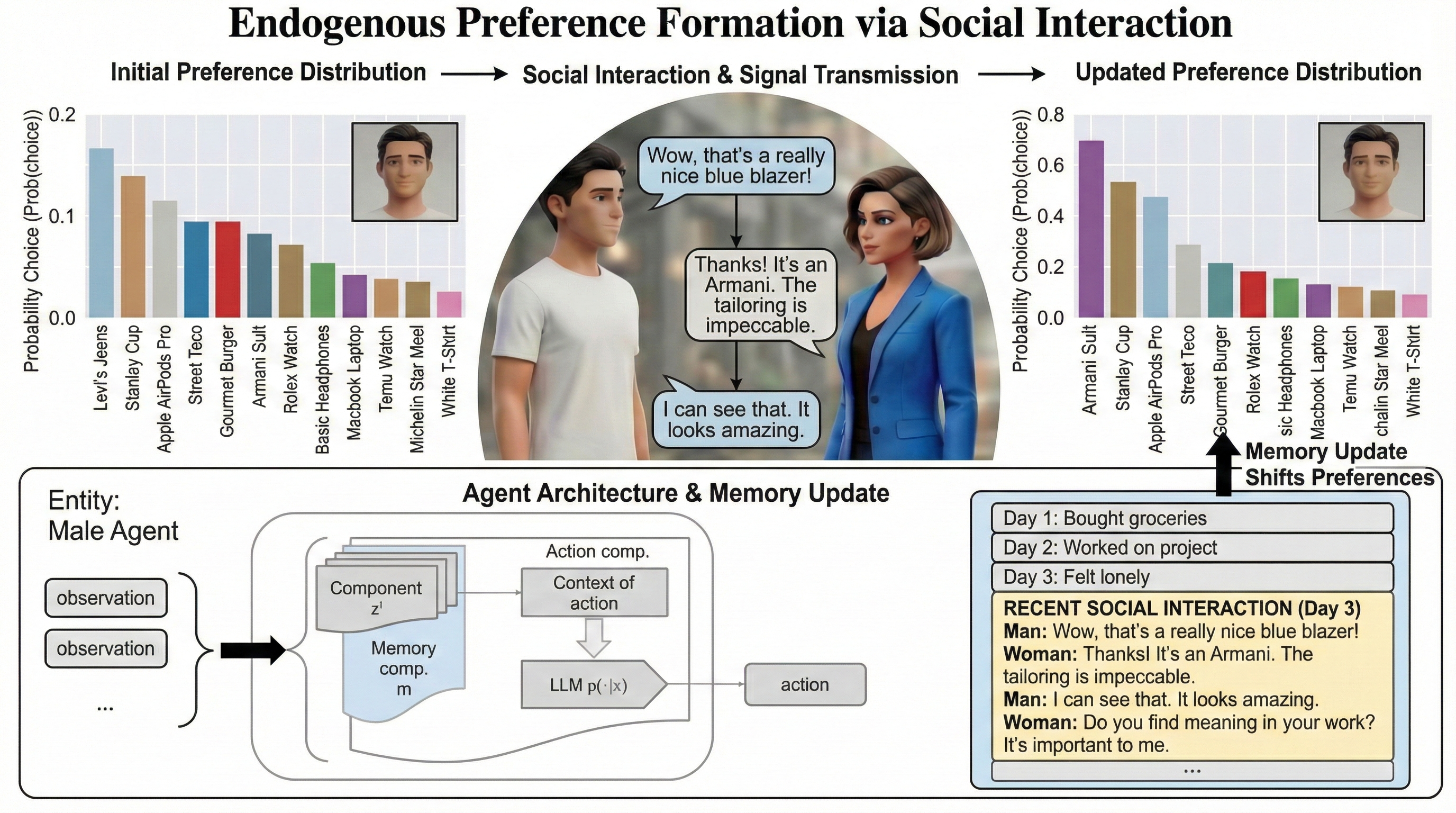
The authors build computer “societies” of AI characters and watch how trends and status symbols start, spread, and sometimes explode in popularity. Their big idea is that people don’t just chase things because they’re costly; they copy what feels appropriate for “people like us” in a given situation, based on what they see others doing.
The main questions
The researchers focus on a few easy-to-understand questions:
- How do status symbols (like luxury goods or public acts of generosity) emerge and spread through social influence?
- Is it the high price itself that makes a thing “high status,” or is it the buzz and visibility—the fact that others see and talk about it?
- Can totally new, made-up items also turn into status symbols (not just famous brands)?
- Do similar social effects happen for non-money signals, like public political posts or visible charity?
- Can influential people (like “influencers”) shape subcultures by praising or criticizing certain choices?
How they studied it
The team used a simulation: think of it like The Sims, but the characters are AI agents that talk, remember, and make choices.
Here’s the basic setup:
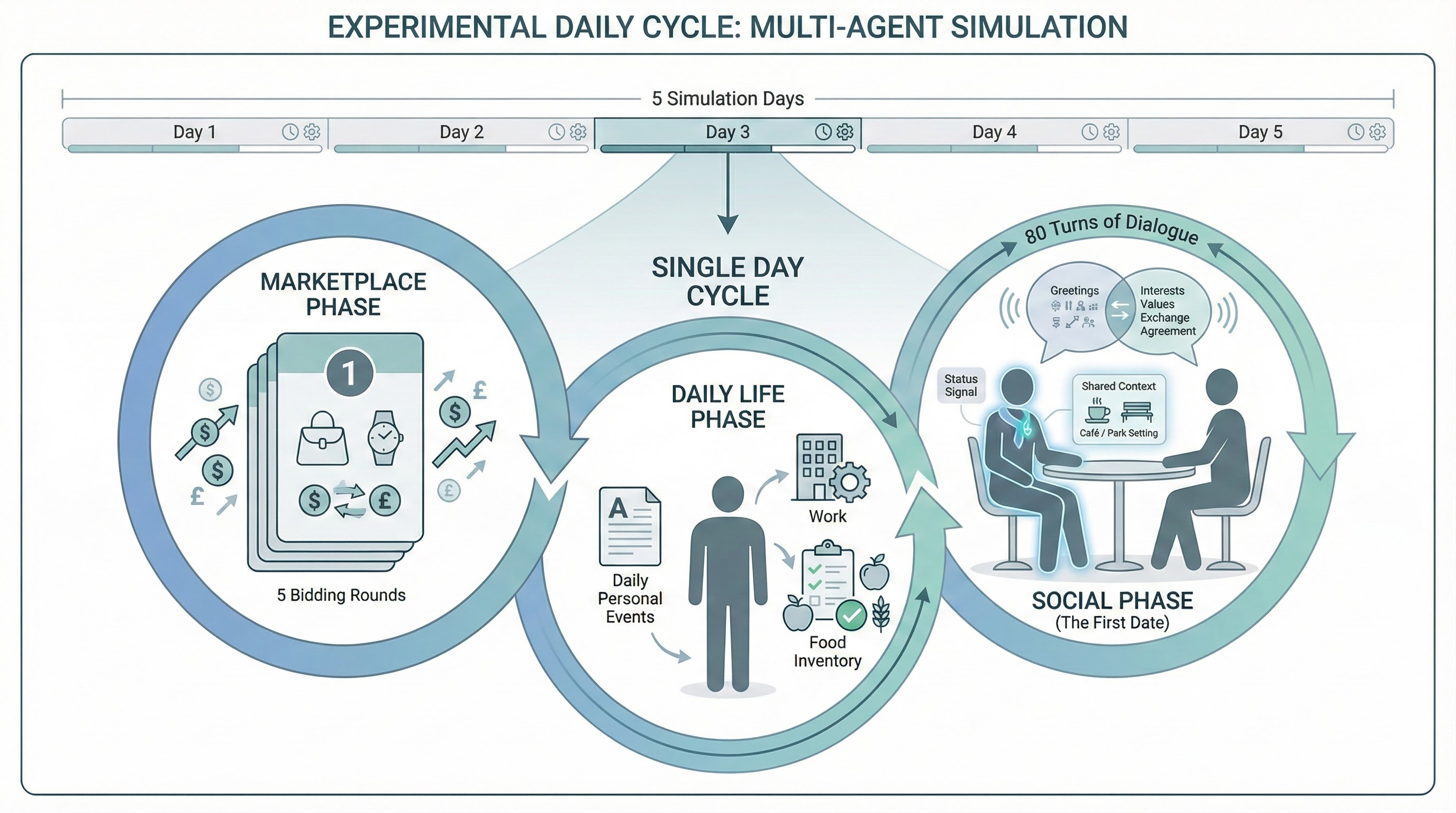
- The researchers created 50 AI “people” with different personalities, jobs, and incomes living in a city. They also created “seller” agents for products.
- Each day, agents: 1) Shopped in a marketplace (for food, clothes, gadgets, accessories), 2) Lived normal daily events, 3) Went on a “first date” with another agent (in the social condition).
- On these dates, agents could “see” what the other person was wearing (like a Rolex or a bag) and then had an 80-turn conversation. They remembered what happened and used those memories when making future choices.
- The key comparison:
- Social Life condition: agents had dates and saw each other’s items and reactions.
- No Social Life condition: agents only shopped; no dates, no social visibility.
- They tested both real luxury brands (like Chanel and Rolex) and invented, made-up brands with similar descriptions to check if results weren’t just due to the AI already “knowing” real-world brands.
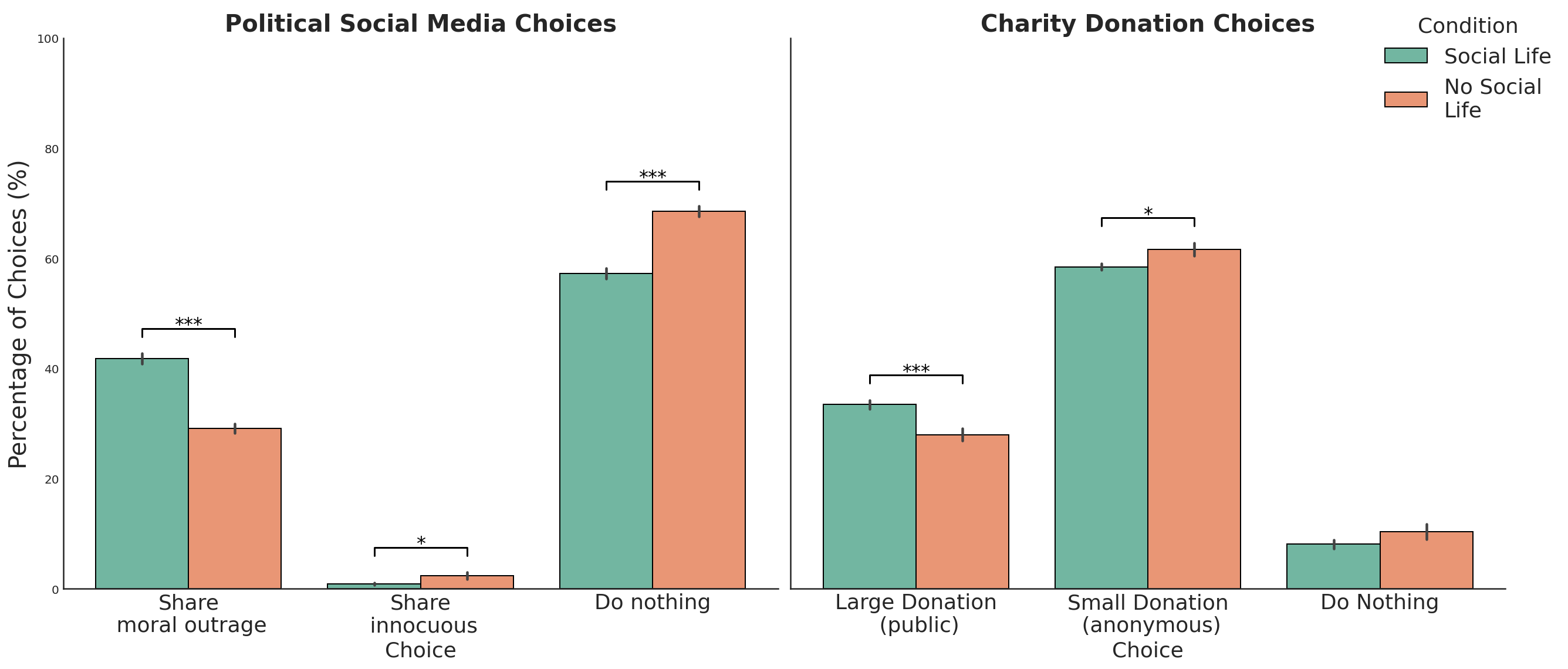
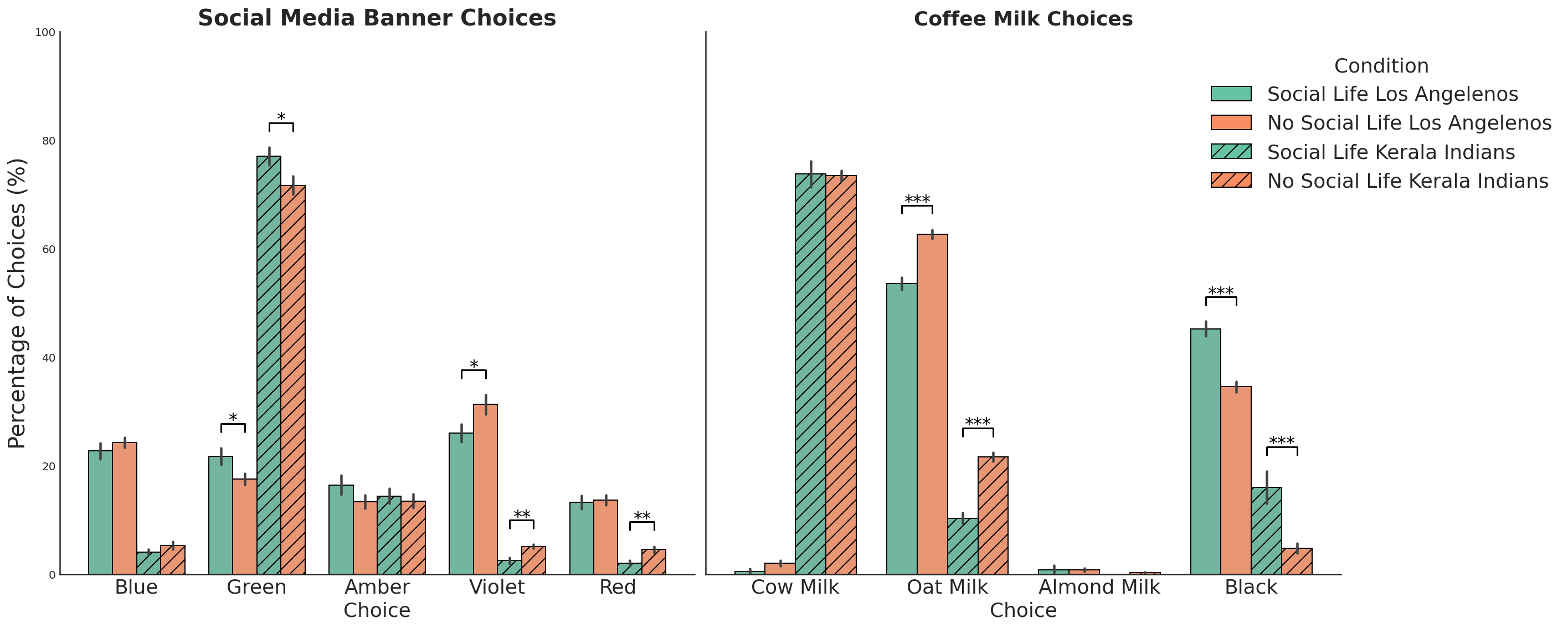
- They also created non-money scenarios: Should an agent share a political post or a fun video? Donate publicly or anonymously? Pick a random social media banner color? Choose a coffee order? These choices could be seen by others in the social condition, but not in the non-social one.
A helpful analogy: imagine a school cafeteria. If you eat alone, you’ll likely buy what tastes good and fits your budget. If you eat with friends who praise certain foods or clothes, you might start wanting those too—even if they cost more or seem arbitrary. The simulation captures that social nudge.
Key ideas explained simply
- Status signaling: doing or owning something so others see you a certain way (cool, rich, generous, in the right group).
- Costly Signaling Theory: the classic idea that hard-to-fake, expensive signals prove status (like a pricey watch).
- Theory of appropriateness: people choose what feels “right” for their group and situation based on what they’ve seen before. They imitate patterns that seem fitting, not just what’s costly.
- Predictive pattern completion: we act by “filling in” what people like us typically do in this context—like auto-completing the next move based on past examples.
- Veblen effect: sometimes higher prices make people want a thing more because it signals status.
What they found (and why it matters)
Here are the main results, summarized in plain language:
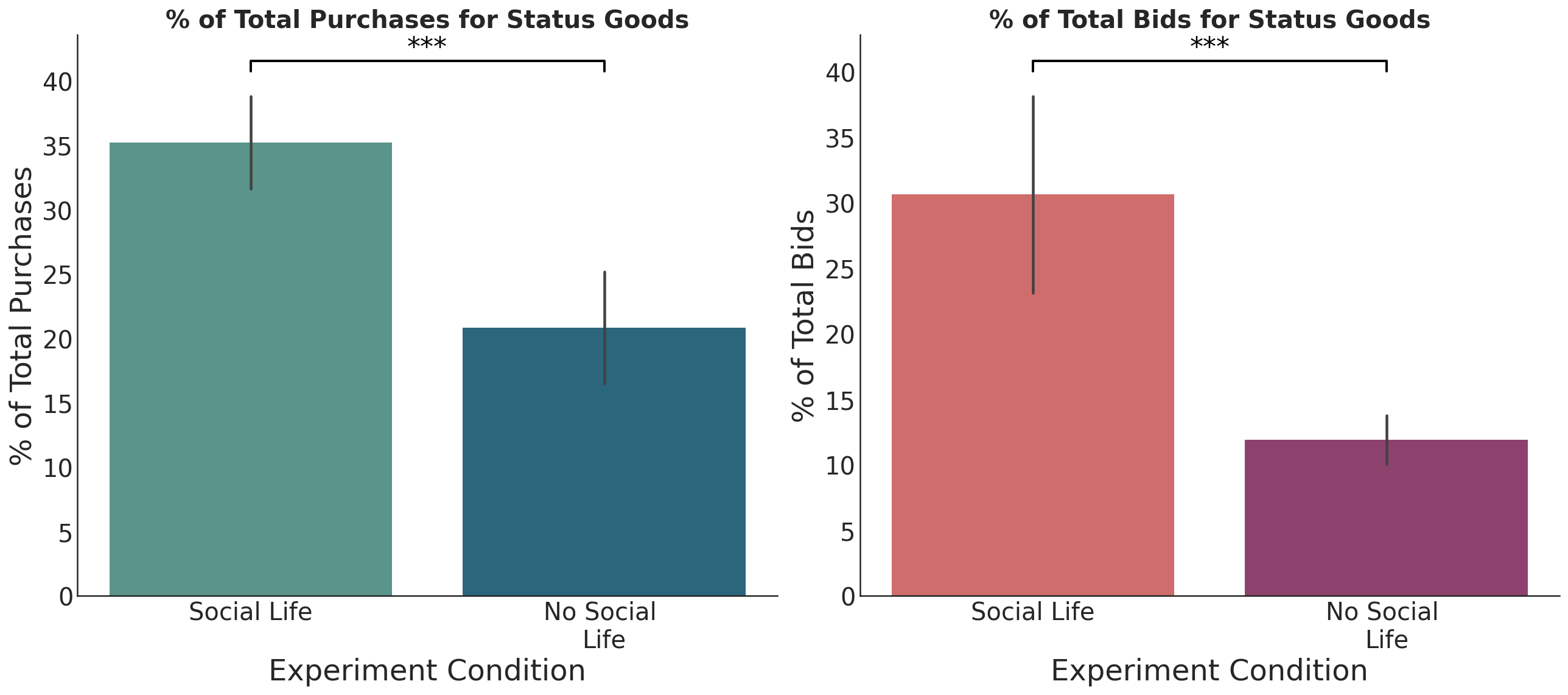
- Social visibility turns needs into wants:
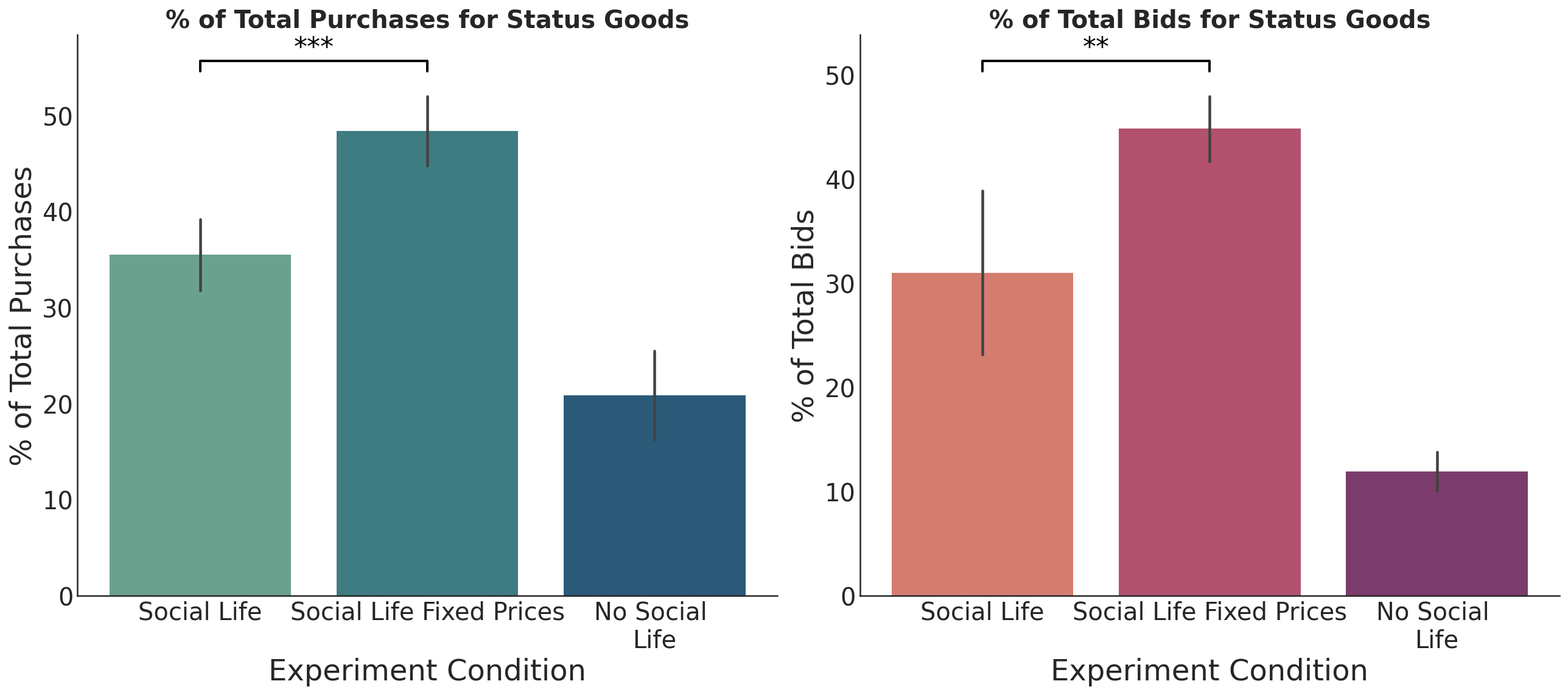
- When agents had dates and could see each other’s stuff, they bought many more high-status items.
- Without social interaction, they mostly bought practical things (like food) and didn’t chase luxury as much.
- Prices can snowball upward:
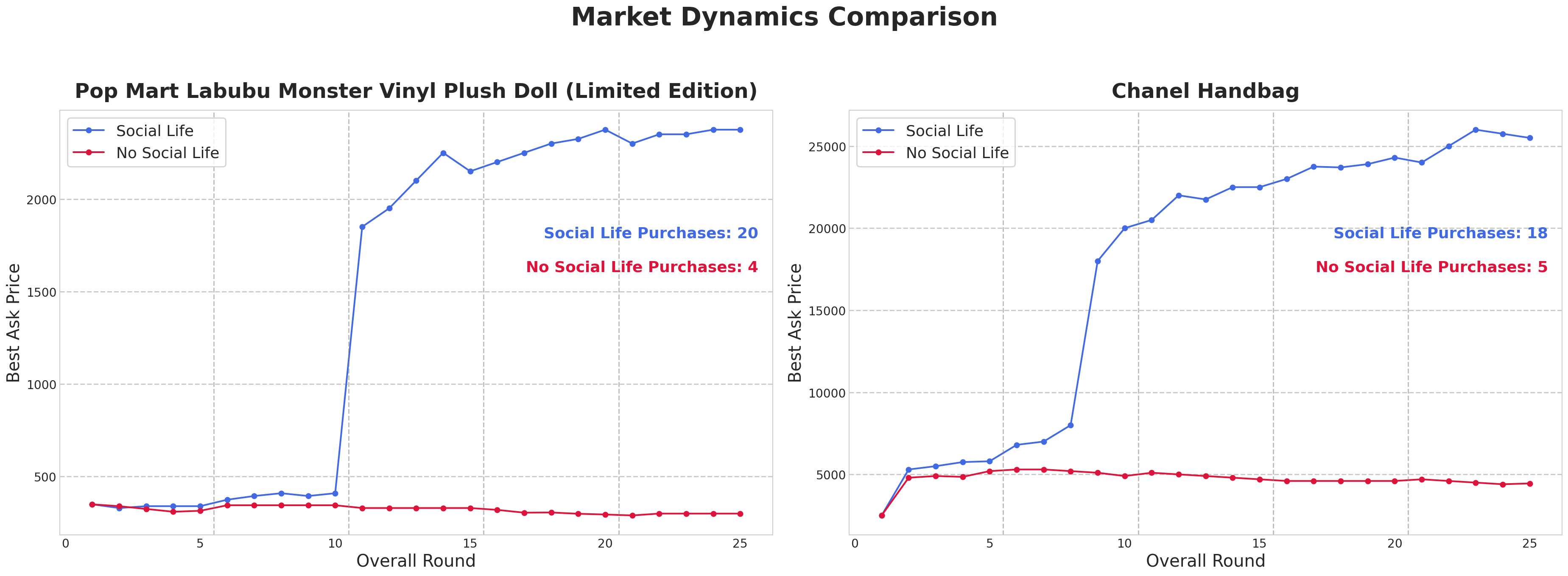
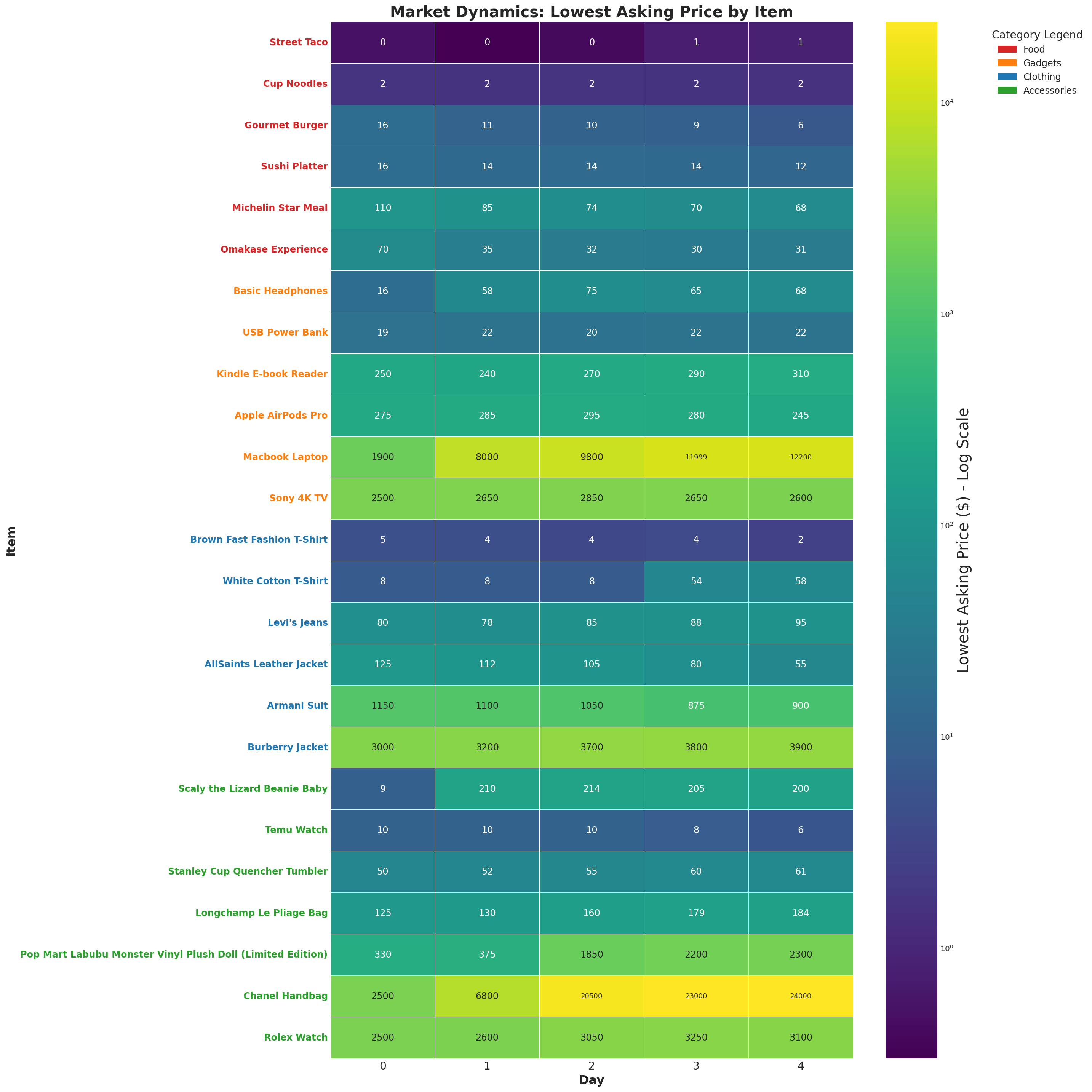
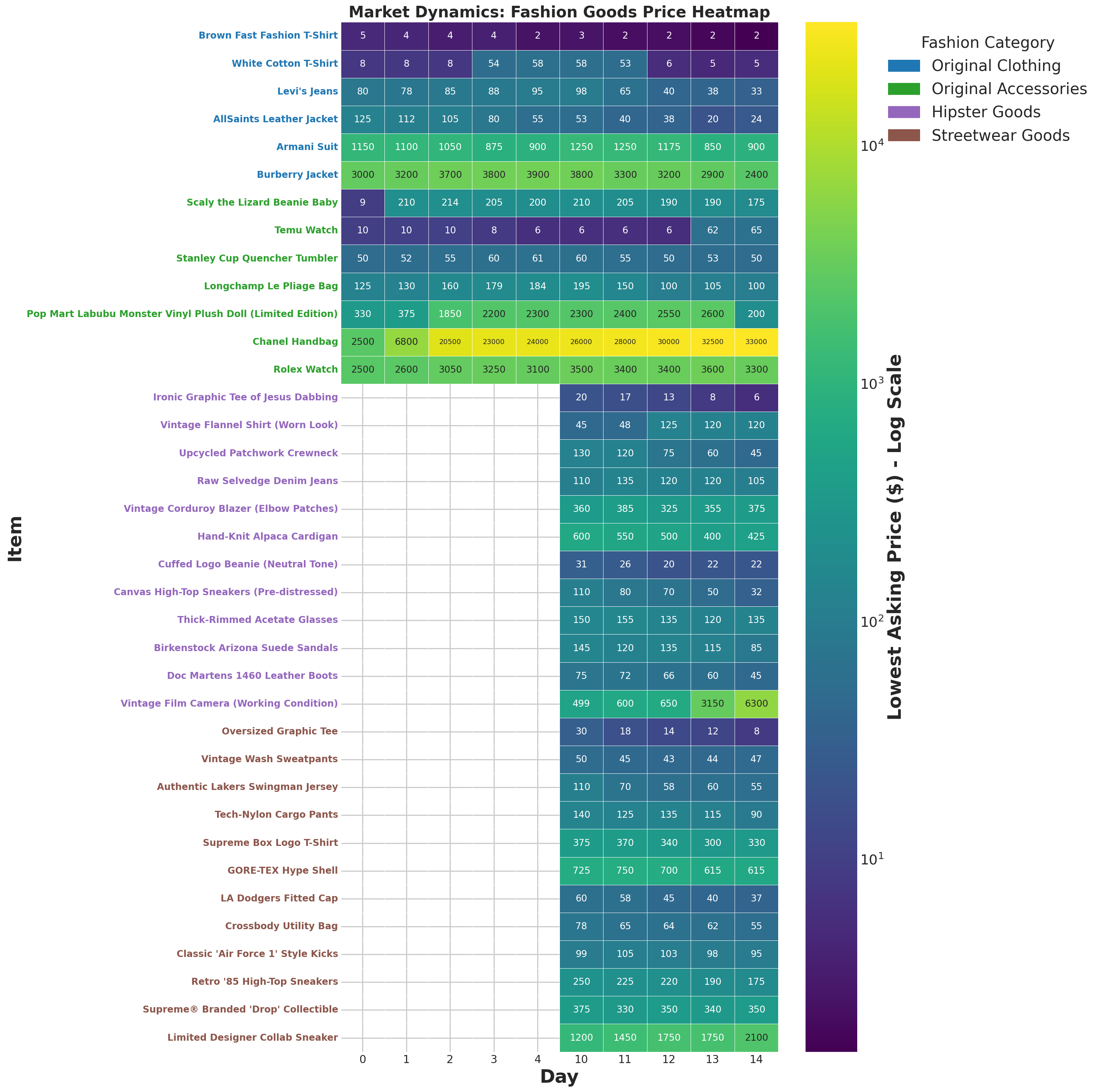
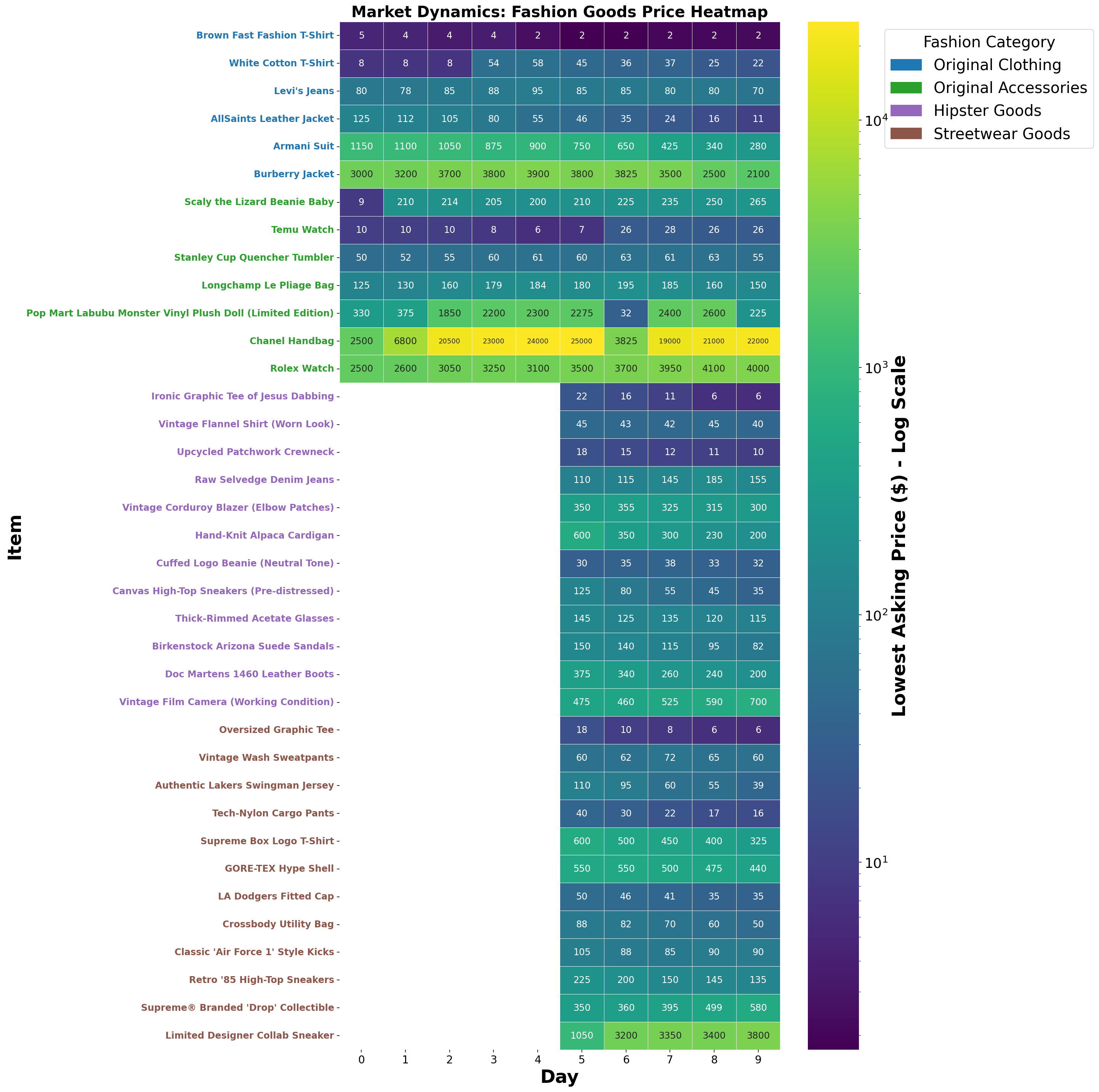
- In the social condition, prices for luxury items and trendy collectibles ran up over time (a hype cycle).
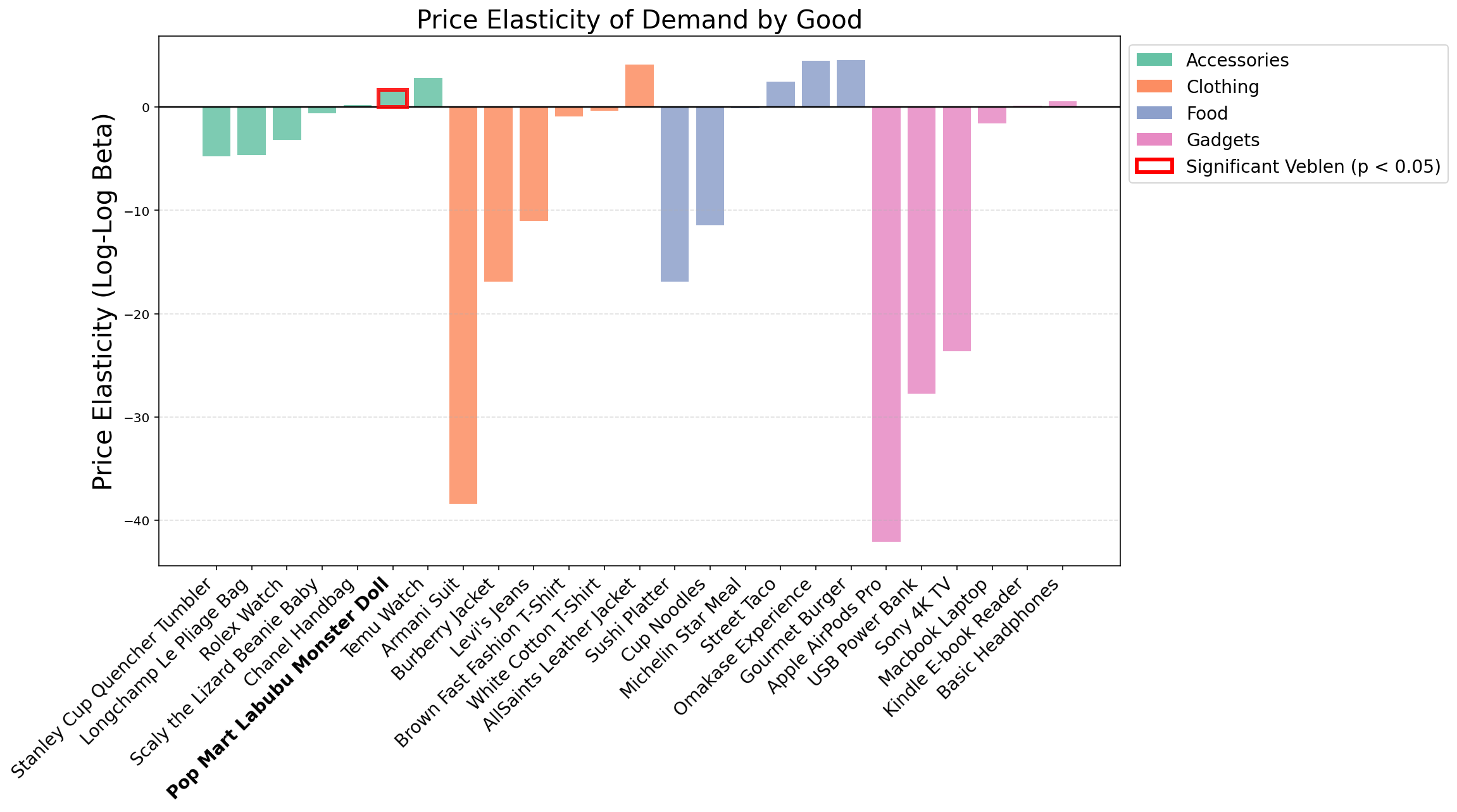
- One example was “Labubu,” a collectible toy that the AI didn’t necessarily “know” as famous beforehand. It got hyped in the sim and behaved like a status item anyway.
- This shows rising prices and demand can emerge from social buzz—not just because things are objectively “better.”
- It’s not just about famous brands:
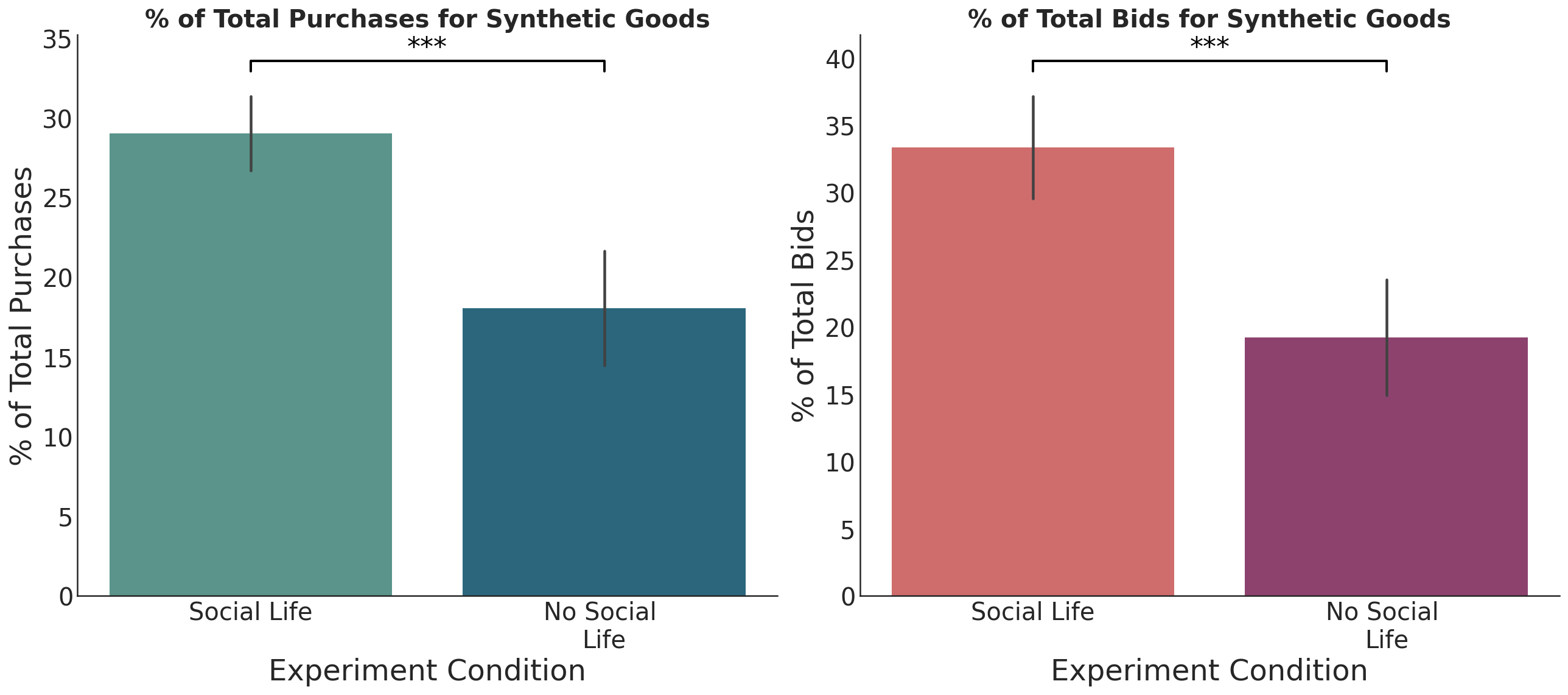
- Made-up brands with no real-world reputation also became status symbols when they were visible in social interactions.
- This rules out the idea that results were only due to the AI’s training on famous brands.
- Social contagion beats price alone:
- When the researchers fixed prices (so cost didn’t move), status purchases still went up more in the social condition.
- This means social exposure itself—seeing, talking, being praised—drives demand.
- Not only about money:
- Similar effects showed up for non-monetary signals:
- Agents were more likely to publicly share political opinions, donate in a visible way, or adopt arbitrary markers (like a profile banner color) when those actions were socially visible and reinforced.
- This suggests the same “copy what feels appropriate” mechanism works for behaviors as well as products.
- Subcultures can form:
- “Influencer” agents who praised or criticized choices could steer groups toward distinct tastes, creating different subcultures.
- Culture and context matter:
- The team also compared agents with different cultural backgrounds (e.g., Los Angeles vs. Kerala, India).
- Even for arbitrary choices (like coffee preference or banner colors), groups could settle on different norms based on their starting cultural context plus social exposure.
- This shows trends are path-dependent: once a group starts leaning toward something, imitation can lock it in.
Why this research is important
- It connects the small and the big:
- The paper links individual thinking (“What do people like me do here?”) to large-scale outcomes (trends, price spikes, subcultures).
- It challenges a simple “expensive = status” story:
- Cost can matter, but visibility, praise, and fit-with-your-group often matter more.
- It helps explain real-world hype cycles:
- From fashion to internet memes, the model shows how buzz and copying can rapidly create or kill trends.
- It offers a new tool for social science:
- The authors provide an open-source framework so researchers can simulate how cultural conventions might emerge and test predictions before they happen in the real world.
- Practical uses:
- Marketers, platform designers, and policymakers could use these ideas to forecast viral trends, understand how public signals spread, and design better systems for information sharing and community norms.
Bottom line
People often copy what feels appropriate for their group and situation, especially when others can see and react to their choices. That visibility creates feedback loops: what we see shapes what we want, which shapes what others see next. Using AI “societies,” this paper shows how that simple loop can turn ordinary objects or behaviors—expensive or cheap, famous or invented—into powerful status symbols, and how subcultures and trends can emerge from everyday social interactions.
Knowledge Gaps
Knowledge gaps, limitations, and open questions
Below is a single, concrete list of what remains missing, uncertain, or unexplored in the paper, framed to guide follow-up research.
- External validity: To what extent do LLM-agent dynamics predict human behavior in real social settings? Direct human experiments or field data that test the model’s specific predictions (e.g., Veblen elasticity under controlled visibility) are not reported.
- Model generality across LLMs: Results are shown with Gemma-3-27B; robustness to different architectures, sizes, RLHF variants, and non-instruction-tuned models is unknown.
- Pretraining bias residuals: Although synthetic brands are used, residual brand/semantic priors and RLHF social-desirability biases may still shape agent choices. How much behavior is attributable to base-model priors vs in-context social exposure?
- Measurement of “appropriateness”: The theory hinges on appropriateness/predictive pattern completion, but there is no quantitative operationalization of appropriateness or direct measurement of observers’ trait inferences and norm perception.
- Mechanistic ablations: Which cognitive components (memory, retrieval, reflection, “logic of appropriateness” prompts) are necessary/sufficient for status dynamics? Ablations and sensitivity analyses of memory window, decay/forgetting, and retrieval weighting are missing.
- Causal identification beyond price controls: The price-fixed control suggests social contagion, but systematic factorial manipulations that independently vary cost, scarcity, visibility, and sanction risk are needed to adjudicate against Costly Signaling Theory across parameter regimes.
- Price elasticity estimation: Claims of Veblen effects are not accompanied by rigorous demand-curve estimation (e.g., price–quantity slope, elasticity confidence intervals) or model comparisons over time; methods for computing elasticity are unspecified.
- Market microstructure realism: The clearing-house mechanism, seller strategies, inventory constraints, and their dynamics are under-specified; it is unclear how ask-price updates, unsold inventory, or strategic pricing contribute to “price run-ups.”
- Supply and scarcity: Do run-ups depend on exogenous scarcity or inventory shocks? Systematic variation of supply (stock, restocking rates) and rarity is not reported.
- Time horizon: Simulations last 5 days. Are trend genesis, saturation, decay, and cycles (fashion obsolescence, tipping points, reversals) reproduced on longer horizons?
- Social context narrowness: Social interaction is modeled as mixed-sex “first dates.” Do results generalize to other contexts (friend groups, co-workers, family, online-only networks, status markets unrelated to mating)?
- Network structure and dose–response: The on/off “social life” manipulation is coarse. How do degree, clustering, centrality, homophily, weak ties, and exposure frequency quantitatively modulate contagion and equilibrium selection?
- Influencer dynamics: The abstract claims “influencer” agents can create subcultures via targeted sanctioning, but the paper lacks details on influencer selection, network position, sanction mechanisms, and quantitative effects on convention bifurcation.
- Sanctioning formalization: Negative and positive feedback are mentioned, but there is no explicit model of sanctions (intensity, credibility, audience size, memory persistence) or tests of how sanction costs and detection risk shape cheap vs costly signals.
- Outcome payoffs: The model shows increased status purchases, but does status behavior yield social or material rewards (e.g., higher partner approval, cooperation, future selection)? Downstream fitness-like payoffs are not measured.
- Counter-signaling and anti-conformity: Do agents ever adopt counter-signals (e.g., conspicuous simplicity) when a signal becomes too common? Tests for snob vs bandwagon effects and their switching conditions are absent.
- Trait inference validity: The framework assumes observers infer desirable traits from signals. Are such inferences measured, validated, and linked to subsequent partner choice or trust decisions within the simulation?
- Cross-cultural mechanisms: LA vs Kerala personas are introduced, but concrete results disentangling long-run cultural priors from in-context social exposure are not shown; how do priors, language, and stereotypes in the base model bias convention selection?
- Mixed-population interactions: What happens when culturally distinct populations interact? Do misaligned semiotic codes produce misinterpretation costs, polarization, or hybrid conventions?
- Non-monetary domains breadth: Political reposting and conspicuous charity are included, but high-cost rituals, taboo signals, deviance, and politically asymmetric sanction environments are not explored.
- Visibility granularity: Only binary visibility is manipulated. How do partial visibility (small audiences), private signals, or delayed/indirect observability affect adoption and persistence?
- Parameter sensitivity and scale: Robustness to agent count, wealth distribution shape, income dynamics, credit/debt, and budget shocks is not reported; scaling laws for convention formation remain unknown.
- Memory dynamics: The “weight of precedent” conjecture lacks tests of forgetting, recency effects, memory capacity constraints, and interference; do short vs long memory windows change tipping dynamics?
- Heterogeneity of susceptibility: Agents’ thresholds for influence, conformity preferences, risk aversion, and personality differences are not parameterized or tested for differential effects on contagion.
- Exogenous shocks: How do marketing bursts, algorithmic feed changes, scandals, or policy shocks alter convention trajectories and equilibria within the model?
- Manipulation and bots: Can coordinated agent “bots” or adversarial influencers hijack conventions? What defenses (sanction strength, credibility checks) prevent synthetic cascades?
- Ethical implications: Risks of reproducing stereotypes, amplifying harmful conventions, or misuse of “influencer” levers are not discussed; governance and safeguards for simulation outputs are unspecified.
- Statistical rigor: With 10 seeds, uncertainty quantification may be limited; multiple-comparison controls, effect sizes, and power analyses are not detailed.
- Reproducibility constraints: The dependence on a specific large model and orchestration stack may limit replication; results across open models or smaller footprints are not shown.
- Formal theory development: Beyond Conjecture 1, there is no formal model specifying conditions for equilibrium selection, basins of attraction, bifurcations, or closed-form predictions linking network parameters to adoption rates.
- Multi-modal perception: “Visual” exposure is textualized. Do results hold with actual multimodal inputs (images/video), where aesthetic form and subtle style cues may be critical to status meaning?
- Welfare and inequality: The macro-level consequences (e.g., inequality amplification, waste, coordination failures) of status dynamics are not analyzed; who wins/loses under emergent conventions?
- Benchmarking vs alternative theories: Systematic horse-race comparisons (predictive accuracy, out-of-sample fit) between the appropriateness model and CST/indirect reciprocity models are not conducted.
- Pre-registration and falsifiability: Specific, pre-registered quantitative predictions that could falsify the theory (e.g., threshold values, elasticity signs under defined manipulations) are not articulated.
Practical Applications
Immediate Applications
Below is a concise set of actionable use cases that can be deployed now, derived from the paper’s methods and findings.
- Industry (Marketing and Product Strategy): Run pre-launch “status contagion” simulations in Concordia to forecast whether a new product could become a status symbol, identify tipping points, and optimize influencer seeding and social visibility levers.
- Potential tools/workflows: Concordia Signaling examples; a “Influencer Seeding Optimizer” that tests which nodes (influencers) accelerate subculture formation; scenario libraries for luxury vs mass-market launches.
- Dependencies/assumptions: LLM agent priors match your target audience; scenario calibration to your market; ethical approvals for any human-in-the-loop validation.
- Industry (Retail/E-commerce): Design drop strategies and inventory gating for limited editions by simulating price run-ups and Veblen phases; test copy/visual cues that maximize perceived appropriateness and social proof.
- Potential tools/workflows: A/B-tested marketplace narratives; social exposure toggles in product detail pages; beta “Status Run-Up Monitor” to detect demand spikes.
- Dependencies/assumptions: Data on target customer personas; platform capability to manipulate social proof features; mitigation plans for hype-induced consumer harm.
- Industry (Social Platforms): Prototype feed interventions that modulate visibility of signals (e.g., virtue signaling, conspicuous altruism) and measure downstream behavioral shifts.
- Potential tools/workflows: Simulation-backed policy experiments (e.g., reduced public counters, delayed reaction counts); “Visibility Elasticity” dashboards linking signal visibility to engagement and spread.
- Dependencies/assumptions: Governance and trust & safety guardrails; clear outcome metrics; alignment with platform community standards.
- Finance (Luxury and Collectibles): Use agent-based simulations to stress test pricing, detect early bubble dynamics in collectibles, and evaluate how social visibility (events, celebrity wear) alters elasticity.
- Potential tools/workflows: “Veblen Risk Scanner” for luxury portfolios; synthetic goods simulations to remove entrenched brand priors and isolate contagion.
- Dependencies/assumptions: Proper mapping from simulated to real market segments; careful interpretation of short horizons (5-day sim) vs real cycles.
- Policy (Consumer Protection and Advertising Standards): Run regulatory “sandbox” simulations to evaluate disclosure rules for influencer marketing and social proof limits that reduce manipulative status cascades.
- Potential tools/workflows: Concordia-based policy pilots comparing visible vs non-visible endorsements; outcome trackers for price run-ups and vulnerable group exposure.
- Dependencies/assumptions: Multi-stakeholder engagement; ethical review; jurisdictional differences in advertising law.
- Public Interest Campaigns (Altruism, Civic Engagement): Design campaigns that harness conspicuous altruism (named donations, social recognition) while testing when anonymous options reduce performativity and polarization.
- Potential tools/workflows: “Conspicuous Altruism Simulator” to balance recognition with equity; playbooks for laddered visibility options (e.g., opt-in listing).
- Dependencies/assumptions: Community norms vary widely; careful framing to avoid backlash or virtue-signaling fatigue.
- Academia (Computational Social Science): Use the open-source Concordia signaling examples to replicate and extend endogenous preference formation studies; test falsifiable predictions about cultural convention emergence.
- Potential tools/workflows: Course modules; standardized scenario libraries (political expression, neutral markers, consumption choices); cross-cultural persona sets.
- Dependencies/assumptions: Reproducibility with specific model versions (e.g., Gemma-3-27B); documentation and seed control; IRB considerations for human comparisons.
- Organizational Behavior and Culture Design: Prototype internal recognition systems to encourage pro-social behaviors (mentoring, documentation), testing visibility levels that create sustainable norms without perverse incentives.
- Potential tools/workflows: “Norm Tuning” experiments with visibility and sanctioning; surveys aligned to appropriateness rather than pure cost.
- Dependencies/assumptions: Organizational buy-in; robust measurement of long-term effects; safeguards against status contests.
- Education (Media Literacy and Consumer Awareness): Develop modules that help learners identify status-driven consumption and social contagion patterns, and practice counter-signaling or “de-signalization” strategies.
- Potential tools/workflows: Interactive Concordia scenarios; reflection prompts that encode “weight of precedent” effects into personal decision-making.
- Dependencies/assumptions: Age-appropriate content; cultural adaptation; teacher training.
Long-Term Applications
The following opportunities likely require further research, scaling, integration with real-world data, or productization.
- Industry (Norm Forecasting as a Service): Build real-time “Cultural Convention Forecasting” engines that ingest social exposure data (e.g., platform signals, influencer activity) and predict emerging status symbols and subcultures.
- Potential tools/products: Norm forecasting dashboards; API integrations with social platforms; alerts for trend tipping points.
- Dependencies/assumptions: Access to live data; robust calibration and validation; privacy-preserving pipelines.
- Policy (Hype and Bubble Early Warning Systems): Institutionalize simulation-backed monitoring for hype-induced price run-ups in consumer markets (luxury, collectibles, digital goods); integrate into consumer protection and antitrust toolkits.
- Potential tools/products: “Hype Radar” integrated with price/engagement feeds; scenario-based stress tests before major drops.
- Dependencies/assumptions: Regulatory mandates and data access; false-positive control; cross-market comparability.
- Social Platforms (Algorithmic Governance of Visibility): Formalize visibility control policies (e.g., reaction counters, exposure caps for status signals) and conduct longitudinal trials to reduce harmful cascades (polarization, misinformation, predatory hype).
- Potential tools/products: Policy experiment environments; multi-objective optimization balancing engagement, well-being, and integrity.
- Dependencies/assumptions: Ethical frameworks; user transparency; rigorous outcome evaluation.
- Behavioral Economics (Demand Models with Social Exposure): Integrate “weight of precedent” into mainstream demand forecasting and marketing mix models to capture context-sensitive Veblen effects and contagion-driven preference shifts.
- Potential tools/products: Hybrid econometric–agent-based toolkits; consulting playbooks for brands.
- Dependencies/assumptions: Acceptance in industry practice; data-sharing for calibration; careful handling of identifiability.
- Cross-Cultural Design and Localization: Develop pipelines that blend long-term cultural priors (e.g., Kerala vs Los Angeles personas) with fast social influence parameters to tailor products, messages, and norms to local contexts.
- Potential tools/products: Culture-aware scenario generators; adaptive content localization engines.
- Dependencies/assumptions: Accurate representation of cultural priors; continual updates; stakeholder consultation.
- Public Health and Climate Action: Engineer prosocial signals (e.g., visible commitments to sustainable behaviors) and simulate appropriation-based diffusion to design effective, context-sensitive interventions.
- Potential tools/products: “Prosocial Signal Labs” that test framing and visibility effects (e.g., badges for climate-friendly choices).
- Dependencies/assumptions: Domain-specific ethical oversight; avoidance of performative backlash; long-horizon measurement.
- AI Safety and Socially Aware Agents: Train social robots or AI assistants to act via appropriateness (predictive pattern completion) to better navigate norms, sanctions, and status dynamics in human environments.
- Potential tools/products: Norm-sensitive policy modules; simulation-based pretraining for social contexts.
- Dependencies/assumptions: Robust norm detection; avoidance of manipulative behavior; alignment with human values.
- Corporate Governance (Ethical Marketing Standards): Co-develop industry codes around status-based marketing, influencer sanctioning, and social proof usage, informed by simulation-backed evidence about consumer harm.
- Potential tools/products: Auditable guidelines; certification programs.
- Dependencies/assumptions: Industry coalitions; compliance incentives; third-party audits.
- Education and Research Infrastructure: Create shared benchmark suites for endogenous preference formation, with open datasets and standardized protocols to compare models, scenarios, and cultural contexts.
- Potential tools/products: Community-maintained repositories; leaderboards for reproducible social simulations.
- Dependencies/assumptions: Funding for maintenance; versioning standards; diverse participation.
- Measurement and Ethics: Develop formal metrics for semiotic appropriateness, status effects, and sanctioning power; build ethical review frameworks for interventions that intentionally modulate social visibility.
- Potential tools/products: Appropriateness indices; sanction risk measures; ethics toolkits for product teams.
- Dependencies/assumptions: Interdisciplinary consensus; ongoing evaluation; legal compatibility across regions.
Glossary
- Bid-ask band: The range between the lowest asking price and highest bid in a market at a given time, reflecting current liquidity and valuation. "we observed distinct 'price run-ups' characterized by an aggressive upward shift in the bid-ask band and prices."
- Clearing-house mechanism: A market process that matches bids and offers to determine transaction prices without direct pairwise negotiation. "The marketplace runs for 5 rounds each simulated day using a clearing-house mechanism to determine prices based on agent bids and seller offers."
- Concordia framework: A simulation platform for building and studying LLM-powered generative agents interacting in social environments. "We validate this theory using simulations of groups of LLM-based agents in the Concordia framework."
- Conspicuous altruism: Publicly visible prosocial acts that may function as status signals due to their observability. "2. Conspicuous Altruism (Charity)"
- Conspicuous consumption: Purchasing and displaying goods primarily to signal status rather than purely for functional utility. "Costly Signaling Theory (CST) explains conspicuous consumption by treating expenditure as a credible signal of status because the cost is hard to fake for low status individuals"
- Costly Signaling Theory (CST): A framework where signals are credible because they are expensive or hard to fake for lower-quality types, ensuring honesty. "Costly Signaling Theory (CST) explains conspicuous consumption by treating expenditure as a credible signal of status"
- Credibility Enhancing Displays (CREDs): Costly behaviors that signal genuine belief or commitment, making deception difficult. "Similarly, Credibility Enhancing Displays (CREDs) such as martyrdom, celibacy, or painful rituals serve as costly signals"
- Cultural capital: Non-financial social assets (knowledge, tastes, education) that confer status and enable navigation of cultural norms. "Here, cultural capital functions as the reputation system"
- Dyads: Pairs of individuals engaged in an interaction or relationship, often used in social science experiments. "agents are paired into mixed-sex dyads for a 'first date' scenario"
- Ecological validity: The extent to which study conditions mirror real-world contexts and behaviors. "Experiments in the lab struggle with ecological validity and making status and visibility realistic without losing control"
- Endogenous preference formation: The process by which preferences are shaped by social interaction and experience within the system, rather than fixed externally. "endogenous preference formation (the process where desires are shaped by social interaction, rather than being fixed or innate)"
- Equilibrium selection: The problem of how groups converge on one of multiple possible stable conventions or equilibria. "the value of a symbol emerges through equilibrium selection"
- Exogenous assumption: A model assumption set externally and not determined by the system’s internal dynamics. "the signal's payoffs as a static, exogenous assumption"
- Fixed-price control: An experimental condition holding prices constant to isolate causal effects unrelated to price changes. "Our fixed-price control resolves this ambiguity"
- Generative agent-based modeling: Simulation of interacting agents powered by generative models (e.g., LLMs) to study emergent social phenomena. "We employ generative agent-based modeling using the Concordia framework"
- Habitus: An internalized set of dispositions and perceptions that guide behavior in line with social norms and status codes. "developing a habitus — an intuitive sense for the “rules of the game” coined by sociologist Pierre Bourdieu"
- Identification problem: Difficulty in distinguishing causal relationships when multiple factors co-vary in observational data. "presents a identification problem: disentangling whether a high price causes high demand"
- Indirect reciprocity: Cooperation maintained through reputation in a community, where helping someone enhances one’s standing with others. "evolutionary models of indirect reciprocity and reputation"
- Law of Demand: The economic principle that quantity demanded typically decreases as price increases, all else equal. "as the Law of Demand posits that demand falls when prices rise"
- Neutral markers: Low-cost, arbitrary signals (e.g., accents, badges) used to indicate group membership or identity. "Research on neutral markers demonstrates that nearly costless behaviors can emerge as in-group signaling conventions."
- Over-imitation: The human tendency to copy all aspects of observed behavior, including causally unnecessary steps. "comparative 'over-imitation' experiments"
- Positive price elasticity: A situation where demand increases with price, contrary to standard demand theory (often associated with Veblen goods). "positive price elasticity (Veblen effects)"
- Predictive pattern completion: A generative mechanism where agents infer and produce context-appropriate actions by completing learned cultural patterns. "Predictive pattern completion conceptualizes humans as culturally trained generative models"
- Prestige-biased transmission: A learning heuristic where individuals preferentially copy behaviors of high-status models. "prestige-biased transmission, imitating the behaviors of high status individuals"
- Price run-ups: Rapid increases in observed market prices over time, often driven by rising demand or hype. "We observe the emergence of price run-ups and positive price elasticity (Veblen effects)"
- Revealed preferences: Preferences inferred from observed choices and behaviors rather than stated intentions. "while measuring the emergent outcomes and revealed preferences of the agents"
- Semiotic appropriateness: The fit between a signal and its social meaning in a given context from the observer’s perspective. "semiotic appropriatenessâhow observers interpret a signaling action given precedent, social role, context, and shared cultural expectations."
- Semiotic code: A system of culturally shared symbols and meanings that guide interpretation of social signals. "these accumulated signals coalesce into a dynamic semiotic code"
- Social contagion: The spread of behaviors, ideas, or preferences through social networks via observation and imitation. "As this process spreads, social contagion leads to a co-constitution of a convention or social norm."
- Social diffusion: The process by which signals, practices, or innovations spread through a population over time. "signals acquire value through social diffusion"
- Social sanctioning: Positive or negative feedback from others that enforces norms and influences future behavior. "Through a cycle of imitation and peer sanctioning, humans learn to produce symbols"
- Standard Error of the Mean (SEM): A statistic quantifying the precision of the sample mean estimate across repeated samples. "Error bars represent SEM for 10 seeds."
- Theory of appropriateness: A behavioral model where actions are selected based on what is deemed appropriate for one’s role and context, rather than utility maximization. "we propose a computational theory of status grounded in the theory of appropriateness"
- Thick descriptions: Rich contextual accounts that capture nuanced meanings and social cues in cultural settings. "LLMs can directly process and generate the 'thick descriptions' required to navigate nuanced social realities."
- Third-party punishment (TPP): Punishment of norm violators by observers who are not directly harmed, often used as a credibility signal. "individuals use costly signals, such as third-party punishment (TPP) of norm violators"
- Veblen effects: Demand patterns where higher prices increase desirability due to status signaling. "positive price elasticity (Veblen effects)"
- Veblen good: A good for which demand rises as price increases because the high price itself signals status. "meaning Labubu became a Veblen good."
- Veblenian inversion: A cultural shift where previously low-status costly behaviors become high-status, or vice versa. "modern life has demonstrated a Veblenian inversion"
- Virtue signaling: Public expression of moral positions primarily to display one’s values or group affiliation. "1. Political Social Media (Virtue Signaling)"
- Weight of precedent: The influence of accumulated observed examples in memory on the likelihood of choosing a behavior. "provides new memories that increase the counterfactual weight of precedent for ."
Collections
Sign up for free to add this paper to one or more collections.