- The paper demonstrates that disordered granular aluminum films achieve high kinetic inductance, enabling miniaturized superconducting resonators.
- The methodology involves DC magnetron sputtering and microwave measurements to assess resonance frequency shifts and quality factor variations influenced by TLS interactions.
- Findings indicate that TLS saturation effects and temperature-dependent behaviors critically impact resonator performance, fostering advancements in quantum circuit design.
Microresonators Fabricated from High-Kinetic-Inductance Aluminum Films
This essay discusses the paper "Microresonators fabricated from high-kinetic-inductance Aluminum films" (1807.00210). The document presents research on superconducting coplanar-waveguide (CPW) resonators made from disordered aluminum films, emphasizing their use in miniaturizing microwave resonators crucial for quantum circuit applications.
Introduction
The study focuses on resonators utilizing the high kinetic inductance of disordered superconducting Aluminum films. These films offer substantial electromagnetic benefits for microwave applications, including kinetic inductance photon detectors and superconducting quantum circuits. The paper proposes granular Al films as a promising candidate for high LK applications.
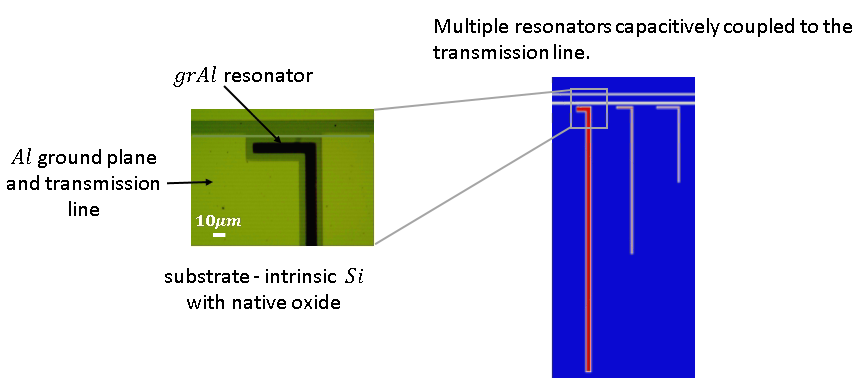
Figure 1: (a) Image of a section of the resonator capacitive coupling with the transmission line; (b) Several resonators with varied resonance frequencies.
Experimental Details
The fabrication of disordered Al films involved DC magnetron sputtering of an aluminum target in an Ar and O2 atmosphere. The resonators comprised nanoscale aluminum grains surrounded partially by AlO\textsubscript{x}, enabling resonance frequencies up to 5 GHz. The setup was primarily geared towards minimizing loss disruptions from the two-level systems (TLS) in the environment.
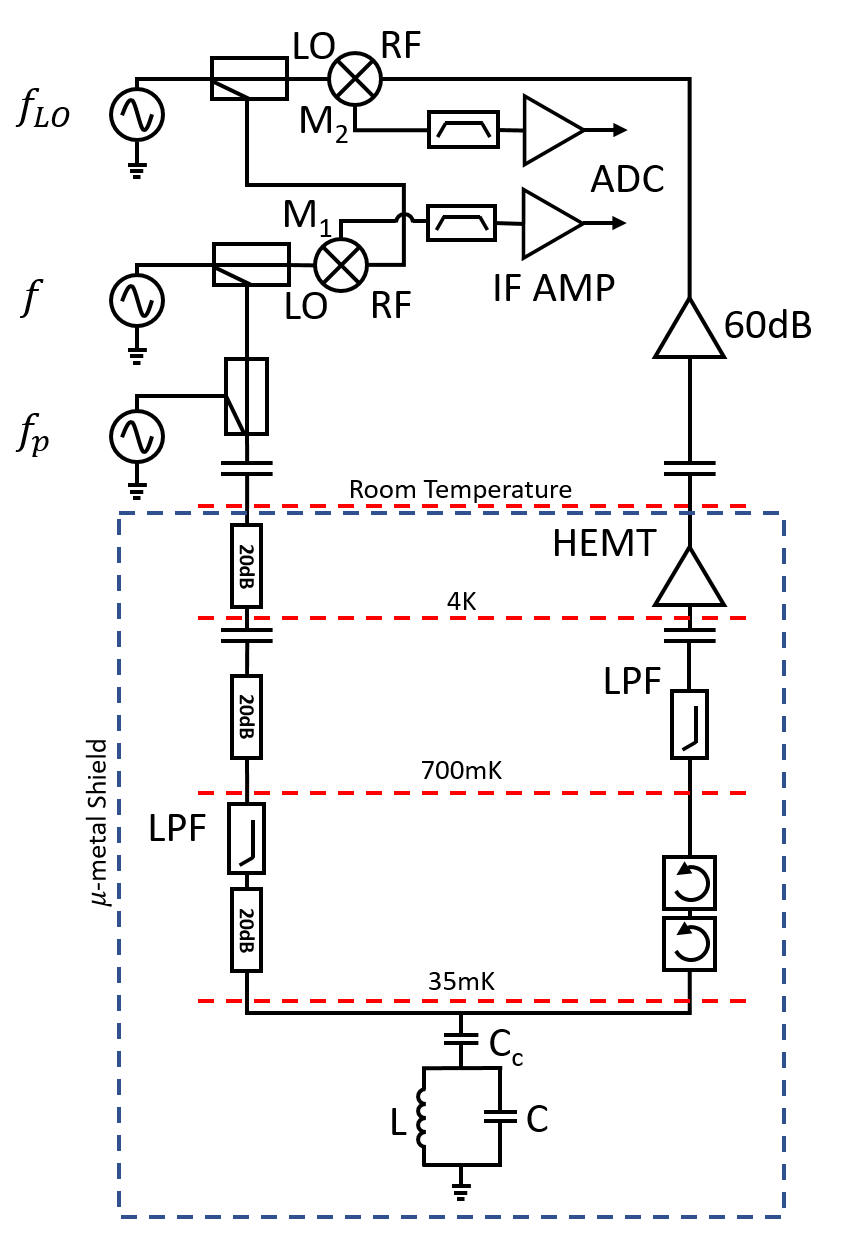
Figure 2: Schematics of the resonator measurement setup utilized throughout the experimental phase.
Microwave Characterization
Microwave characterization determined key resonance parameters across various excitation levels. Determining factors such as the kinetic inductance LK were derived from LK=1/4fr2C, demonstrating values comparable to existing studies on granular Al films. Loss analysis revealed moderate impact from TLS at temperatures below 250 mK, with higher temperatures following the Mattis-Bardeen (MB) theory predictions.
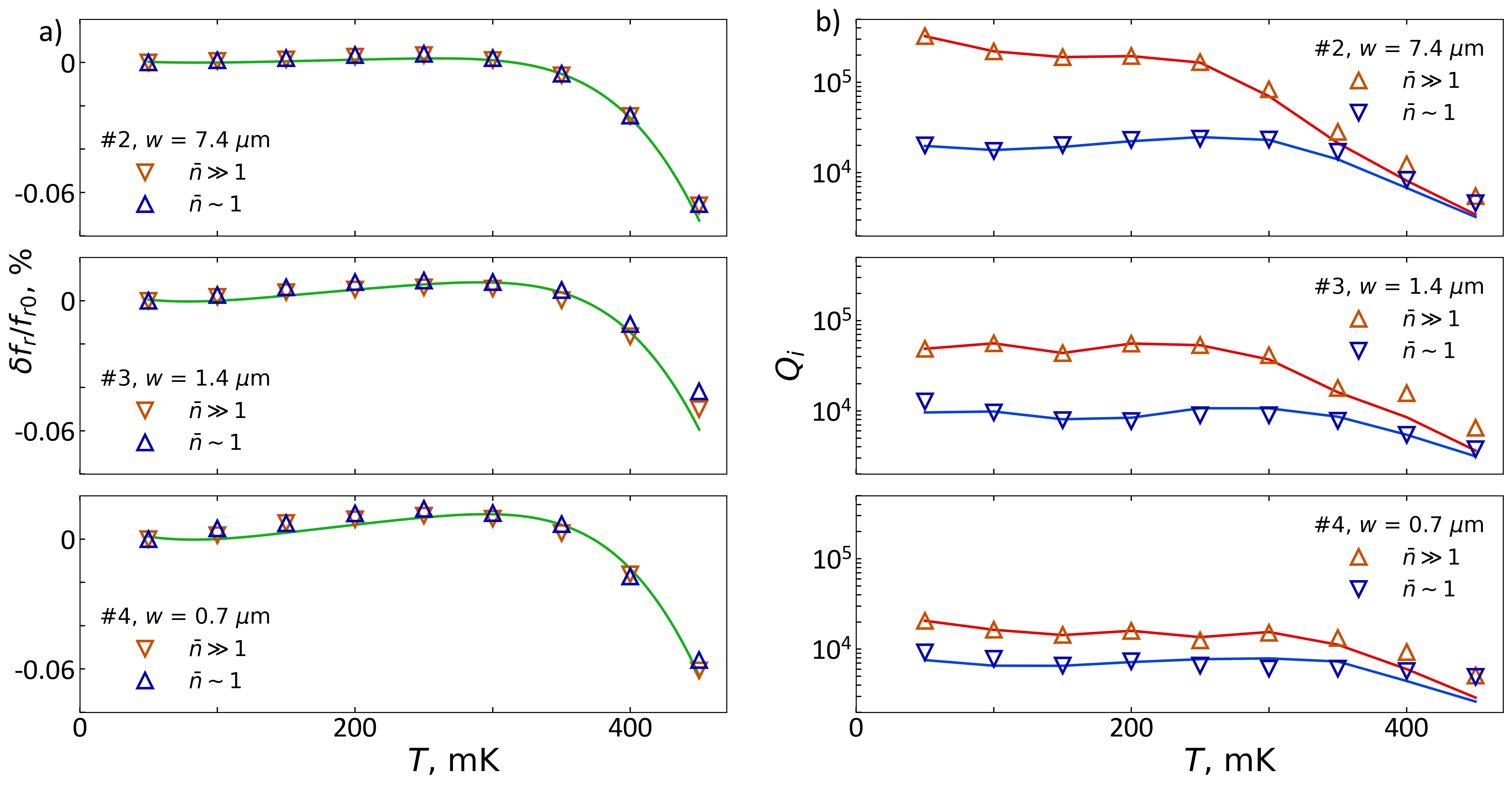
Figure 3: The temperature dependence for resonance frequency shifts due to TLS coupling seen across different resonator samples.
Resonance Frequency Analysis
The study of resonance frequency shifts with varying temperature indicated that TLS coupling critically influenced the frequency when below the diode threshold. Deviations at higher temperatures were consistent with traditional MB superconducting variations reflecting Cooper pair disruption.
Quality Factor Analysis
Intrinsic losses at different power levels exposed TLS-induced modifications. The paper discusses saturation effects, which burn holes in the TLS density of states under high microwave powers, influencing the quality factor Qi(nˉ) scaling. Higher characteristic impedance and narrow strip resonators posed unique challenges in coupling TLS, tightly aligning empirical data with theoretical predictions.
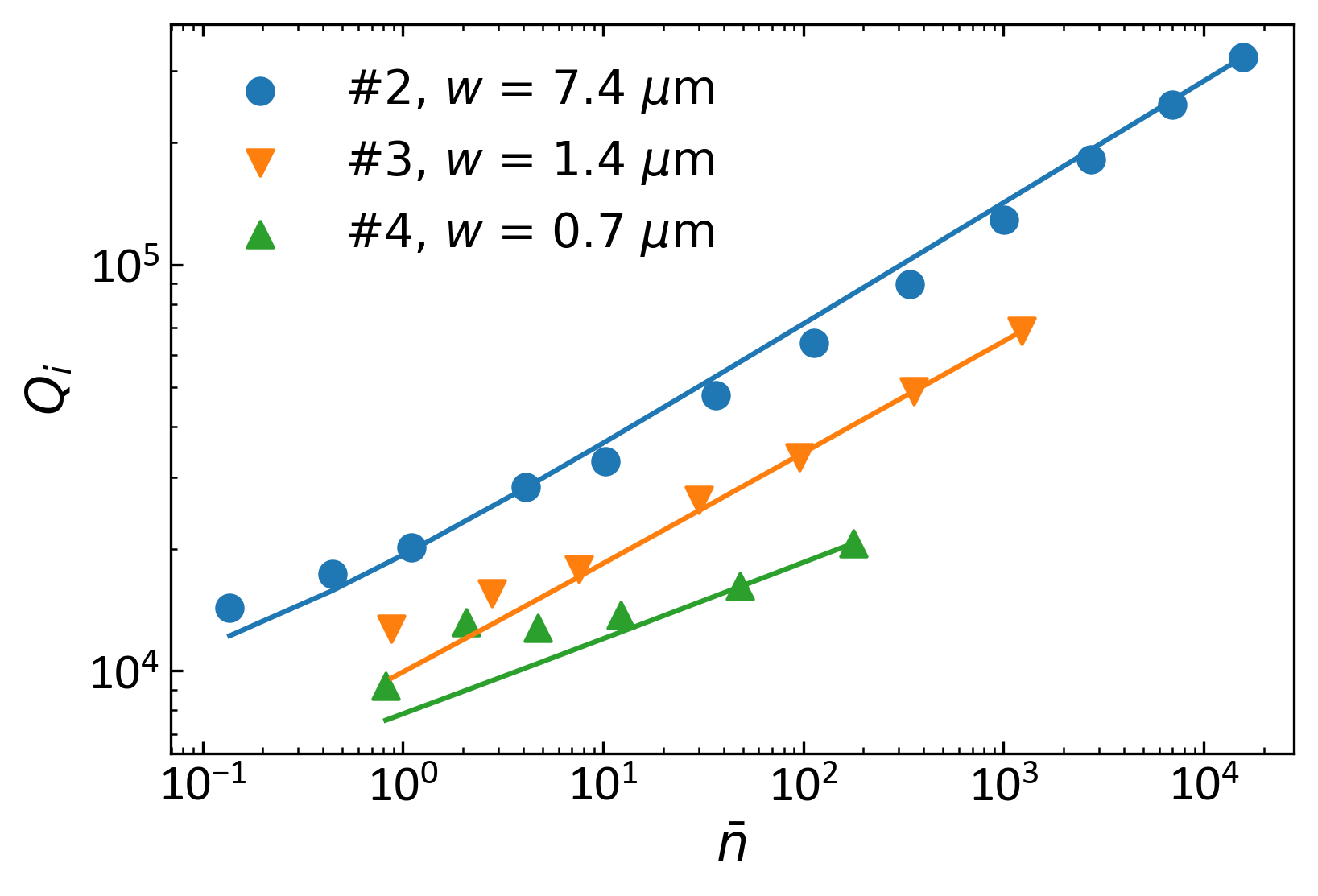
Figure 4: Quality factor variation at base temperatures for resonators with different widths.
Two-Tone and Time-Domain Measurements
The research executed pump-probe experiments to further comprehend TLS-related dissipation. Variations in Qi with different detuning values revealed resonant macro-level TLS dissipation characteristics. Relaxation times were profiled to identify TLS burn effects and resonance exploitation for higher application viability.
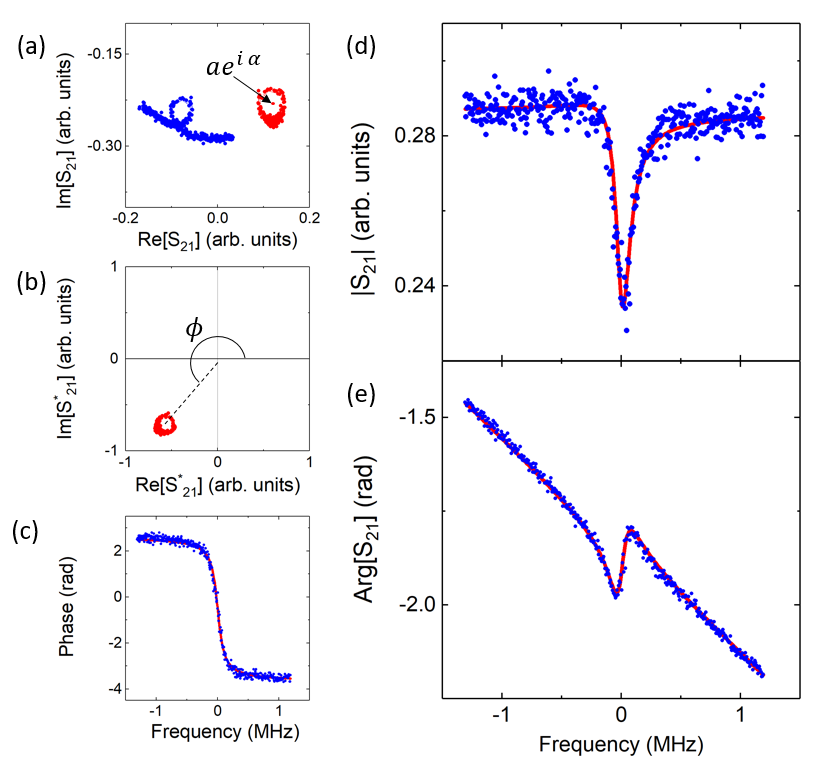
Figure 5: Fitting of phase delay oscillations before and after phase removal, demonstrating circle formation on the IQ plane.
Conclusion
Granular aluminum resonators manifest impressive potential for scalable quantum applications due to their miniaturized format and robust performance amidst challenging TLS interactions. These findings point to promising pathways for further research and application in quantum computing, emphasizing the critical role of superinductors and protected qubit designs.
The research calls for deeper investigation into the electrodynamics of strongly disordered superconductors for microwave applications, ensuring clarity on the superconductor-to-insulator transition.