- The paper introduces Agora, a hybrid protocol that fuses structured routines with natural language for efficient LLM communication.
- It demonstrates a five-fold cost reduction in a 100-agent demo, highlighting improved scalability and decentralized performance.
- The framework effectively addresses the Agent Communication Trilemma by balancing versatility, efficiency, and portability.
A Scalable Communication Protocol for Networks of LLMs
Introduction
The paper "A Scalable Communication Protocol for Networks of LLMs" (2410.11905) presents a novel framework called Agora designed to address the inherent complexities in communication among heterogeneous networks of LLMs. The central goal is to circumvent what the authors term the Agent Communication Trilemma, which encapsulates the challenges of achieving versatile, efficient, and portable communication within LLM-powered networks. The framework is grounded in leveraging both structured data for common communications and natural language for rare ones, thus facilitating robust scalability, decentralization, and minimized human intervention.
The Agent Communication Trilemma
The Agent Communication Trilemma describes the trade-offs involved when attempting to optimize for versatility, efficiency, and portability in agent communications. Traditional rule-based agents face difficulties in adaptability and versatility, whereas LLMs, due to their proficiency in natural language processing, offer potential advantages despite challenges such as computational overhead and non-deterministic behavior.
Agora addresses these challenges by implementing a hybrid communication protocol that employs structured routines for frequent communications while reserving natural language processing for more infrequent or emergent scenarios.
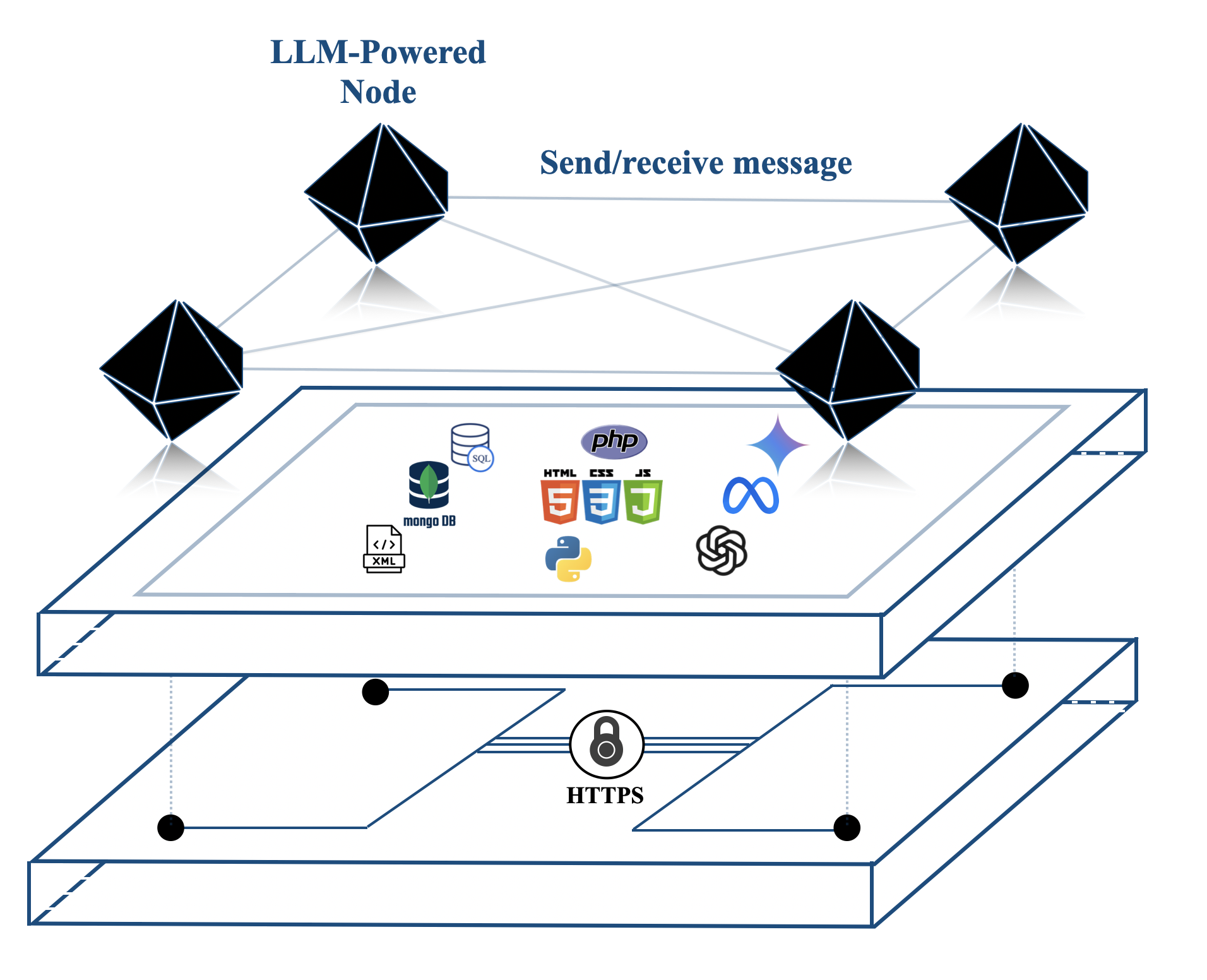
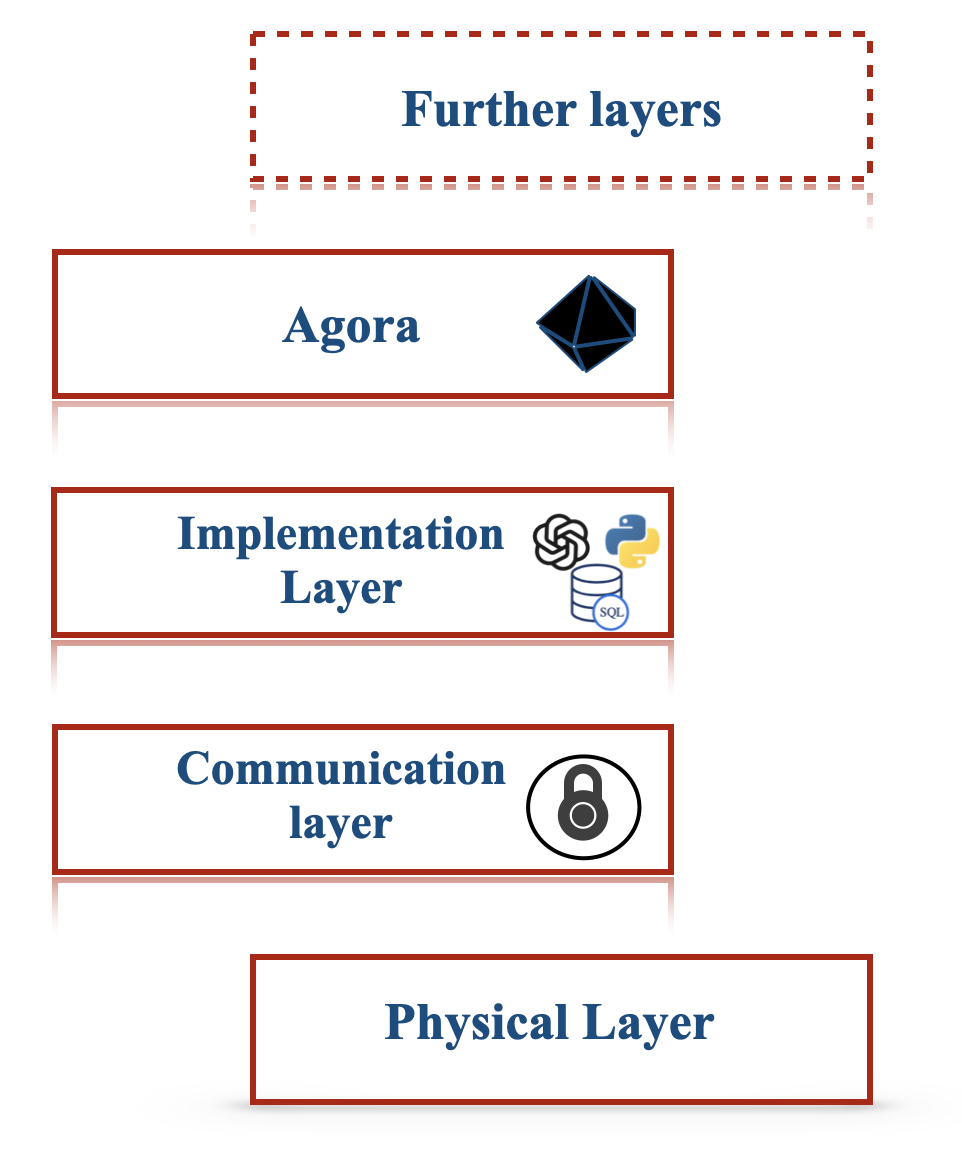
Figure 1: An illustration of Agora and how it abstracts the underlying implementation, communication, and physical layers.
Agora: Communication Protocol Layer
Agora operates as a meta protocol, exploiting the capabilities of LLMs to negotiate, implement, and utilize structured protocols autonomously. The framework introduces protocol documents (PDs), which are JSON-based documents that provide a machine-readable format for communication procedures, aiding in the reduction of reliance on purely natural language exchanges.
The operational hierarchy within Agora involves prioritizing routine-based communication for efficiency whenever possible, leaning on LLMs and natural language only when necessary. This strategy yields a robust solution to the trilemma by balancing the competing demands within the network.
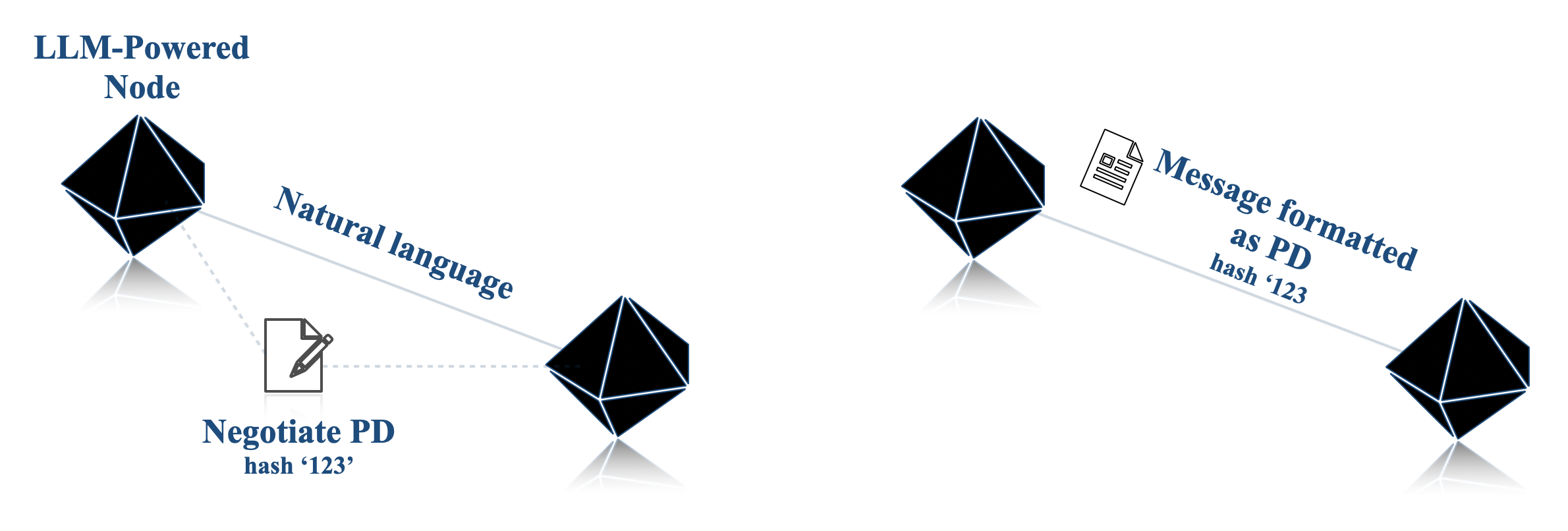
Figure 2: How a protocol document is negotiated between LLM-powered agents (left) and used for future efficient communications.
Practical Implementation and Applications
Agora's implementation underscores its capacity for decentralized scalability, as demonstrated through functional demos ranging from simple two-agent systems to complex networks involving 100 or more agents. The practical applications indicate emergent behaviors where agents autonomously formulate novel communications protocols, thus facilitating highly complex interactions with minimal human oversight.
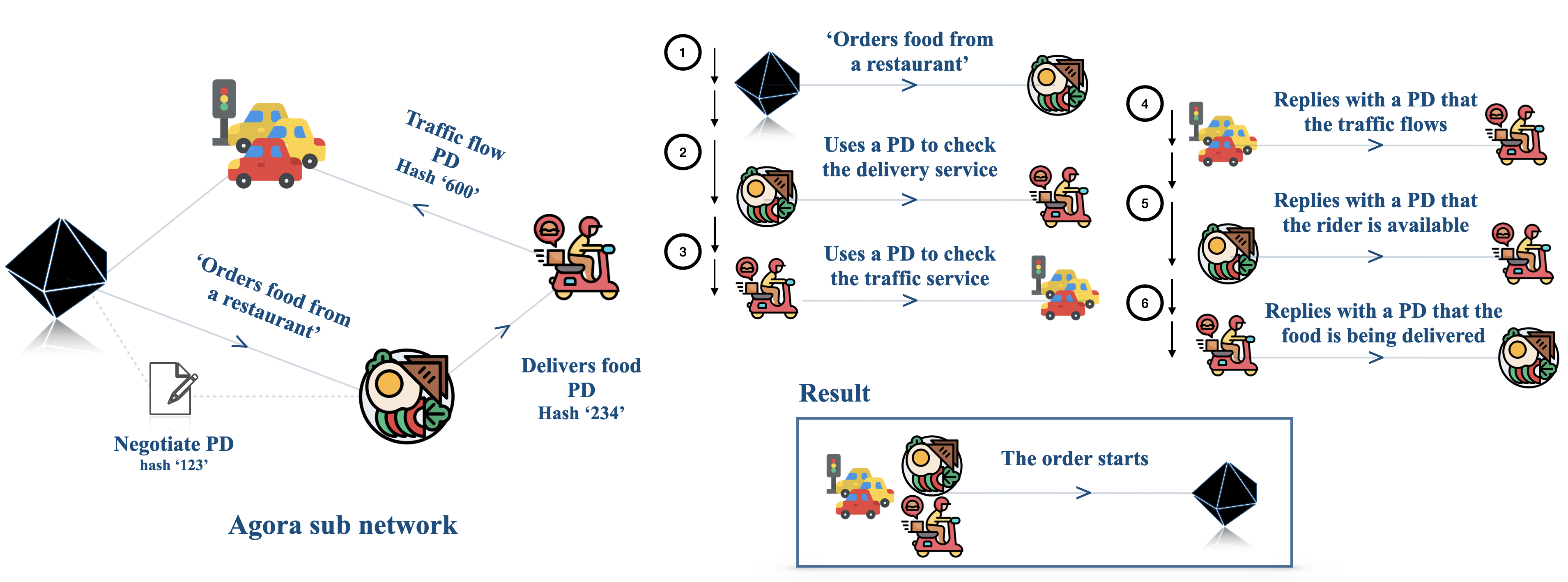
Figure 3: Illustration of how in an Agora network with 100 agents (left; for clarity, only the relevant sub-network is displayed), an emergent protocol for food delivery emerges (right).
Cost Efficiency and Scalability
Evaluating the demo results, the paper demonstrates that Agora significantly reduces costs associated with LLM communications compared to natural language-only systems. In the 100-agent demo, Agora achieved a five-fold cost reduction, indicating substantial efficiency gains due to its capacity to share PDs across the network, minimizing LLM invocation frequency.
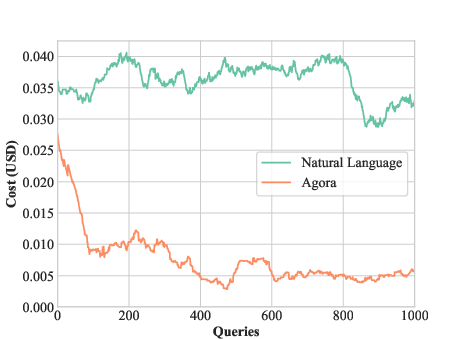
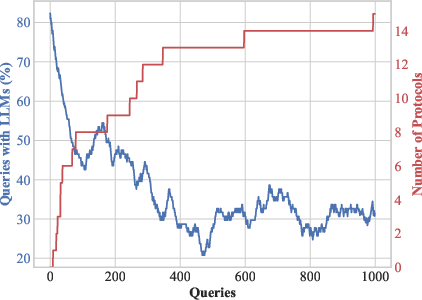
Figure 4: Cost comparison of natural language vs Agora on a network of 100 agents. Costs are averaged with a window size of 100.
Conclusion
Agora presents a transformative approach to enabling scalable, efficient, and versatile communication in networks of LLMs. Through its innovative mixture of structured protocols and dynamic negotiation capabilities, Agora paves the way for future research and applications in autonomous agent networks. As LLMs continue to evolve, frameworks like Agora are instrumental in realizing their full potential in various autonomous and collaborative domains.
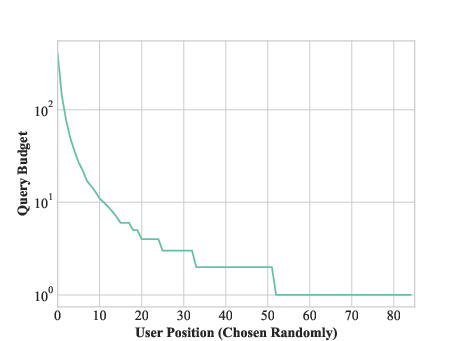
Figure 5: Distribution of query budgets for users. The y axis is logarithmic.