- The paper presents an empirical game-theoretic analysis demonstrating that disparities in latency and orderflow foster oligopolistic dynamics in Ethereum block building auctions.
- The methodology integrates a meta game framework and α-Rank analysis to evaluate equilibrium strategies across symmetric, latency-variable, and orderflow-variable scenarios.
- Findings indicate that while aggressive bidding prevails under symmetric conditions, privileged orderflow access enables conservative bidding that consolidates market dominance and reduces auction efficiency.
Introduction
The paper "From Competition to Centralization: The Oligopoly in Ethereum Block Building Auctions" (2412.18074) explores the dynamics of Ethereum's block building market, predominantly influenced by mechanism of Maximal Extractable Value (MEV) through Proposer-Builder Separation (PBS) and MEV-Boost auctions. The authors employ empirical game-theoretic analysis to investigate how disparities in latency and access to private orderflows impact strategic bidding behavior and the centralization of block builders within the market.
Background
The Ethereum blockchain has embraced a Proof-of-Stake consensus mechanism, where validators are randomly selected to propose new blocks. These validators outsource block creation to specialized builders via PBS, using MEV-Boost auctions. Builders compete for MEV rewards by organizing transactions for maximum profitability. However, the auction process has led to centralization, with dominant builders utilizing latency and exclusive private transaction orderflow advantages to consolidate their power.
PBS and MEV-Boost aim to enhance decentralization by separating proposers and builders, ideally fostering competitive equality among builders. Yet, in practice, builders with more privileged access to private orderflows and optimized latency connections dominate the auctions. This concentration of power risks undermining the market's efficiency and fairness.
Model Description
The paper extends the previous models by integrating a wide-ranging meta game framework, enabling the examination of builders’ strategies through three defined meta strategies: conservative, moderate, and aggressive. These strategies allow builders to adapt their bids according to their received MEV, latency, and orderflow access probability. Under the PBS architecture, the model simulates scenarios where builders compete in MEV-Boost auctions considering the stochastic nature of the public and private signals they receive.
Additionally, the paper implements dynamic analysis using α-Rank, a stochastic evolutionary algorithm to determine the equilibrium strategies within MEV-Boost auctions.
Equilibrium Analysis
The paper evaluates three game variants: the symmetric game where builders have equal latency and orderflow distribution, a game with variable latencies, and a game with variable orderflow access.
Symmetric Conditions
Under symmetric conditions, where all builders have equal latency and identical orderflow access probabilities, the aggressive strategy dominates, revealing a dynamic, competitive market where builders are incentivized to bid aggressively to maximize their win rates.
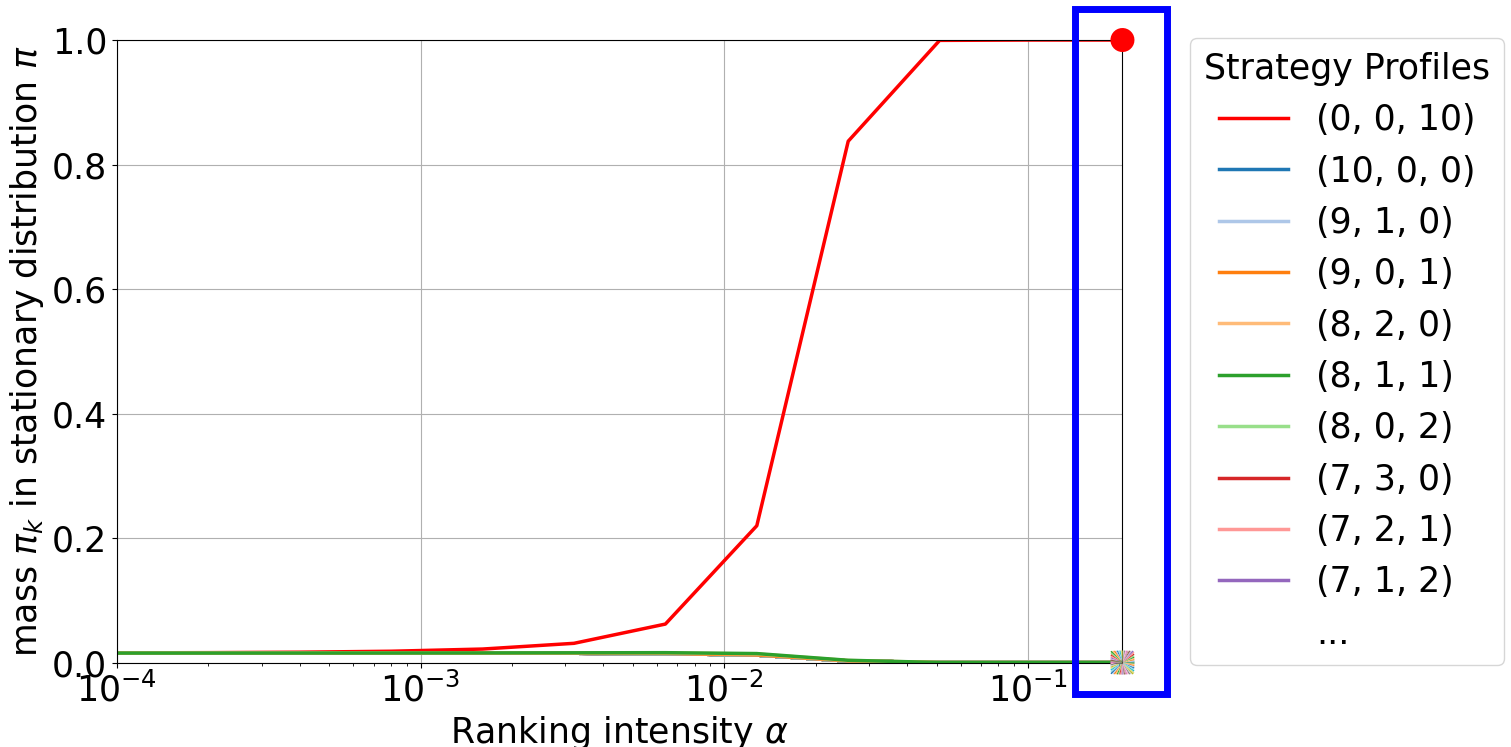
Figure 1: Mass of all strategy profiles in the stationary distribution when sweeping α. The legend shows the final ranking of strategy profiles as computed by α-Rank.
Latency Differences
For scenarios with differing latencies, builders maintain aggressive bidding behaviors irrespective of latency variations. However, overall auction efficiency diminishes as latency difference grows, potentially due to high-latency builders missing valuable opportunities to include additional signal updates, incentivizing low-latency builders to utilize conservative strategies occasionally.
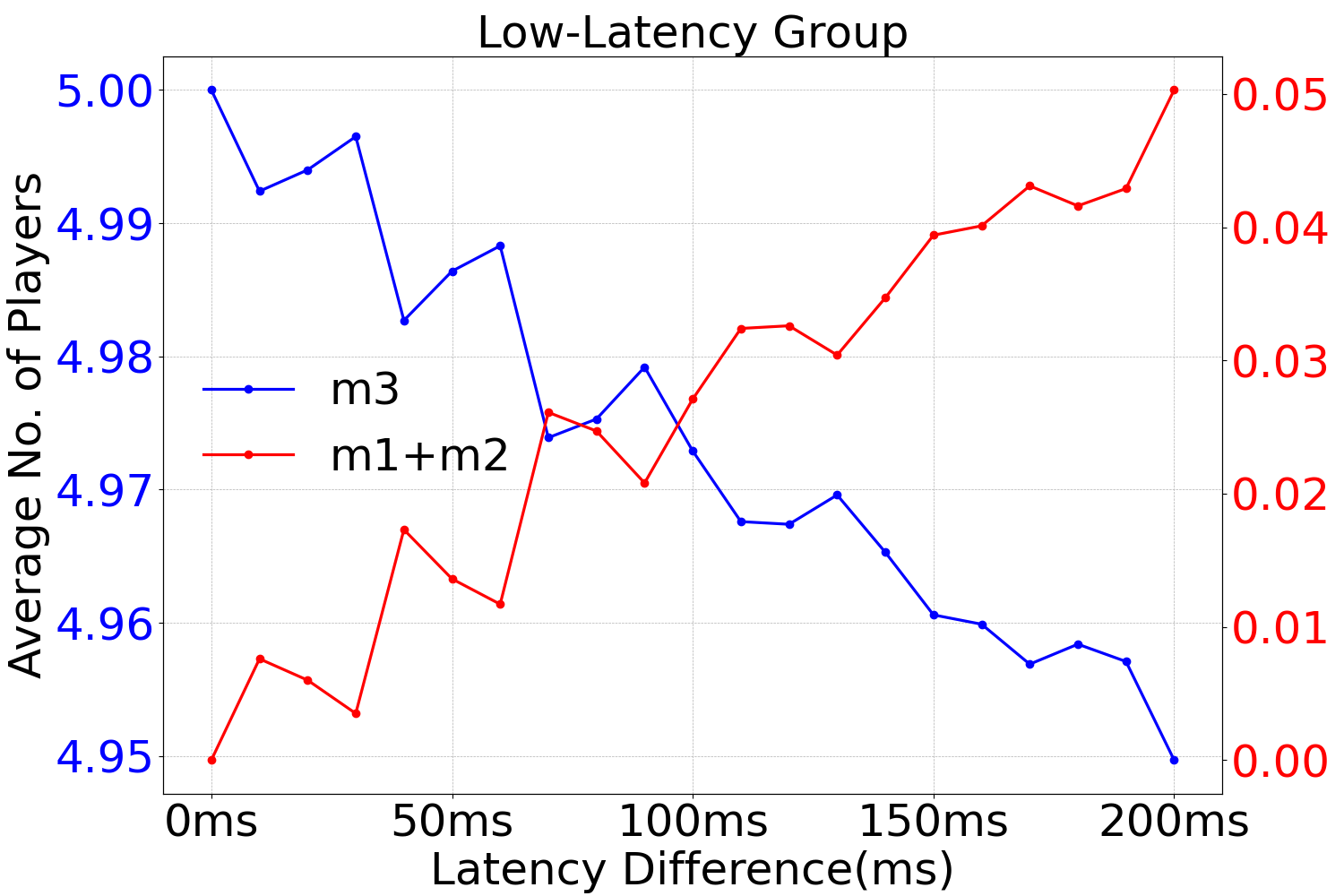
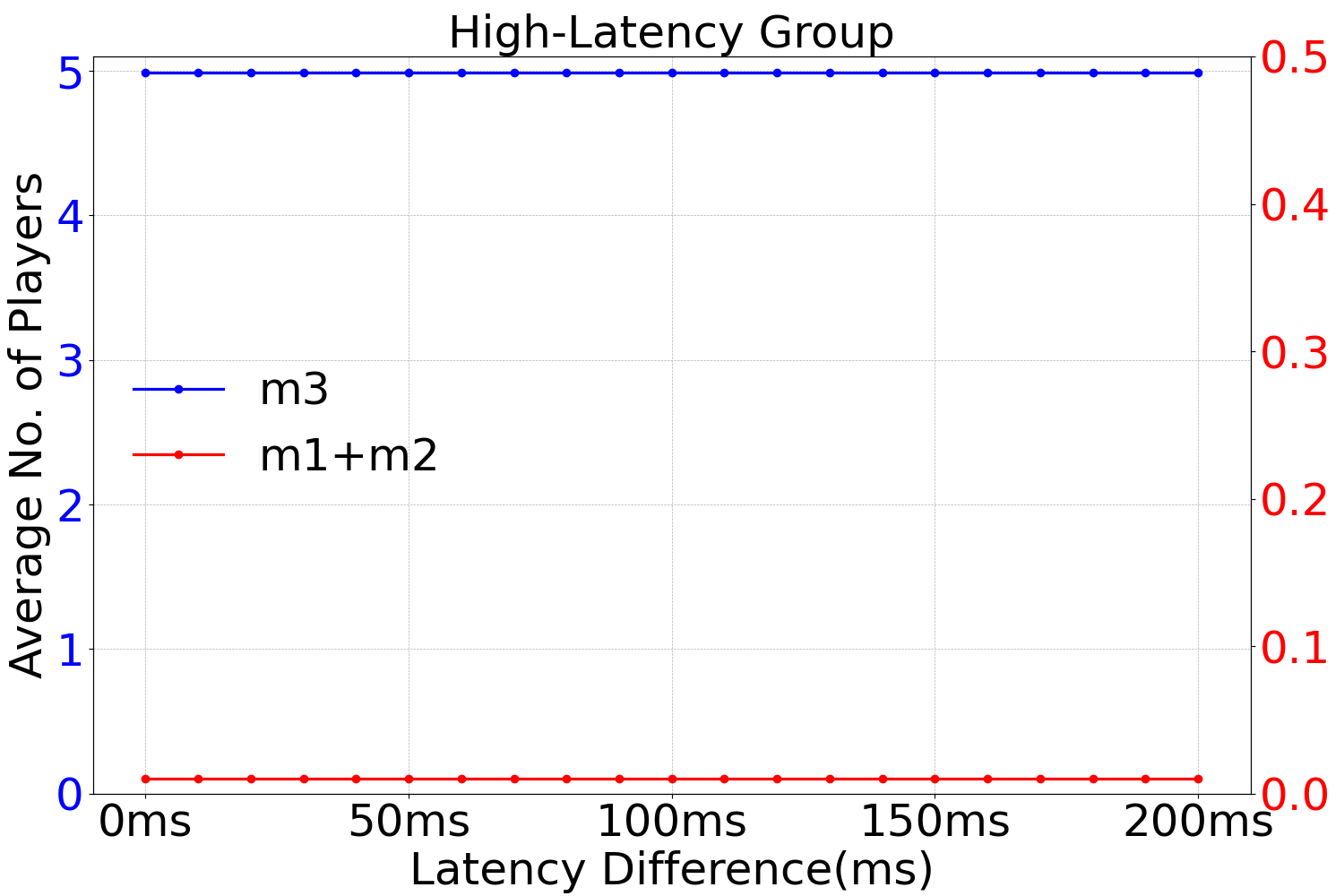
Figure 2: Average usage of aggressive and the other two (conservative+moderate) strategies by low-latency players (left) and high-latency players (right) across all profiles under varying latency differences as computed by α-Rank.
Orderflow Access Disparities
Conversely, when the discrepancies originate from orderflow access probability, the market leans towards oligopolistic tendencies. Builders with superior orderflow access can afford to bid conservatively, thus securing the market dominance while maintaining high-profit margins. This disparity leads to reduced auction efficiency and proposer revenue.
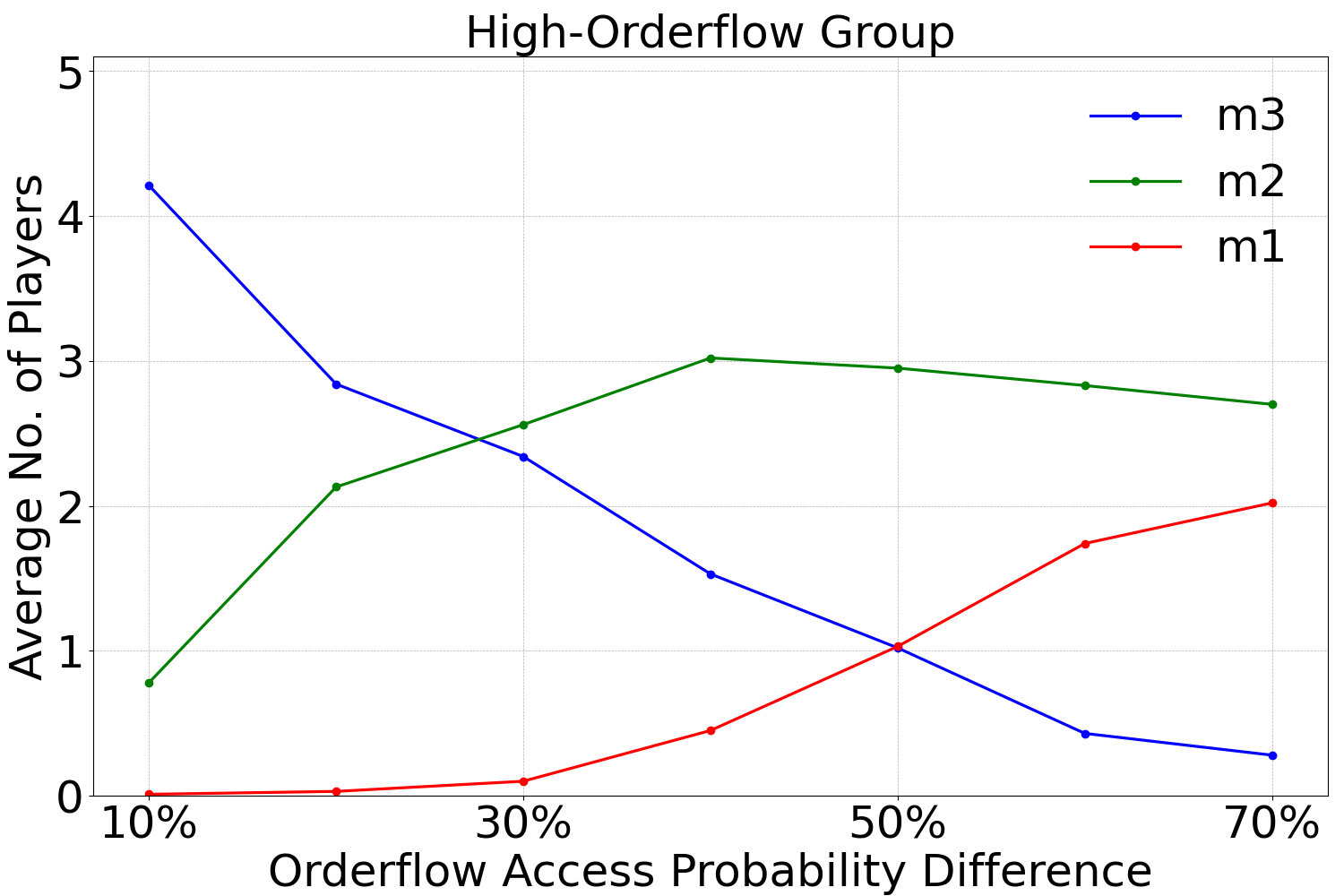
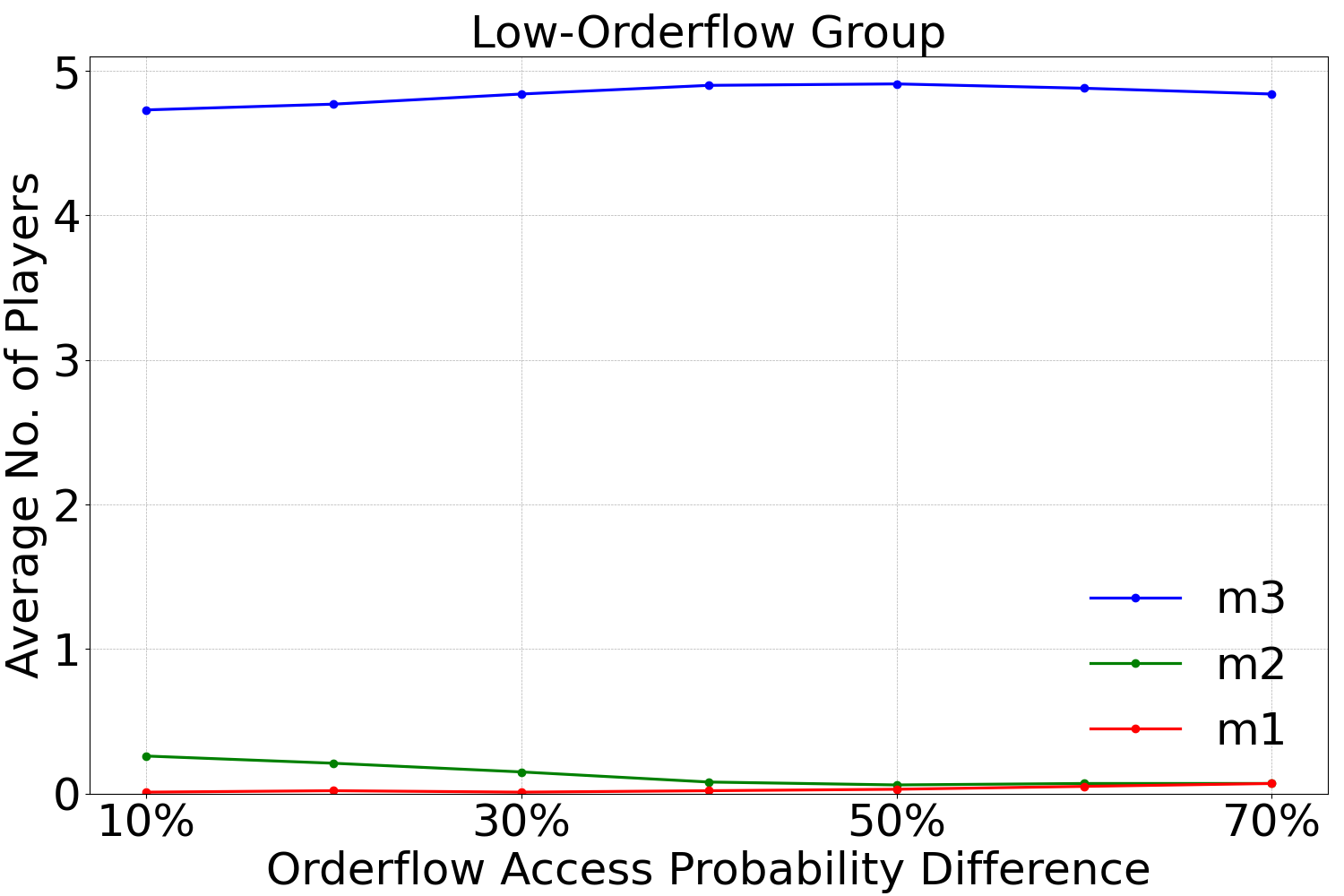
Figure 3: Average usage of each meta strategy by high-orderflow players (left) and low-orderflow players (right) across all profiles under varying orderflow access probability differences as computed by α-Rank.
Implications and Future Directions
The results highlight significant implications for Ethereum's block building market. Although innovations like MEV-Boost aimed to decentralize, the existing disparities in latency and orderflow access culminate in centralized power among a few builders. Builders with privileged access tend to dominate, risking the efficacy and fair opportunity within the Ethereum ecosystem. Future efforts must focus on ensuring equitable MEV distribution and enhancing decentralized infrastructure within PBS and MEV-Boost frameworks.
The study also provides noteworthy insights for other decentralized systems facing similar centralization threats. Emphasizing the need for fair distribution mechanisms and robust infrastructure is likely crucial for broader decentralization objectives.
Conclusion
In conclusion, while Ethereum's PBS and MEV-Boost mechanisms substantively advance toward decentralization, the practical disparities in latency and orderflow access challenge market competitiveness and efficiency, fostering oligopolistic dynamics among builders. Structural adjustments and novel frameworks for equitable MEV distribution may mitigate these centralization risks while promoting an efficient, decentralized marketplace reminiscent of the intended Ethereum blockchain paradigm.