- The paper shows that a few builders dominate with 80% market share in Ethereum block auctions.
- It demonstrates that exclusive order flow access and low-latency bidding strategies drive builder profitability.
- The analysis uses correlation and entropy metrics to highlight how diverse order flows correlate with market success.
An Analysis of Ethereum Block Building Auctions: Dominance and Market Dynamics
Introduction
The study of Ethereum block building, particularly through the lens of Maximal Extractable Value (MEV) and its influence on proposer-builder separation (PBS), has highlighted significant trends in how block auctions are executed. This analysis covers key findings and implications regarding Ethereum block building auctions, focusing on market dominance, profitability, and strategic behavior of builders.
Block Market Dynamics
The Ethereum block building market from October 2023 to March 2024 showcases a high concentration of power, with only a few builders dominating the scene. Notably, three builders—beaverbuild, rsync, and Titan—produced a substantial 80% of the total blocks during this period. This concentration suggests a potential risk to Ethereum’s decentralized and censorship-resistant ethos, as these few entities hold significant influence over block creation.
The analysis reveals a critical positive correlation between builders' market share and their order flow diversity. Builders with access to a more diverse set of order flows tend to secure a higher market share. This diversity allows them to remain competitive in block auctions without relying on a single type of order flow, which may not always be available.
Exclusive Order Flow and Profitability
The relationship between exclusive order flow (EOF) access and builder profitability underscores the importance of strategic partnerships and exclusivity deals. Builders that receive significant EOF from unique providers, such as integrated searchers or entities with special agreements, tend to achieve higher profits. The study identifies that top-performing builders frequently participate in exclusive agreements, ensuring they receive distinguished transaction flows that bolster their profitability.
Figure 1, a taxonomy of transaction transparency, elucidates how different transactions are categorized based on their visibility and order flow purpose. This diversity in transparency and order flow directly impacts builders' strategic decisions and market positioning.
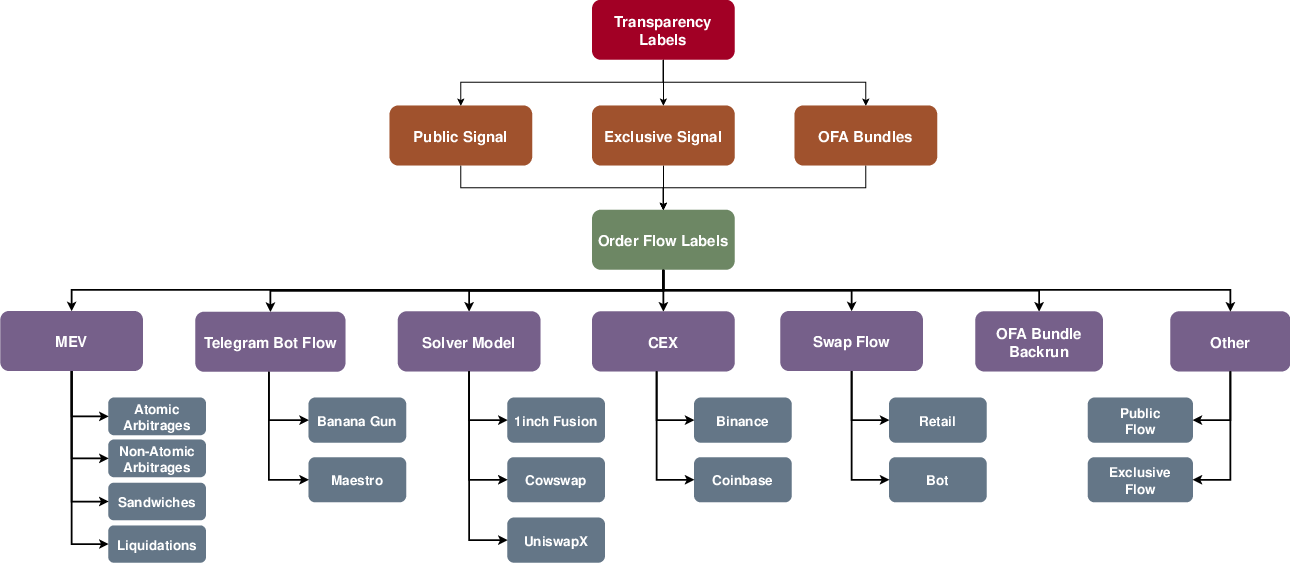
Figure 2: Taxonomy of transaction transparency and order flow labels.
Strategic Builder Behavior
The study explores various strategies employed by block builders to gain a competitive edge. Notably, it highlights the significance of latency and bidding strategies, wherein builders with advanced infrastructure and low latency can update bids efficiently to react to market conditions. This agility in bidding underlines the importance of infrastructure in maintaining a competitive position during auctions.
Furthermore, the use of bid cancellations and adjustments before block finalization reflects sophisticated strategic behavior. Builders employ these techniques to optimize their bids according to real-time changes in block value and competing bids.
Correlation and Market Share Insights
Utilizing Spearman correlation analysis, the study identifies key features linked with achieving significant market share and profitability in the MEV-Boost auction. Exclusive signal access, alongside lucrative order flow types like non-atomic arbitrages and Telegram bot flow, positively correlates with both market share and profitability. Conversely, a reliance on public signal and retail swaps displays a negative correlation, often indicating less profitable and competitive builders.
Figure 3 provides visual insight into builders' order flow diversity measured by Shannon entropy, illustrating the breadth of order flows across different builders.
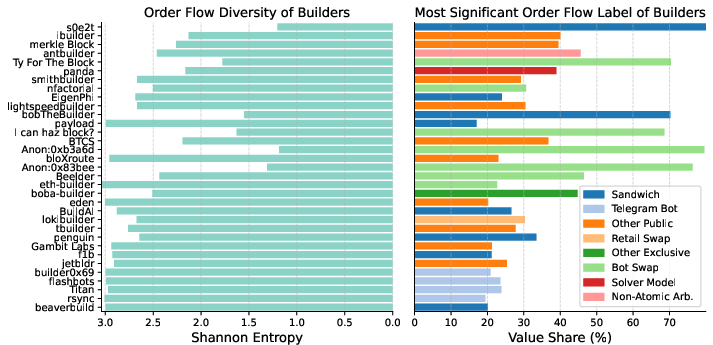
Figure 3: The left panel is a horizontal bar plot presenting each builder's order flow diversity through a Shannon entropy value. Builders are ordered from top to bottom in ascending order of market share.
Practical and Theoretical Implications
The findings suggest that while proposer-builder separation has succeeded in democratizing access to MEV for validators, the builder market remains centralized. This centralization poses threats to Ethereum's censorship resistance and its foundational ideology of decentralization.
Several solutions are posited to mitigate these issues, including changing auction formats to sealed-bid systems, fostering decentralized builder ecosystems like SUAVE, and incorporating in-protocol features to combat censorship. The adoption of these solutions could diversify the builder market, enhance competition, and preserve Ethereum's core values.
Conclusion
This comprehensive analysis of Ethereum block auctions underscores the complex interplay between market dynamics, strategic behavior, and blockchain ideology. The need for reformative measures is evident to prevent centralization and ensure a fair competitive environment within the Ethereum ecosystem. By understanding the correlations between order flow access, market share, and builder strategies, stakeholders can work towards a more equitable and resilient blockchain platform.