- The paper presents a structured LLM-driven methodology for aligning independently developed SysML v2 models in collaborative MBSE.
- It introduces an iterative, prompt-driven process that includes syntax verification, semantic extraction, and traceability checks.
- The approach demonstrates improved model integration efficiency and consistent outputs with minimal human intervention.
LLM-Assisted Semantic Alignment for Collaborative MBSE with SysML v2
The paper "LLM-Assisted Semantic Alignment and Integration in Collaborative Model-Based Systems Engineering Using SysML v2" (2508.16181) proposes a structured approach leveraging LLMs to facilitate semantic alignment and integration of independently developed models in Model-Based Systems Engineering (MBSE), using the SysML v2 framework. This framework aims to enhance semantic interoperability and traceability across cross-organizational models by using LLM capabilities.
Introduction
Model-Based Systems Engineering (MBSE) seeks to improve systems engineering processes by formally modeling system elements and their interactions. Semantic alignment in collaborative MBSE, especially across different organizational entities, remains challenging due to differing modeling practices and tools. SysML v2 improves upon its predecessor by offering modularity and formal semantics, providing a potential solution for enhancing model interoperability. However, integrating systems with disparate semantics requires innovative approaches.
The development of LLMs, particularly those based on architectures like GPT, provides possibilities for aiding the understanding and integration of SysML models. By employing a structured, prompt-driven methodology, the paper offers an approach to refine the semantic alignment through iterative model extraction, matching, and verification processes. It utilizes SysML v2's constructs such as alias, import, and metadata extensions to achieve soft alignment integration.
Approach Conception
Challenges in Integration
The integration leverages the distinct benefits of LLMs in natural language processing to assist in overcoming several challenges:
- Model Alignment Efficiency: Addressing semantic ambiguity and hierarchy mapping complexities to automate semantic extraction from disparate system models.
- Output Validity and Consistency: Ensuring reliable and repeatable outputs from LLMs while addressing issues such as non-deterministic results and hallucinations.
- Output Traceability: Facilitating traceability through input-output mapping records and confidence annotations.
Semantic Integration Concepts
The paper outlines three concepts for integration:
- Unified Modeling: Although beneficial theoretically, practical application is limited by organizational modeling needs.
- Transformation-Based Integration: Automatable model conversions across methodologies are constrained by the absence of standardized processes for SysML v2.
- Soft Alignment: Supports mapping models without structural modifications, utilizing extensible libraries of SysML constructs, making it an optimal approach for iterative and cross-organizational integrations.
Iterative Refinement
The approach is refined through multiple iterations, employing agile test principles and Design Research Methodology (DRM). Experiments demonstrate an improvement in output consistency and traceability, with structured prompts guiding the LLM through stages of syntax verification, semantic extraction, and alignment generation.
Resulting Processes and Implementation
Proposed Integration Approach
The approach systematically combines LLMs with SysML to generate traceable alignment results. Essential components include:
Process Overview
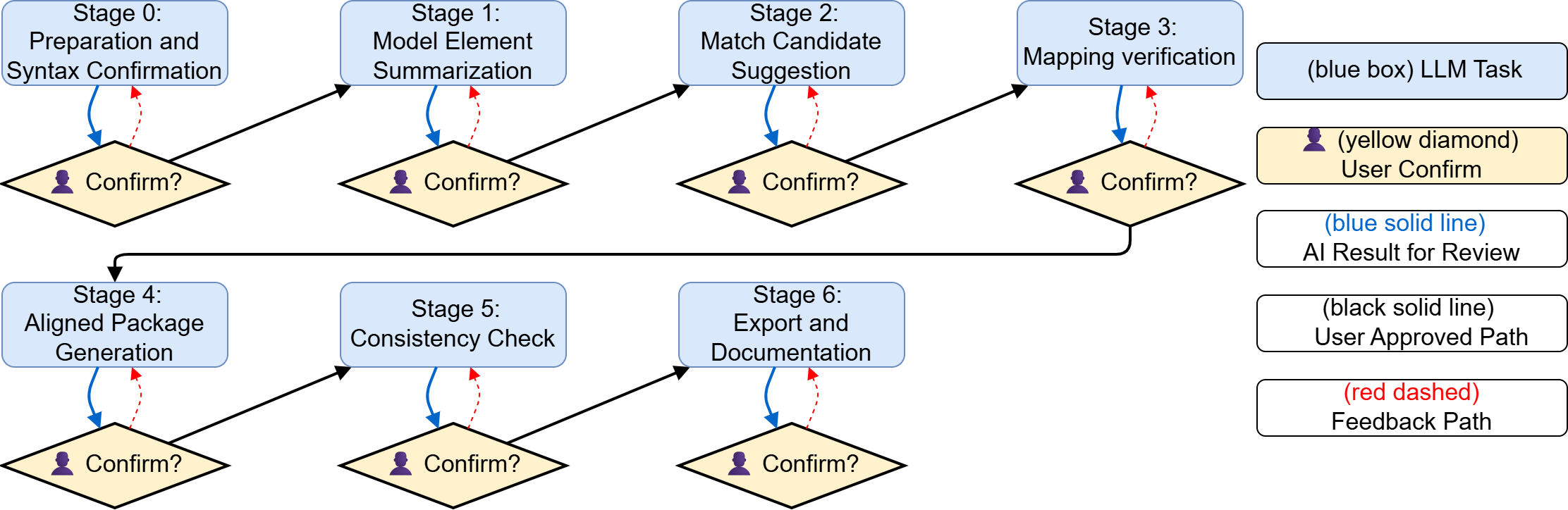
The method divides tasks into stages, ensuring process transparency through user confirmations and iterative refinements:
Prompt-Driven Realization
Implementing the approach focuses on a structured prompt design that includes alignment via alias and extensions without altering original structures. Outputs include traceable JSON formats that contain confidence scores to aid interpretation and verification.
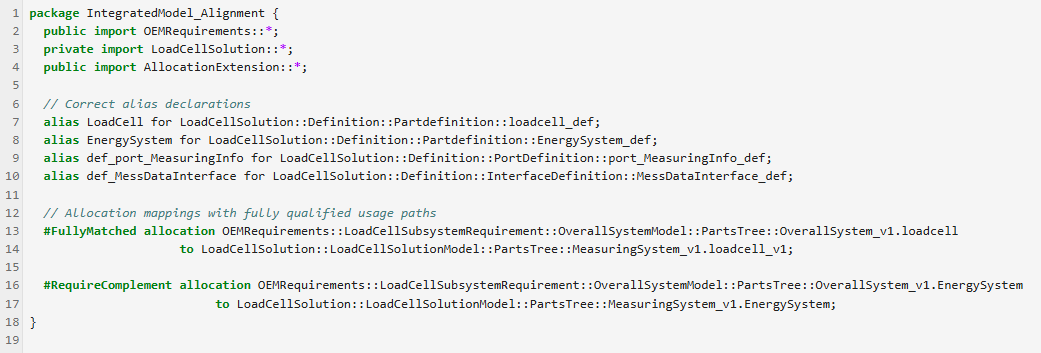
Figure 3: Example Model Alignment Results
Verification and Applicability
Initial tests showed that minimal human intervention rectified semantic deviations early in the prompt-driven workflow, enabling stable and consistent outputs. Verification with example model alignments highlighted the potential for broader scalability and application in complex industrial scenarios.
Discussion
While promising, the approach faces limitations regarding semantic-level alignment and user prompt configuration. Future work should incorporate ontology-driven enhancements for semantic constraints and explore RESTful API integration for greater toolchain applicability.
Despite these areas for improvement, the structured prompt-driven methodology lays a strong foundation for LLM-assisted SysML v2 semantic alignments, setting the stage for future research to deepen integration challenges and solutions in MBSE environments.
Conclusion and Future Work
This paper introduces a robust approach combining LLM assistance with SysML v2 for semantic alignment in MBSE, demonstrating feasibility through structured processes and semantic extension libraries. As LLMs continue to evolve, the proposed system prompt utilization and iterative refinement suggest promising pathways for enhancing collaborative model alignments and traceability in engineering applications. Future endeavors should focus on deepening semantic understanding, improving tooling integration, and scaling to larger industrial scenarios.