The Large Underground Xenon (LUX) Experiment
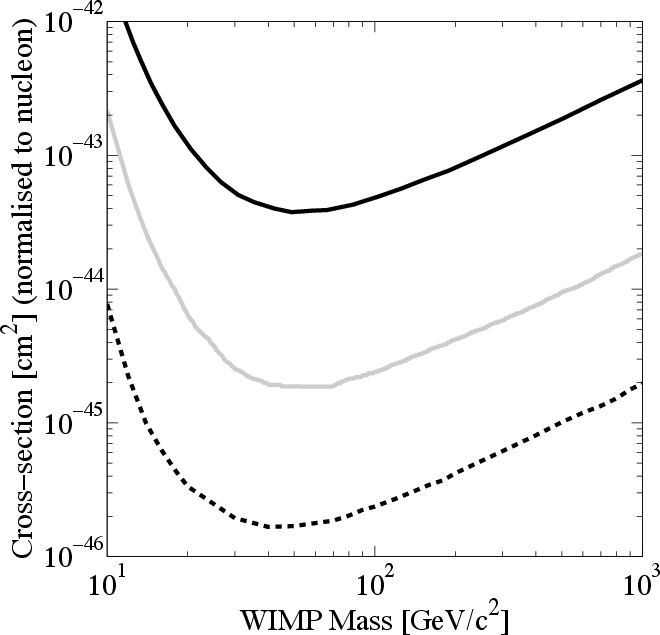
Abstract: The Large Underground Xenon (LUX) collaboration has designed and constructed a dual-phase xenon detector, in order to conduct a search for Weakly Interacting Massive Particles(WIMPs), a leading dark matter candidate. The goal of the LUX detector is to clearly detect (or exclude) WIMPS with a spin independent cross section per nucleon of $2\times 10{-46}$ cm${2}$, equivalent to $\sim$1 event/100 kg/month in the inner 100-kg fiducial volume (FV) of the 370-kg detector. The overall background goals are set to have $<$1 background events characterized as possible WIMPs in the FV in 300 days of running. This paper describes the design and construction of the LUX detector.
Paper Prompts
Sign up for free to create and run prompts on this paper using GPT-5.
Top Community Prompts
Knowledge Gaps
Unresolved Knowledge Gaps, Limitations, and Open Questions
Below is a single, concrete list of gaps and open questions left unresolved by the paper that future researchers could directly address.
- In-situ discrimination performance is only projected: measure the actual electron-recoil leakage vs. nuclear-recoil acceptance across energy and position after full underground calibration.
- Actual low-energy thresholds and energy scales (keVee and keVnr) are not reported: determine the measured S1/S2 yields, thresholds, and their field and position dependence.
- Background model relies heavily on Monte Carlo and PMT assays: provide measured in-situ ER and NR background rates in the fiducial volume, with a full materials budget (titanium, copper, PTFE, stainless steel, resistors, cabling) and associated uncertainties.
- Neutron backgrounds are incompletely quantified: calculate and validate (alpha,n) and spontaneous fission neutron yields for all materials; measure single-scatter NR rates in the FV using dedicated neutron calibrations.
- Muon veto (water Cherenkov) performance is unspecified: quantify veto efficiency, energy threshold, coverage, deadtime, and residual cosmogenic neutron rates after veto tagging.
- Krypton and radon control strategies are not detailed: measure krypton concentration achieved (ppt level), implement/validate distillation, and quantify radon emanation/ingress with mitigation plans and time evolution.
- Purity and electron lifetime in the full detector are not demonstrated: report achieved electron drift lengths over time, impurity species (O2, N2, H2O), and their correlation with operations (HV, circulation).
- Tritium calibration removal is claimed (99.9% per pass) without residual background quantification: measure residual tritium after calibration, clearance time, and any long-lived permeation or adsorption effects.
- 83mKr calibration uniformity and removal are uncharacterized: assess spatial mixing, uniformity of response, and decay/removal times; bound any residual backgrounds.
- Cathode HV operation at scale is unvalidated: report maximum stable voltage achieved, discharge rate, drift field uniformity, electron extraction efficiency, and impacts on S2 uniformity and detector uptime.
- Drift field distortions and edge effects are not mapped: measure 3D field nonuniformities, correct position reconstruction biases, and quantify their impact on fiducialization and energy reconstruction.
- Grid and anode properties are not linked to optical/electroluminescence uniformity: characterize S2 gain uniformity vs. x–y, grid deflection under operating fields, and any systematic correction needed.
- S1 light collection is not quantified: measure phe/keVee and phe/keVnr, PTFE reflectivity in situ, and S1 nonuniformities; assess PMT coverage gaps and shadowing from structures.
- PMT radioactivity characterization is limited to 15 units: extend assays to a statistically representative sample (or all), provide distributions and outliers, and include radon emanation measurements from PMTs and bases.
- PMT operational stability in LXe is not reported: measure dark rates, gain drift vs. temperature/field, afterpulsing evolution, linearity under large S2, and their impact on low-energy detection and deadtime.
- Level sensing accuracy near the extraction region is not quantified: validate sensor precision/stability, froth/bubble effects, and correction schemes needed to maintain a flat liquid surface and uniform extraction field.
- Thermometry shows high failure rates and module/wiring biases: implement improved mounting/calibration, quantify temperature gradients, and link temperature stability to xenon optical/electrical properties during extended runs.
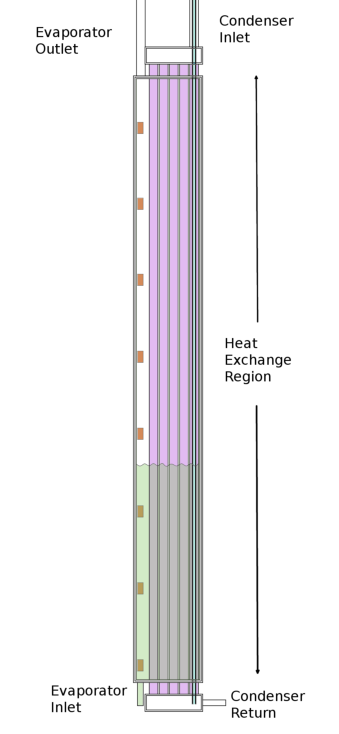
- Heat exchanger performance in the full detector at highest flow rates is unverified: measure efficiency, thermal loads, bubbling/froth onset, and impacts on S1/S2 stability during sustained 300–420 kg/day circulation.
- HV cable outgassing control via xenon draw-through (0.1 SLPM) is unproven: quantify impurity ingress, monitor purity while HV is on, and validate draw-through sufficiency under long-term operation.
- Field cage resistor chain reliability and noise at cryogenic temperatures are untested: assess long-term stability, outgassing, potential pickup, and redundancy against single-point failures.
- Water shield properties are not provided: measure water radiopurity (including radon), gamma attenuation, neutron moderation lengths, PMT noise/coverage, and overall shielding effectiveness.
- Copper and titanium radiopurity/cosmogenic activation are not fully described: assay U/Th/Co and activation products (e.g., Co-60), estimate time-dependent contributions, and evaluate mitigation (underground storage, annealing).
- DAQ and trigger system performance is missing: specify S1/S2 dynamic range, sampling, trigger algorithms/thresholds, pileup handling, deadtime, and low-energy detection efficiency including acceptance losses.
- Position reconstruction accuracy is projected: validate ~1 cm resolution at low energy with data, quantify biases near walls/corners, and develop correction maps for light/field nonuniformities.
- Fiducialization and multiple-scatter rejection criteria are unspecified: define FV cuts relative to walls/grids, double-scatter tagging algorithms, acceptance losses, and related systematic uncertainties.
- Sensitivity projection lacks systematic treatment: state halo model parameters, low-energy scintillation/ionization yields (, quenching factors), and quantify sensitivity robustness to these inputs and detector systematics.
- Long-term stability and background drift over the 10-month run are unaddressed: plan for monitoring/mitigation (radon, krypton, PMT aging, HV conditioning), and report criteria for stable WIMP-search data quality.
- Underground integration impacts are not discussed: evaluate vibration, EM noise, and thermal/environmental stability at SURF and their effects on noise, trigger rates, and calibration fidelity.
- The description of the electric field grids and their optical impact is incomplete: complete the design rationale for minimizing light losses, and quantify the trade-offs between mechanical strength, transparency, and field performance.
Glossary
- Afterpulsing (AP): Spurious delayed pulses in a PMT caused by ionized residual gas returning to the photocathode; used to assess PMT health and vacuum quality. "An extensive ion-feedback afterpulsing (AP) characterization study was performed for 90 PMTs,"
- Anode: The positively biased electrode above the liquid surface that, together with the gate, creates the extraction and electroluminescence fields in a dual-phase TPC. "The anode sits a distance of 1~cm above the gate grid"
- Cathode: The negatively biased electrode at the bottom of the TPC that establishes the electric drift field in the liquid xenon. "The cathode grid is located 4~cm above the bottom PMT shield"
- Cherenkov veto: A background-rejection system that detects Cherenkov light in water to tag and veto muon-induced events. "and used as a Cherenkov veto for muons."
- Cirlex: A radiation-hard polyimide laminate used for mounting and electrically insulating components such as thermometers inside the detector. "mounted on Cirlex$^{\tiny{\textregistered}$ boards"
- Cold finger: A high-conductivity thermal link used to couple components to a cold stage for temperature control. "It connects to the large capacity thermosyphon through a cold finger"
- Concentric-tube heat exchanger: A coaxial heat exchanger used to pre-cool warmed xenon gas or warm cold streams during circulation. "through a single-phase concentric-tube heat exchanger,"
- Conflat flange: A standardized ultra-high-vacuum flange system that uses a metal gasket for leak-tight seals. "and a standard conflat flange."
- CP1 titanium: Commercially pure grade 1 titanium, chosen for low radioactivity and suitable mechanical properties in cryostat construction. "are made of 0.223" thick grade CP1 titanium sheets"
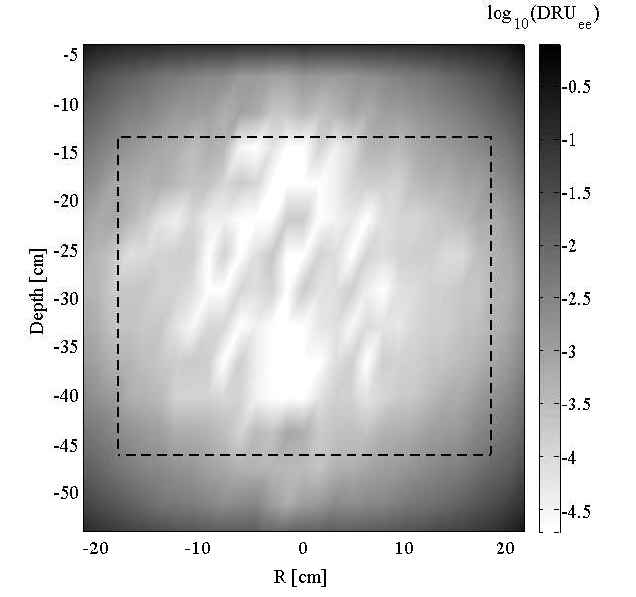
- DRU: Differential Rate Unit; a background rate measure of events per kilogram per keV per day. "in terms of log(DRU) where 1 DRU~=~1 event/kg/keV$_{\text{ee}$/day."
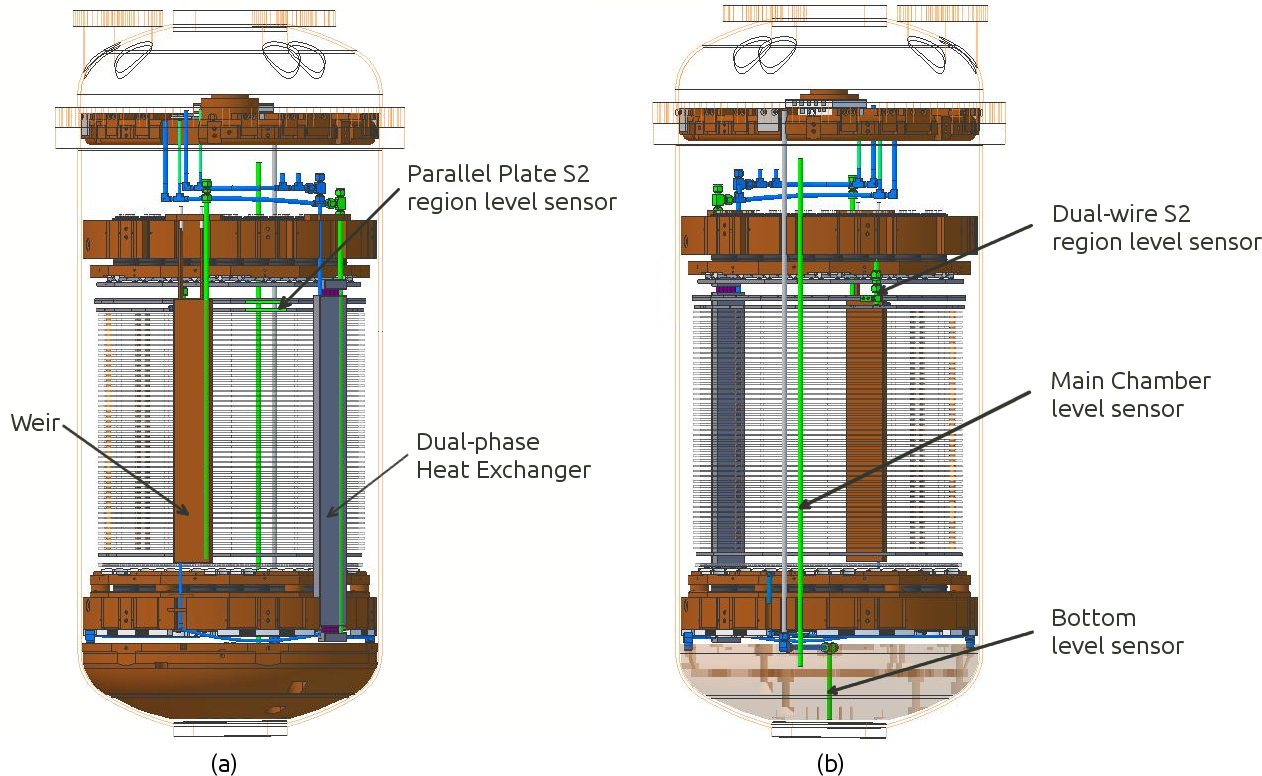
- Dual-phase heat exchanger: A device that condenses returning xenon gas using cooling from simultaneous liquid xenon evaporation to reduce thermal load. "The dual-phase heat exchanger, shown in Fig.~\ref{figHX2},"
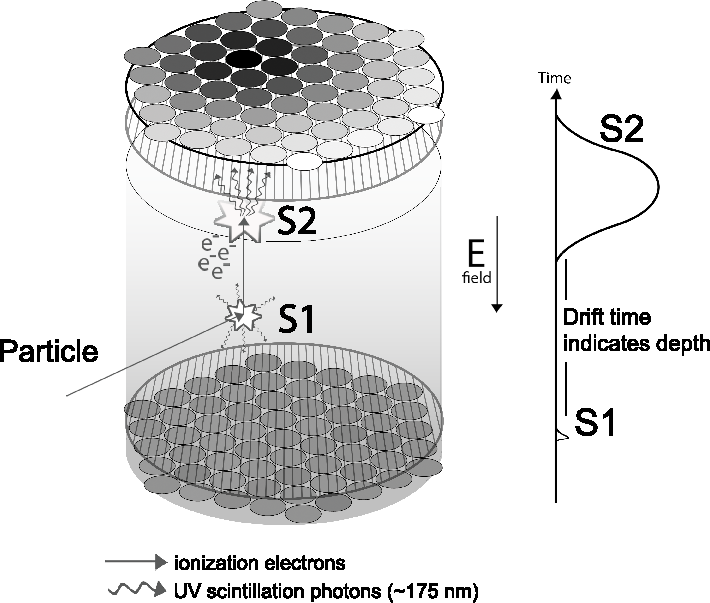
- Dual-phase xenon detector: A detector using both liquid and gas xenon phases to measure prompt scintillation (S1) and electroluminescence (S2) for 3D event reconstruction. "has designed and constructed a dual-phase xenon detector,"
- Electron lifetime: The characteristic time electrons can drift before being captured by impurities, indicating xenon purity. "by measuring the electron lifetime."
- Electron recoil (ER): Interactions where incident radiation scatters off electrons, typical of gamma and beta backgrounds in dark matter detectors. "discrimination of electron recoils (ER), arising from background rays and betas,"
- Electro-luminescence: Proportional scintillation light produced by drifting electrons accelerated in the gas phase above the liquid. "create electro-luminescence light (S2)."
- Extraction field: The electric field just below the liquid surface used to pull electrons from liquid xenon into the gas phase. "to generate the 5~kV/cm extraction field just below the liquid surface"
- Feedthrough: A vacuum-sealed interface that allows high-voltage or signals to pass from outside to inside the detector without leaks. "the LUX cathode high-voltage system places the feedthrough outside the water shield at room temperature."
- Fiducial volume (FV): The inner, well-shielded portion of the detector defined for low-background event selection and analysis. "inner 100-kg fiducial volume (FV) of the 370-kg detector."
- Gate grid: A wire grid located just below the liquid surface that, together with the anode, defines the extraction and electroluminescence regions. "the ÒgateÓ grid that is used in conjunction with the anode"
- Getter: A heated reactive metal purifier that removes electronegative and molecular impurities from xenon gas. "through the use of a SAES hot metal getter"
- Helicoflex gasket: A metallic C-ring gasket providing reliable ultra-high-vacuum seals on cryostat flanges. "The flanges of both vessels are designed to use Helicoflex gaskets."
- High-purity germanium (HPGe) detector: A low-background gamma-ray spectrometer used to assay radioactivity levels of materials. "a 0.6-kg high-purity Ge detector,"
- Ion-feedback: The process where ions created in a PMT drift back to the photocathode, releasing additional electrons and causing afterpulses. "An extensive ion-feedback afterpulsing (AP) characterization study"
- keV electron equivalent (keVee): An energy scale that converts detector response to the equivalent energy deposition from electron recoils. "keV electron equivalent or keV$_{\text{ee}$)"
- Liquid nitrogen (LN): A cryogen used to cool condensers and provide refrigeration for thermosyphon operation. "a bath of liquid nitrogen (LN);"
- Liquid xenon (LXe): A dense, scintillating noble liquid used as the target and detection medium in the TPC. "Events in the liquid xenon (LXe) target"
- Mass spectrometry (cold trap): A technique using a cryogenic trap to separate xenon from impurities for sensitive mass spectrometric analysis. "using the cold trap mass spectrometry method"
- Monte Carlo simulations: Stochastic computational models used to predict detector responses and optimize background suppression. "Extensive Monte Carlo simulations have been performed for the LUX detector,"
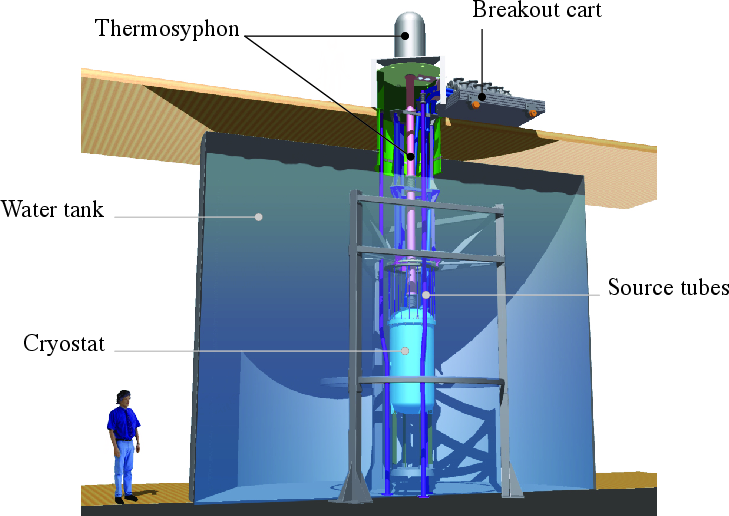
- Muon veto: An auxiliary detector system that tags penetrating muons to reject muon-correlated backgrounds. "The PMTs of the muon-veto system are not shown."
- OFHC copper: Oxygen-Free High Conductivity copper with low impurities, used for low-radioactivity and high-thermal-conductivity components. "all copper components are C101 OFHC grade."
- Photocathode: The light-sensitive surface in a PMT that emits electrons when struck by photons. "to shield the photocathodes of the PMTs"
- Photomultiplier tube (PMT): A vacuum photodetector that converts and amplifies light into an electrical signal via dynode stages. "photomultipliers (PMTs)"
- Proportional-Integral-Derivative (PID) loop: A feedback control algorithm that stabilizes temperatures by adjusting heater power based on error signals. "as part of a Proportional-Integral-Derivative (PID) loop"
- Quantum efficiency (QE): The probability that an incident photon produces a photoelectron at the photocathode. "has a typical quantum efficiency (QE) of 33\% at that wavelength,"
- Resistor chain: A series of resistors used to grade voltages across field-shaping rings for a uniform drift field. "A resistor chain between the gate and the cathode grids is used"
- SAES MonoTorr: A commercial heated getter product used for high-throughput purification of noble gases. "through a commercial heated getter (SAES MonoTorr \cite{SAESMonoTorr}),"
- Single photoelectron (sphe): The smallest PMT signal corresponding to a single emitted photoelectron, used for gain calibration. "Single photoelectron (sphe) pulses were recorded"
- Single-scatter event: An event where a particle interacts only once in the detector, characteristic of potential WIMP signals. "the upper limit of the single-scatter ER event rate"
- Standard liters per minute (SLPM): A gas flow rate normalized to standard temperature and pressure for consistent comparison. "0.1 standard liters per minute (SLPM)."
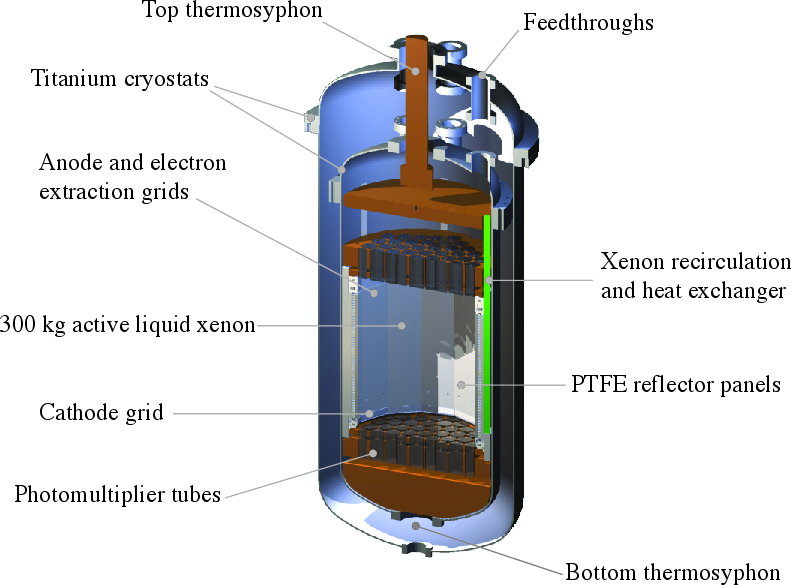
- Thermosyphon: A sealed, gravity-driven two-phase heat transport device used to cool and stabilize detector components. "a unique cryogenic system based on thermosyphon technology"
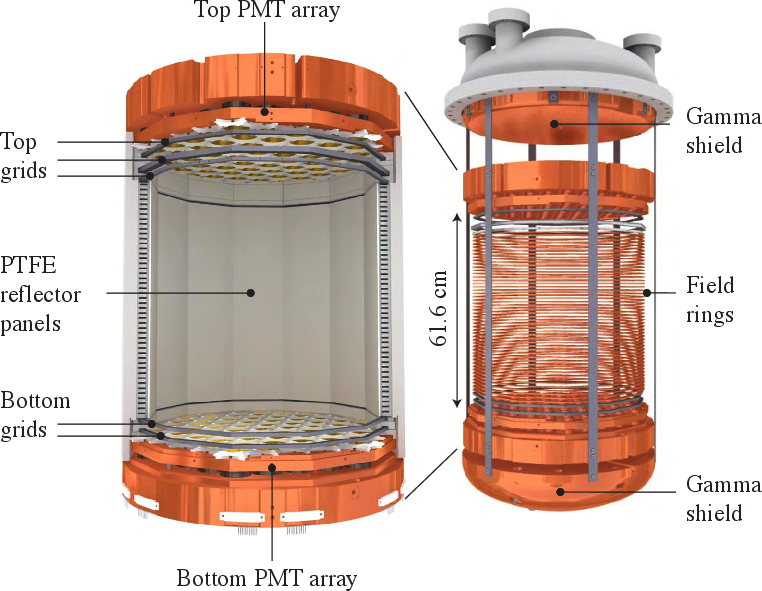
- Time-Projection Chamber (TPC): A detector that reconstructs 3D positions from drift times and charge/light signals in an electric field. "The LUX Time-Projection Chamber (TPC) is a dodecagonal structure"
- Tritium beta source: A low-energy beta emitter used to calibrate the electron-recoil response at keV scales. "and Tritium beta sources."
- Ultra High Molecular Weight Polyethylene (UHMW): A high-strength polymer used as structural supports with favorable low-background properties. "Ultra High Molecular Weight Polyethylene (UHMW) panels."
- Umbilical: A service conduit/tube carrying cables or gas between the external systems and the detector internals. "xenon-gas-filled umbilical"
- Weir reservoir: An overflow volume that stabilizes and defines the liquid xenon level in the TPC. "into the weir reservoir."
- WIMP (Weakly Interacting Massive Particle): A leading dark matter candidate predicted to interact via rare nuclear recoils. "search for Weakly Interacting Massive Particles(WIMPs)"
Practical Applications
Immediate Applications
These applications can be deployed with current technology, using components, methods, and workflows directly described in the paper.
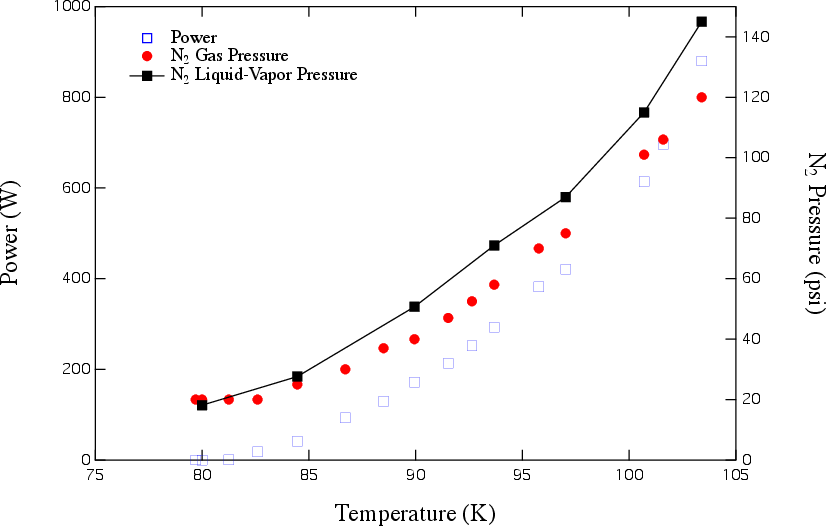
- High-efficiency LN2 thermosyphon cooling for cryogenic systems (Energy, Semiconductors, Research infrastructure)
- What: Passive, gravity-driven thermosyphons with effective thermal conductance ~55 kW/K/m that provide hundreds of watts of cooling at ~77 K with PID-controlled heaters.
- Tools/products/workflows: Thermosyphon cold-head modules; PID temperature control loops; LN2-based pre-cooling stages for large vacuum or cryo assemblies.
- Assumptions/dependencies: Ready access to liquid nitrogen; vertical orientation constraints; design to exclude gas in high-field regions when coupled to HV systems; adherence to cryogenic safety standards.
- Internal dual-phase heat exchangers for gas recirculation energy savings (Energy, Semiconductors, Aerospace)
- What: In-vessel condensers/evaporators that reuse latent heat to achieve ≥94–98% reduction in cooling power during high-throughput gas purification/recirculation.
- Tools/products/workflows: Compact, dual-phase heat exchanger cartridges for noble-gas loops; integration with diaphragm pumps and getters.
- Assumptions/dependencies: Closed-loop plumbing compatible with cryogens; sufficient temperature instrumentation; LN2 or equivalent cooling available.
- Ultra-high-purity noble gas handling and purification (Semiconductors, Aerospace, Research)
- What: Gas-phase recirculation through heated SAES MonoTorr getters, achieving meter-scale electron attenuation lengths in LXe and single-pass removal of tritiated methane at 99.9%.
- Tools/products/workflows: Modular purification skids (getter + pump + flow/pressure control); leak-tight stainless plumbing; integrated assay ports.
- Assumptions/dependencies: Getter capacity/consumables; material compatibility to prevent outgassing and back-diffusion; flow rates up to 50 SLPM (420 kg/day) achievable with commercial pumps.
- Cold-trap mass spectrometry for ppb–ppt impurity assay (Semiconductors, Aerospace, Standards/QA)
- What: On-line/off-line gas QA/QC with cold-trap MS for O2/N2 at <ppb and krypton at ppt levels; four-point sampling for process monitoring.
- Tools/products/workflows: Standardized assay stations; calibration with reference cylinders; SPC charts for getter performance and leak diagnosis.
- Assumptions/dependencies: Stable MS calibration; trained operators; clean sampling lines; cold-trap infrastructure.
- Web-based slow-control/SCADA for multi-instrument cryo systems (Software, Research infrastructure, Industry 4.0)
- What: Unified slow control with alarm routing (email/SMS/sirens), trend logging, and browser/ROOT/MATLAB interfaces; >200 sensors and dozens of instruments supported.
- Tools/products/workflows: Modular database-backed control software; configurable alarm thresholds; watchdogs for critical interlocks.
- Assumptions/dependencies: Network reliability; cybersecurity controls; clear SOPs for escalation and response.
- Precise cryogenic liquid level sensing (Energy, Research infrastructure, LNG operations)
- What: Parallel-wire capacitance sensors for flow-friendly plumbing; parallel-plate sensors for mm-scale leveling near electrodes; complementary differential-pressure and thermal methods to mitigate froth artifacts.
- Tools/products/workflows: Cryo-rated capacitance probes; multi-sensor fusion algorithms for robust level readout.
- Assumptions/dependencies: Dielectric constants well-characterized at operating temperatures; EMI management for capacitance measurements.
- High-voltage delivery with room-temperature oil feedthroughs and inert-gas umbilicals (Research, Industrial HV systems)
- What: HV feedthrough kept at room temp in transformer oil; HV delivered via xenon-filled umbilical with controlled gas outflow to prevent impurity back-diffusion; series current-limiting resistance for fault tolerance.
- Tools/products/workflows: Oil-immersed HV feedthrough assemblies; xenon (or inert gas) umbilical with purge control; HV safety design templates.
- Assumptions/dependencies: Proper oil selection/maintenance; gas management to exclude bubbles in high-field regions; compliance with electrical safety codes.
- PMT afterpulsing–based QA and in-situ health monitoring (Healthcare/Medical imaging R&D, HEP/astroparticle, Industrial detectors)
- What: Afterpulsing spectra used to detect He ingress, air leaks (N+/O+), and Xe+ signatures indicating impending vacuum failure; weekly monitoring protocol with LED calibrations.
- Tools/products/workflows: AP test stands; helium exposure controls for storage; automated LED gain calibration routines; acceptance/rejection criteria for PMTs.
- Assumptions/dependencies: Access to AP-capable digitizers; environmental He management; PMT-specific timing databases.
- Low-background materials screening and procurement (Space instrumentation, Quantum sensors, Research)
- What: HPGe counting of component radioactivity (U/Th/K/Co) to meet low-background budgets; validated low-radioactivity titanium/OFHC copper/PTFE supply chains.
- Tools/products/workflows: Vendor screening pipelines; component assay at underground HPGe labs; parts-tracking databases linking measurements to assemblies.
- Assumptions/dependencies: HPGe lab capacity; defined radioactivity thresholds for the target application; cost/schedule impact of specialized materials.
- UV light collection optimization with PTFE reflectors (Photonics, Water treatment, Analytical instruments)
- What: High-reflectivity PTFE panels and “trifoils” for near-4π UV light capture at ~175 nm; transferable to UV-C (e.g., 254 nm) systems to boost photon economy.
- Tools/products/workflows: PTFE reflector kits for UV chambers; optical simulations for layout; cleaning/handling protocols to maintain reflectivity.
- Assumptions/dependencies: Spectral match of reflectors to emission wavelength; thermal/chemical compatibility with the process environment.
- Emergency inert-gas recovery and safety workflows (Research labs, Aerospace, Specialty gases)
- What: LN2-encased pressure vessels and balloons for rapid, passive recovery of expensive gases (e.g., xenon) during fault conditions; integrated into slow-control alarms.
- Tools/products/workflows: Recovery manifolds; emergency SOPs; training for rapid response.
- Assumptions/dependencies: Space for recovery hardware; regulatory compliance for gas storage; sufficient vessel capacity.
- Collimated, movable source deployment in water-shielded environments (Research)
- What: Dry source tubes with collimators (0.5–17 mm) for in-tank calibration near cryostats, with tungsten backings to suppress backscatter and adjustable z-positioning.
- Tools/products/workflows: Modular source holders; reel-and-pulley positioning; water-displacer elements to manage attenuation.
- Assumptions/dependencies: Licensing for sealed gamma/neutron sources; water-tank access and cleanliness controls.
Long-Term Applications
These applications are plausible extensions but require further R&D, scaling, or engineering to reach operational maturity.
- Port-of-entry fixed-installation radiation imagers with neutron/gamma discrimination (Homeland security)
- What: Dual-phase noble-liquid detectors using S1/S2 discrimination to separate neutron-induced nuclear recoils from gamma backgrounds for special nuclear material detection.
- Potential products/workflows: LXe/LAr TPC portals or gantry systems; automated 3D event reconstruction and fiducialization pipelines.
- Assumptions/dependencies: Cost and logistics of maintaining cryogenic noble liquids at scale; ruggedization and uptime requirements; regulatory acceptance.
- LXe-based PET/Compton medical imaging (Healthcare)
- What: Leveraging high light yield, fast scintillation, and precise 3D localization for improved spatial/energy resolution and potentially TOF PET.
- Potential products/workflows: Hybrid PET/Compton LXe scanners; clinical QA workflows for cryogenic detectors; SiPM readout replacing PMTs.
- Assumptions/dependencies: Clinical-grade reliability; cost-benefit versus LYSO/SiPM systems; patient safety and regulatory approvals.
- Energy-efficient purification loops for industrial gas recycling (Energy, Climate tech)
- What: Scaling LUX-style internal heat exchangers and getters to high-throughput gases (e.g., Ar, Kr, SF6 alternatives) to reduce cooling energy and emissions in fab and utility applications.
- Potential products/workflows: Retrofit modules for gas reclaim/reuse; energy benchmarking and carbon accounting tooling.
- Assumptions/dependencies: Gas-specific thermophysical properties; contamination profiles differing from noble gases; economic incentives for retrofit.
- Cryo-HV systems for next-gen quantum and superconducting platforms (Quantum computing/instruments)
- What: Adapting room-temp oil feedthroughs, inert-gas umbilicals, and gas-free high-field design to deliver stable HV in cryogenic environments for qubit control or detector biasing.
- Potential products/workflows: Low-noise cryo-HV distribution harnesses; EMC-optimized feedthrough assemblies.
- Assumptions/dependencies: Extension to <10 K environments; noise and vibration isolation requirements; integration with cryogen-free (pulse-tube) systems.
- Standardized low-background supply chains and policy guidelines (Policy, Standards)
- What: Material assay and traceability standards for ultra-low-background instrumentation (space telescopes, neutrino/dark matter detectors, quantum sensors).
- Potential products/workflows: Certification programs for low-radioactivity materials; procurement specs embedded in tenders; shared assay databases.
- Assumptions/dependencies: Community consensus on thresholds; HPGe capacity; cost impact on vendors.
- Large-area 3D radiation mappers for environmental and waste monitoring (Energy, Environmental monitoring)
- What: Adapting TPC 3D localization and background suppression to build deployable mappers for nuclear sites and waste repositories.
- Potential products/workflows: Robotic or fixed TPC stations; automated fiducialization to reject external backgrounds; integration with muon-veto panels where feasible.
- Assumptions/dependencies: Detector ruggedization; simplified cryogenics (e.g., LAr) for field use; calibration robustness.
- Thermosyphon technology adapted to broader temperature ranges (Energy, Cryogenics)
- What: Extending high-conductance passive cooling to other working fluids (e.g., neon, helium) for 4–40 K stages in high-availability systems.
- Potential products/workflows: Multi-stage thermosyphon stacks; hybrid passive–mechanical cryocoolers.
- Assumptions/dependencies: Working-fluid selection and safety; gravitational orientation constraints; capillary enhancements if verticality is limited.
- Noble-gas propellant QA standards and inline monitoring (Aerospace, Policy)
- What: Codifying ppt-level Kr/O2/N2 assay methods for xenon propellant used in Hall/ion thrusters to protect cathodes and ensure mission lifetime.
- Potential products/workflows: Flight-line gas assay modules; acceptance testing protocols; supplier certification.
- Assumptions/dependencies: Agency/industry buy-in; operating envelopes for mobile assay; correlation to thruster lifetime data.
- Next-gen large-area UV systems with optimized PTFE optics (Water treatment, Biotechnology)
- What: Designing UV-C reactors and photochemical systems with LUX-informed PTFE reflector geometries for enhanced fluence and uniformity.
- Potential products/workflows: Reactor retrofits; CFD–optical co-design toolchains for dose uniformity.
- Assumptions/dependencies: Long-term PTFE stability under UV-C and chemistry exposure; cleanliness and fouling management.
- Cross-experiment calibration standards using internal sources (Research)
- What: Standardized deployment and rapid removal of gaseous internal sources (e.g., 83mKr) for large detectors with verified removal kinetics via getters.
- Potential products/workflows: Source generators, injection manifolds, and removal validation protocols.
- Assumptions/dependencies: Availability of source generators; regulatory approvals for on-site handling; cross-compatibility with detector materials.
- SiPM-based replacements leveraging LUX light-collection and QA lessons (Healthcare, Research)
- What: Migration from PMTs to cryo-compatible SiPMs while retaining reflector geometries and in-situ calibration/health-monitoring workflows.
- Potential products/workflows: SiPM tile arrays with AP/optical crosstalk diagnostics; LED-based auto-cal pipelines.
- Assumptions/dependencies: SiPM dark-count and correlated noise at cryo; radiation tolerance; cost at large area.
Collections
Sign up for free to add this paper to one or more collections.