- The paper presents a comprehensive survey of ML and CV techniques used for automated beehive monitoring, covering applications like pollen detection, Varroa mite identification, and bee traffic analysis.
- It categorizes methods into conventional classifiers, CNN-based deep learning, and object detectors (e.g., YOLO, SSD), emphasizing their scalability and real-time performance.
- The study highlights the critical role of diverse, annotated datasets and suggests future research in developing high-resolution, embedded systems for real-time beehive management.
"Machine Learning and Computer Vision Techniques in Continuous Beehive Monitoring Applications: A Survey"
Introduction
The paper provides a comprehensive survey on the application of ML and computer vision (CV) techniques in beehive monitoring, addressing challenges such as Varroa mite detection, pollen monitoring, and bee traffic inspection. By analyzing 50 papers, the authors examine how these technologies can automate and enhance beehive management, potentially reducing manual inspection time and mitigating environmental impacts. The survey is particularly relevant given the economic and ecological importance of honeybee populations and the threats they face.
Computer Vision and Machine Learning Techniques
The paper categorizes beehive monitoring ML techniques into conventional classifiers, deep learning classifiers (specifically CNNs), and object detectors.
- Conventional Techniques: These approaches involve hand-picked features and statistical methods for classification and detection tasks, providing better transparency but less adaptability compared to deep learning techniques.
- Deep Learning Classifiers (CNNs): CNNs automatically learn features for classification tasks, making them powerful for complex image recognition scenarios in dynamic environments like beehives.
- Object Detectors: Tools such as YOLO and SSD enable both classification and localization of entities (bees or mites) within an image, allowing real-time analysis and action.

Figure 1: Example of the conventional computer vision detection pipeline.
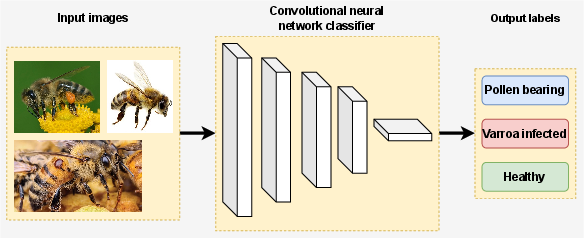
Figure 2: Example of the convolutional neural network classifier pipeline.
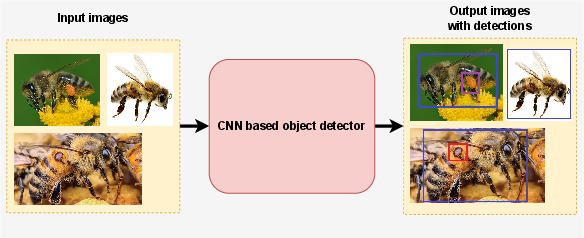
Figure 3: Example of the object detector pipeline.
Applications Discussed
The survey provides an in-depth review of ML applications in the following areas:
- Pollen Detection: This involves identifying pollen-bearing bees entering the hive, using both conventional image processing and CNN classifiers. Effective pollen monitoring can help assess the colony's foraging success and health.
- Varroa Mite Detection: The Varroa mite is a significant threat to beekeeping. Various ML techniques, including CNN classifiers and object detection methods, are utilized to identify these mites on bees' bodies. Early detection is crucial for effective mite management without harmful interventions.
- Bee Traffic Monitoring: This application focuses on tracking bee movement in and out of hives to gather insights into colony health and behavior. Object detection methods are particularly effective here, often achieving high precision in distinguishing between inbound and outbound traffic.
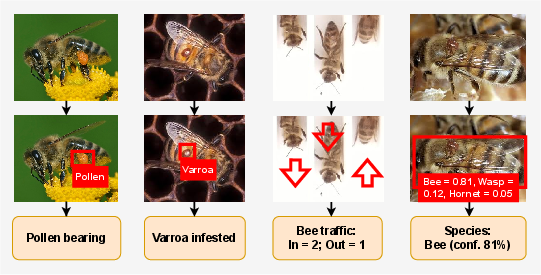
Figure 4: Examples of Pollen detection, Varroa monitoring, Bee traffic monitoring, and general bee inspection (example of intruder species identification) respectively.
The paper emphasizes the importance of diverse, annotated datasets for training robust ML models. It highlights several datasets with variations in bee subspecies, hive type, and environment, which are vital for improving generalization and performance of ML applications in different beekeeping contexts.
Trends and Future Directions
The survey identifies trends such as the growing shift from conventional methods to advanced deep learning and object detection techniques. The authors suggest future research should focus on creating comprehensive, high-resolution datasets and exploring embedded systems for real-time hive monitoring. This would enable more efficient and sustainable beekeeping practices.
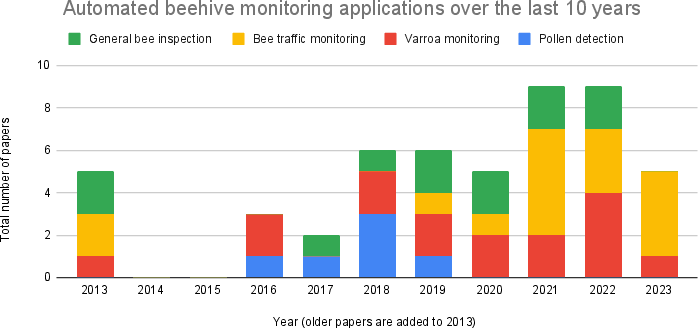
Figure 5: Investigated automated beehive monitoring applications over the last 10 years.
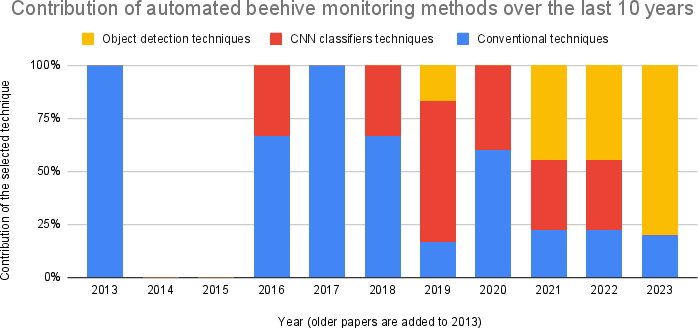
Figure 6: Contribution of investigated automated beehive monitoring methods over the last 10 years.
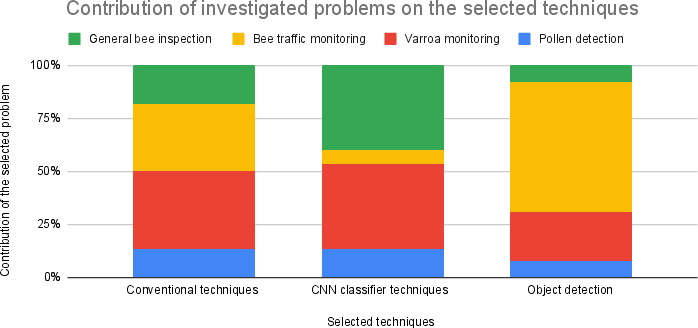
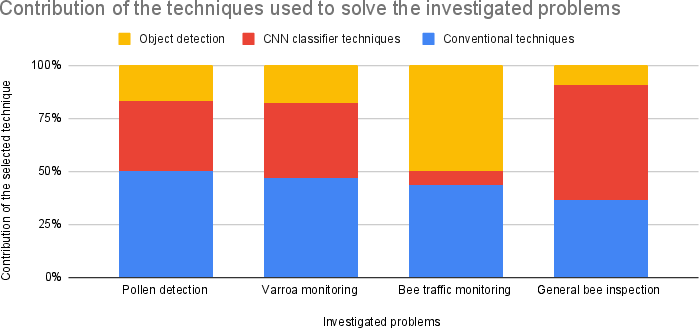
Figure 7: Contribution of investigated problems on the selected techniques and vice versa over the last 10 years.
Conclusion
This survey demonstrates that ML and CV have transformative potential in automated beehive monitoring, with significant implications for ecological research and apiculture. By encouraging further development and adoption of these technologies, the paper aims to enhance sustainable practices in beekeeping and provide tools for more effective management and conservation efforts.