- The paper introduces IntelliBeeHive as an innovative system for automated monitoring of honey bees, pollen, and Varroa mites.
- It employs YOLOv7-tiny with an F1-score of 0.95 and TensorRT optimization to achieve high precision in real-time object detection.
- The system integrates cost-effective hardware like the NVIDIA Jetson Nano for reliable, remote data collection and comprehensive apiary analysis.
IntelliBeeHive: An Automated Honey Bee, Pollen, and Varroa Destructor Monitoring System
Introduction and Background
The paper "IntelliBeeHive: An Automated Honey Bee, Pollen, and Varroa Destructor Monitoring System" explores the development of a comprehensive monitoring system aimed at enhancing our understanding of honey bee colony dynamics and health metrics. By leveraging advancements in computer vision and machine learning, the system focuses on key areas such as Colony Collapse Disorder, pollination activity, and parasitic infestations by Varroa destructor mites, which are a pivotal factor in honey bee population decline (2309.08955).
The use of YOLOv7-tiny, a state-of-the-art object detection model, allows for real-time tracking of bees and the determination of their behaviors and health indicators. The system achieves a remarkable F1-score of 0.95 and demonstrates precision in identifying honey bees, pollen, and Varroa mites with high reliability, maneuvering past traditional methodologies that often disrupt bee activity or prove inefficient in time-sensitive environments.
System Architecture and Hardware Design
The hardware implementation primarily relies on the NVIDIA Jetson Nano Developer Kit for executing computationally intensive object detection tasks. This choice balances cost-efficiency against performance, providing a practical solution for beekeepers spanning from hobbyists to commercial operators.
The containment design undergoes iterations from 3D-printed PLA segments to a laser-cut wooden enclosure due to material deformation under physical stress and temperature extremes. This decision enhances structural integrity and rapid manufacturability, as illustrated in the figures.
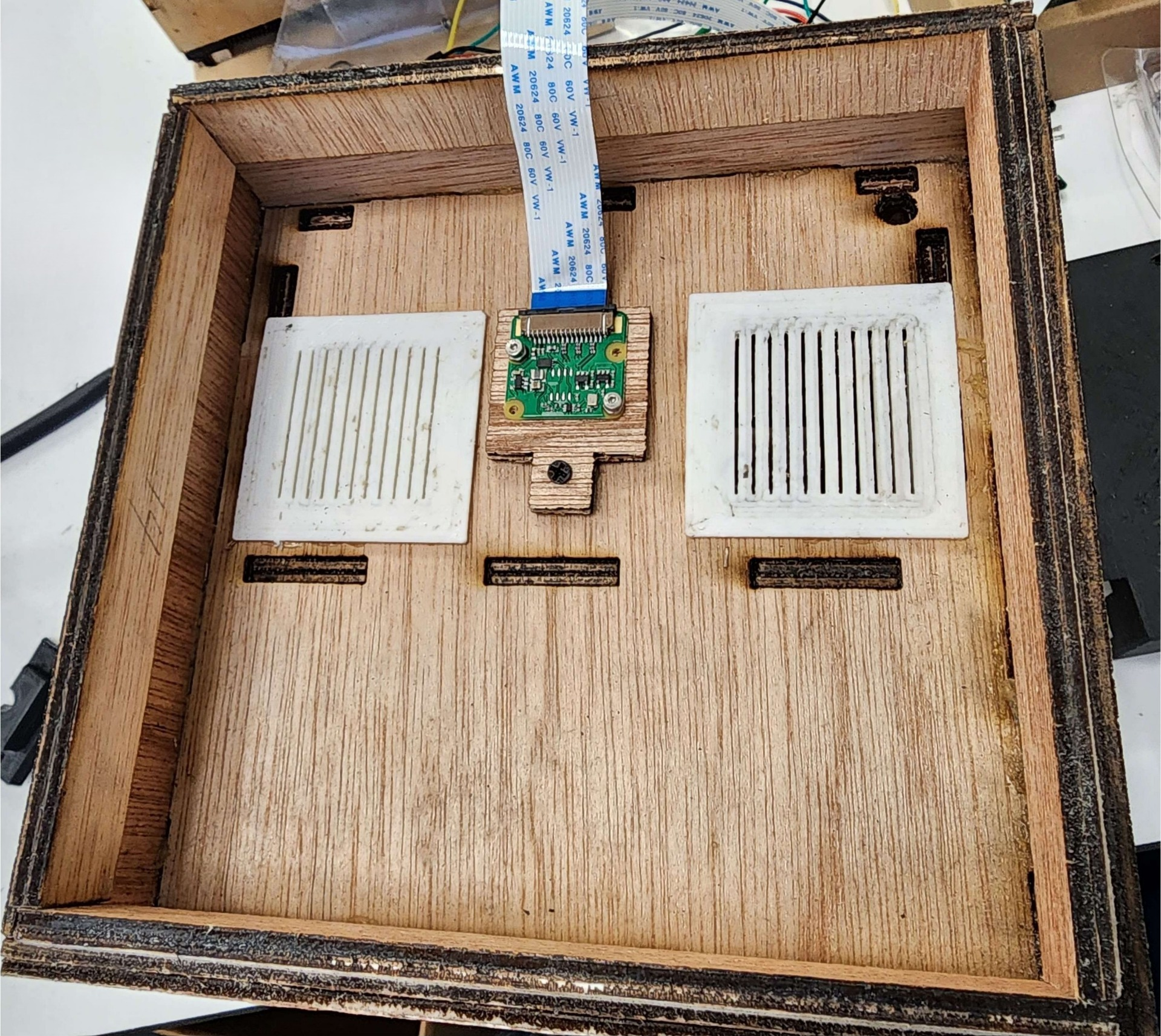
Figure 1: Raspberry Pi Camera V2.1 in monitoring system.
Object Detection and Tracking
Central to IntelliBeeHive’s innovation is its application of YOLOv7-tiny for honey bee detection and tracking, with tailored models for pollen and mite identification. The training regimen is rigorous, utilizing extensive datasets generated from in-situ recordings designed to ensure environmental robustness.
The detection model benefits from conversion to TensorRT, reducing computational latency significantly, thereby optimizing the speed and responsiveness essential for live hive monitoring.
Software and Data Handling
The software architecture employs Secure Shell Protocol (SSH) for remote management, demonstrating the system's adaptability and ease of deployment. Data transmission from the hive to the end-user interface leverages REST APIs for seamless integration and real-time visualization, allowing users to interact with hive statistics through the IntelliBeeHive web application.
The backend supports efficient data retrieval and storage using MySQL, visualizing hive dynamics efficiently over extended periods without performance bottlenecks from large-scale data querying.
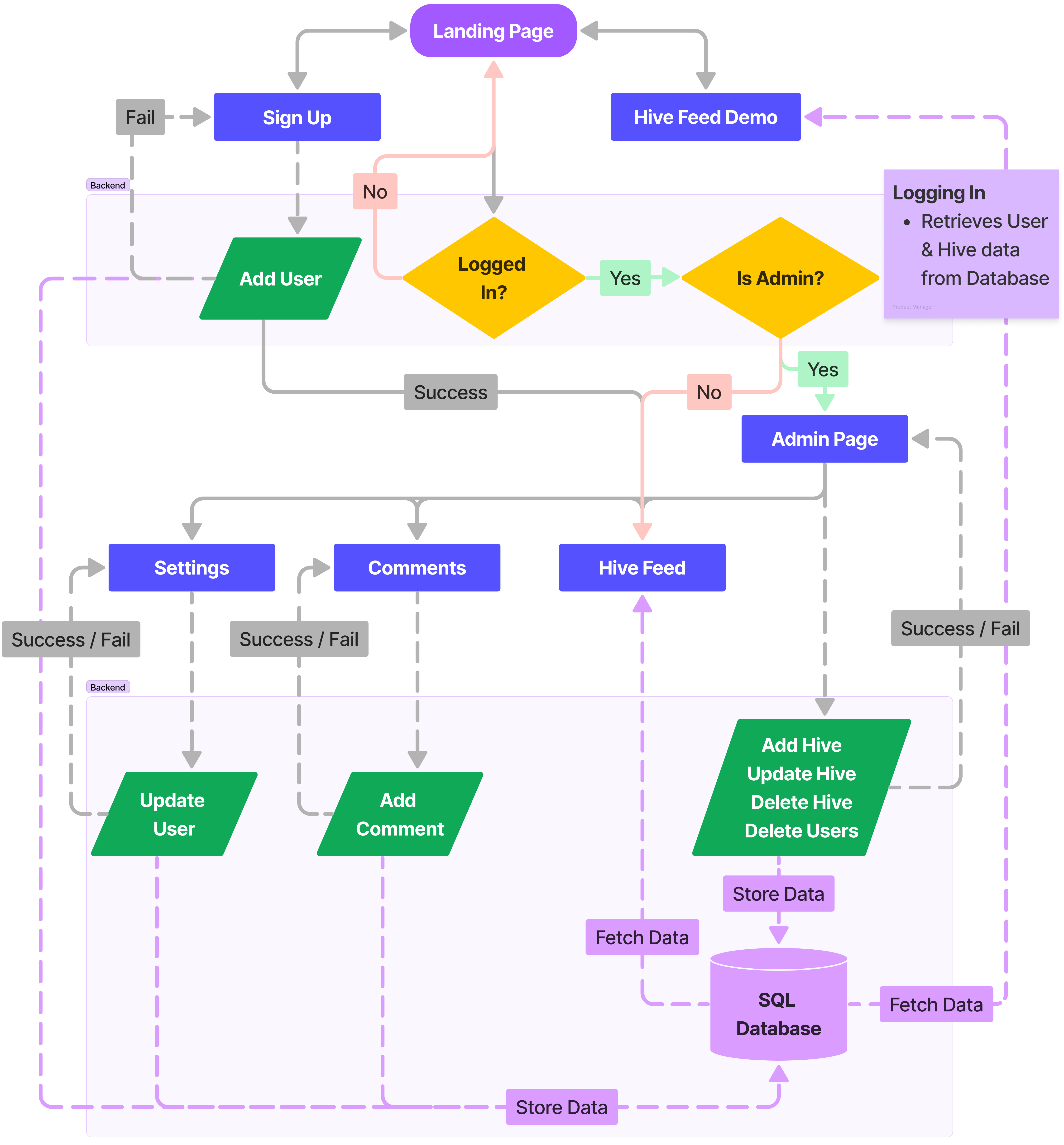
Figure 2: Shows a flowchart diagram of IntelliBeeHive’s backend workflow.
The evaluation of the YOLOv7 training yields F1-scores exceeding 0.95 for honey bee detection, with pollen detection averaging an F1-score of 0.8319. These results showcase the system's efficacy in distinguishing bees and environmental elements accurately, thus ensuring data integrity and reliability.
Experimental analysis indicates a tracking accuracy of 96.28%, affirming the robustness of the software algorithms and their capacity to reflect real-world bee activity without significant deviation from manual counts.
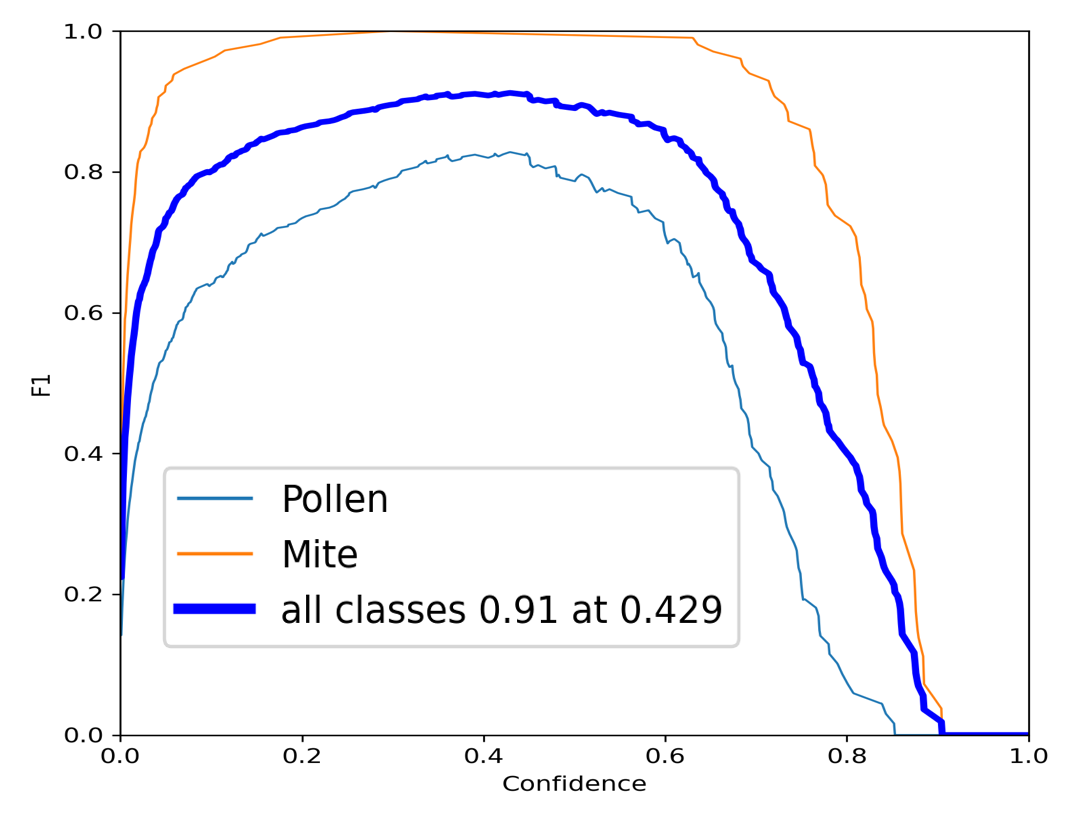
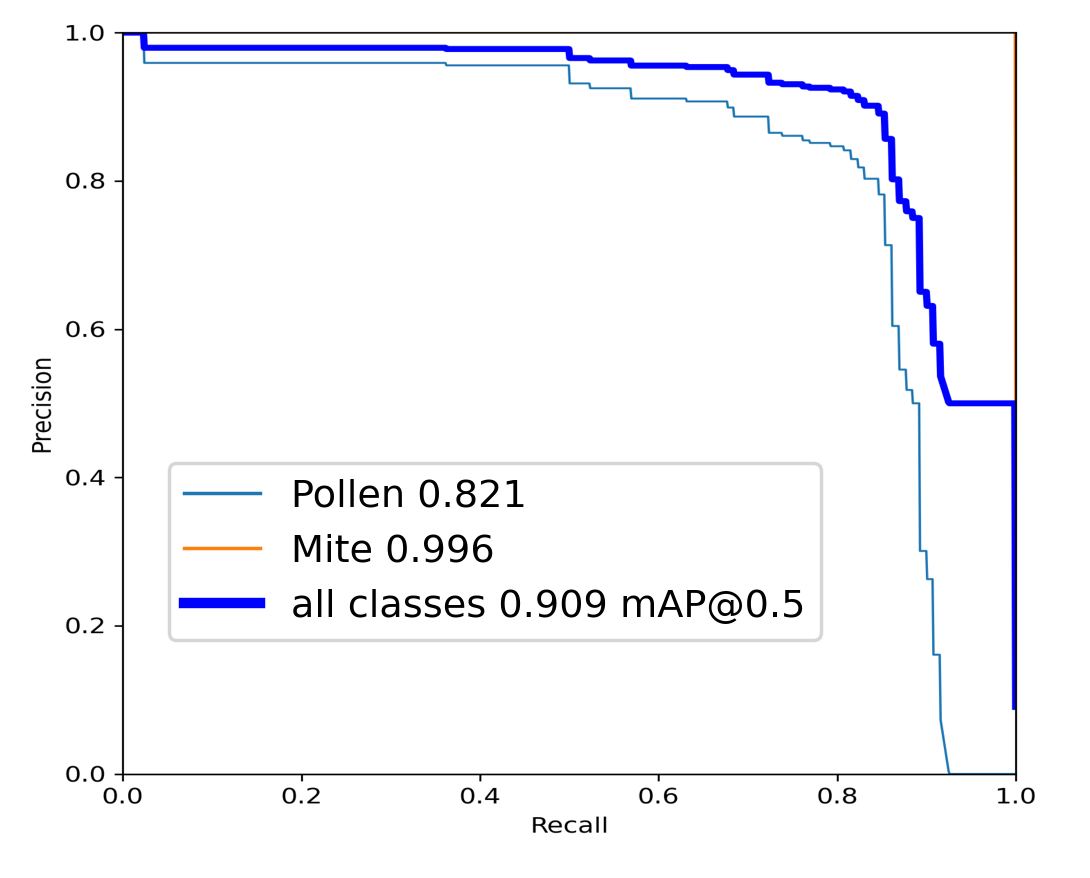
Figure 3: Pollen and Mite model training results
Conclusion
The IntelliBeeHive system presents a transformative approach to automated bee hive monitoring through adept use of object detection frameworks and innovative hardware configurations. Its implications for beekeeping practices are profound, offering data-driven insights and real-time tracking that can inform sustainable apiculture and colony management strategies.
Preliminary evaluations foster confidence in its applicability across varied environmental conditions, with potential extensions such as integrating actual mite data and enhancing hardware capabilities for 24/7 monitoring planned.
Future directions may involve collaborative deployments across global apiaries to test system adaptability and refine the technology further based on diversified environmental feedback. Overall, IntelliBeeHive sets a precedent for integrating AI-driven monitoring solutions in agriculture and ecosystem management.