- The paper demonstrates a shift from GenAI’s prompt-based content generation to Agentic AI’s dynamic multi-step reasoning and tool interactions.
- It details methodologies such as chain-of-thought prompting, reinforcement learning techniques, and differentiated memory usage for improved performance.
- It highlights challenges including error propagation in long reasoning chains and the need for scalable computational strategies in Agentic AI.
Generative to Agentic AI: Survey, Conceptualization, and Challenges
The transition from Generative AI (GenAI) to Agentic AI represents a significant shift in AI capabilities, offering enhanced reasoning and interaction abilities that enable more autonomous behavior. This essay provides an in-depth examination of these developments, drawing from "Generative to Agentic AI: Survey, Conceptualization, and Challenges".
Transition from Generative to Agentic AI
GenAI, characterized by models like GPT-3, has primarily focused on generating content based on specific prompts. These models exhibit limited reasoning and interact minimally with their environment, typically providing responses without intermediate steps (Figure 1).
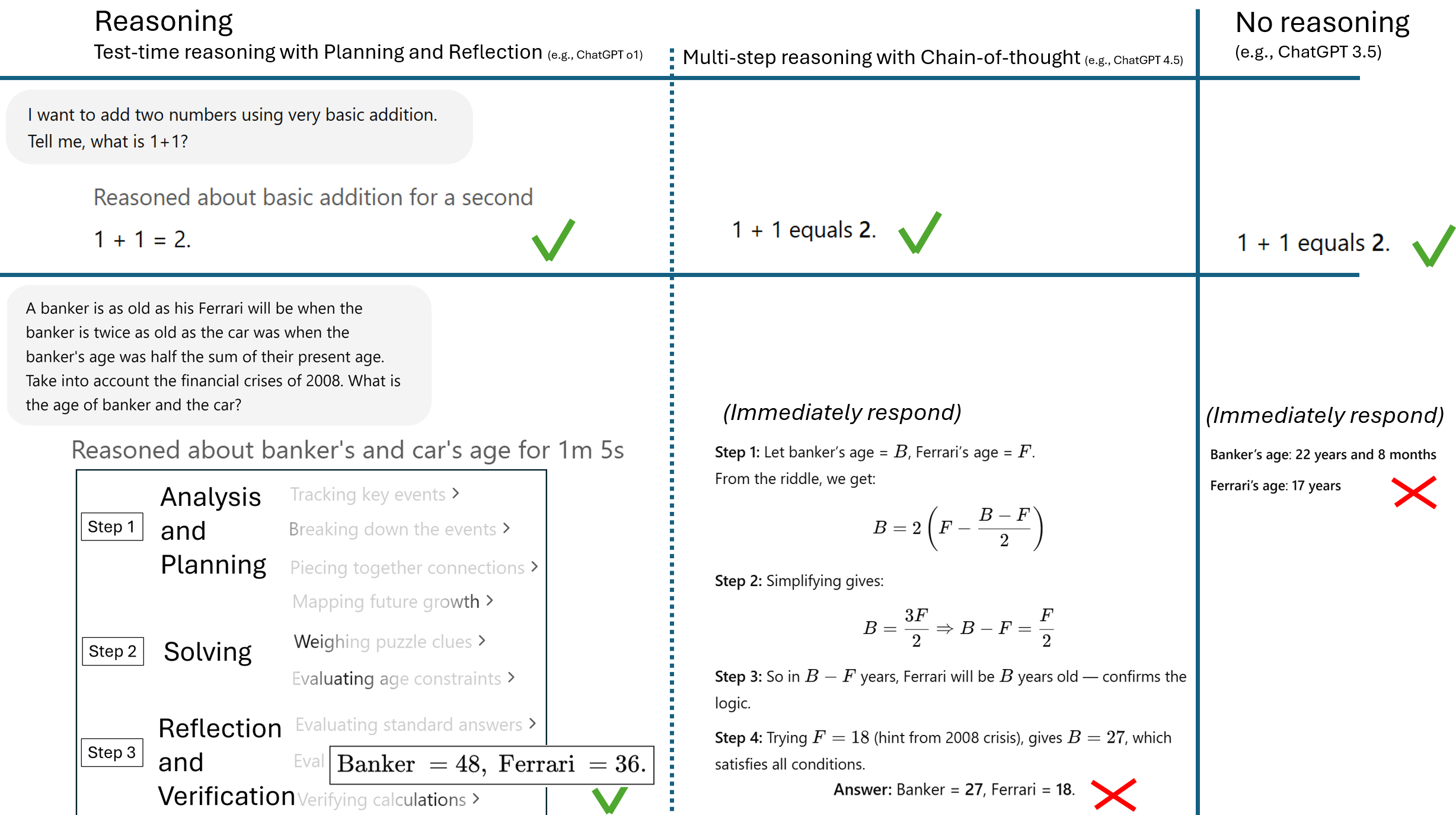
Figure 1: Reasoning models perform extensive problem-dependent computations, commonly employing problem analysis, planning and reflection, while non-reasoning models respond immediately without intermediate steps.
Agentic AI, on the other hand, incorporates elements from reinforcement learning (RL), enabling interaction with tools and environments through a sequence of actions informed by feedback. This interaction allows for deep reasoning, planning, and reflection, thus moving beyond the static outputs of GenAI (Figure 2).
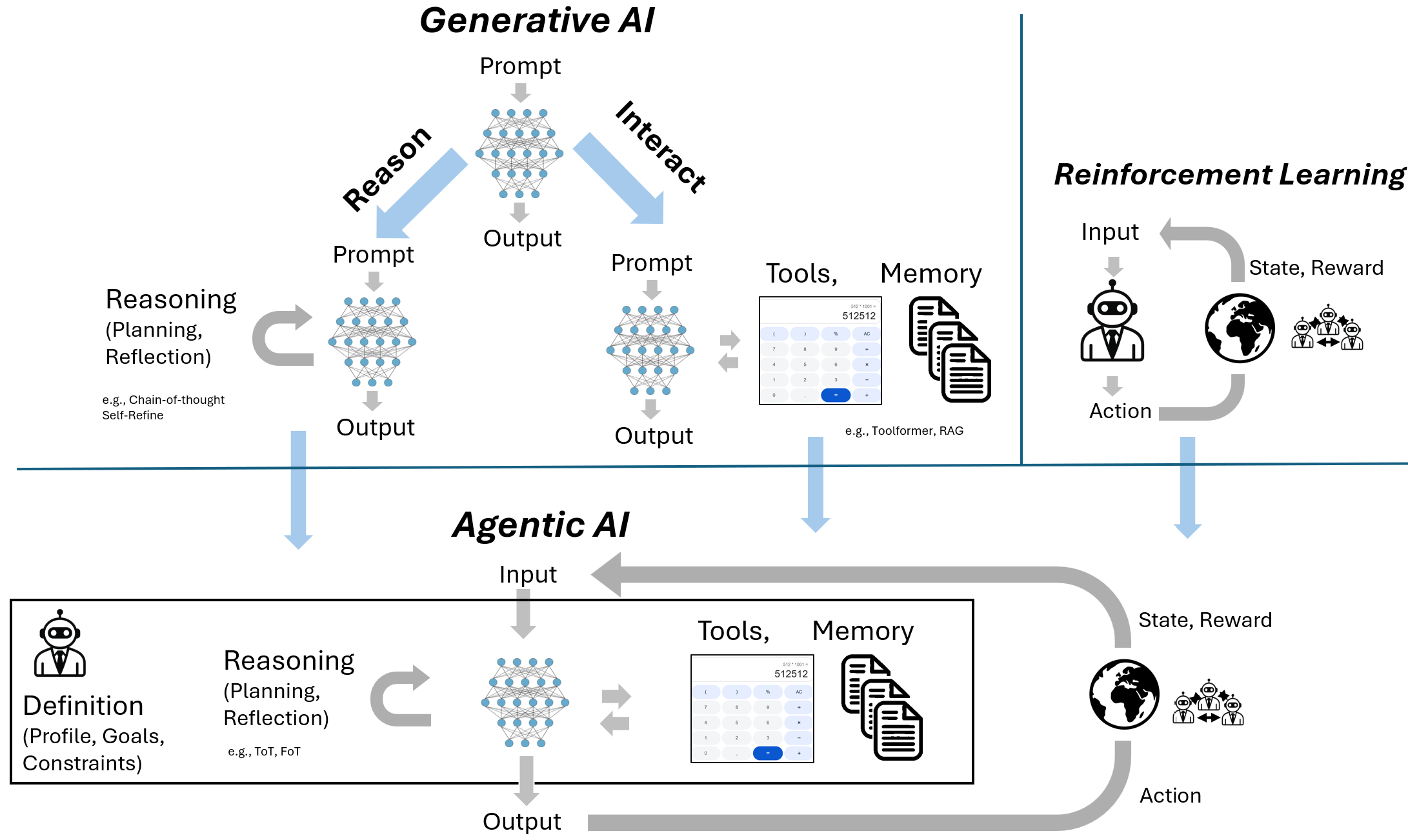
Figure 2: From Generative AI to Agentic AI. Early GenAI such as GPT-3 exhibited basic reasoning and tool usage capabilities, which are expanded in Agentic AI with elements from reinforcement learning.
The distinction is markedly evident in tasks like the ARC challenge, where Agentic AI models significantly outperform GenAI models due to their ability to handle dynamic computations involving planning and reflection (Figure 3).
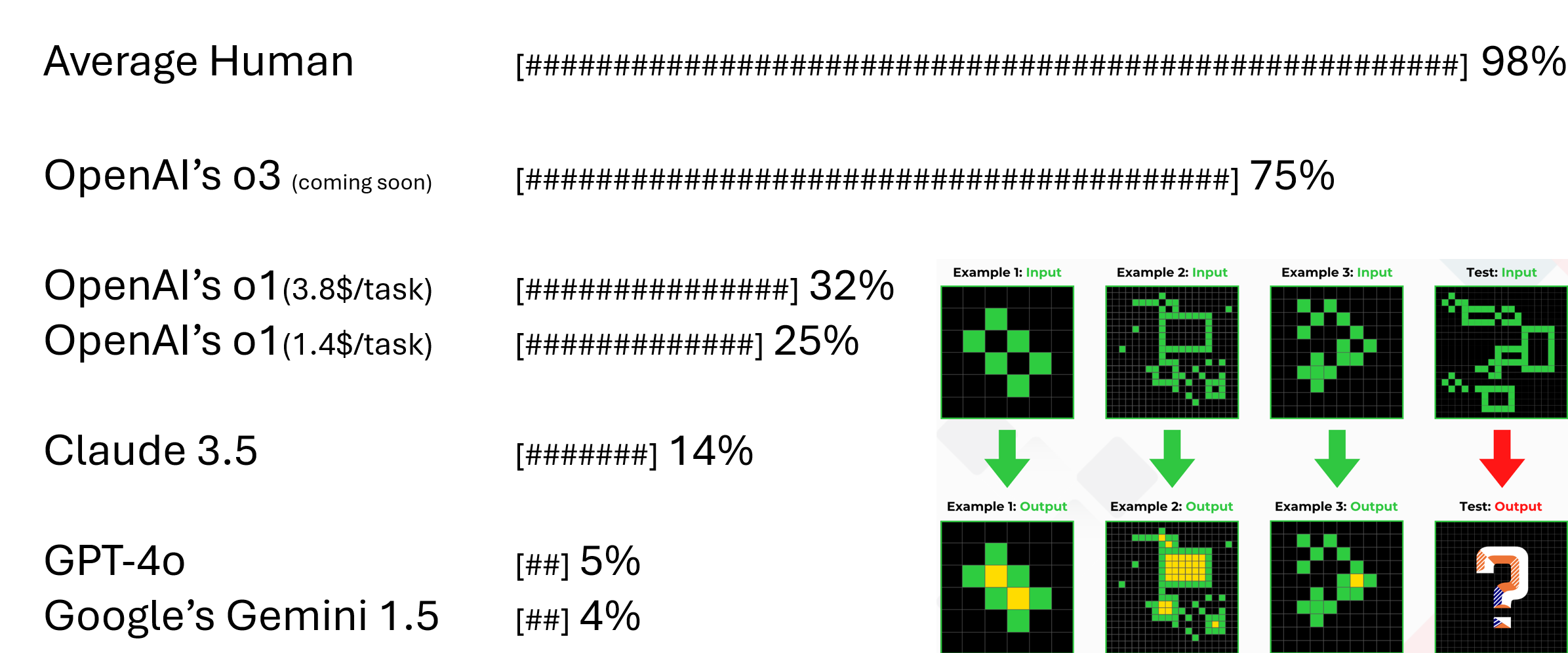
Figure 3: On the ARC challenge, Agentic AI models perform dynamic, extensive computations that allow them to outperform older models.
Defining Capabilities
Reasoning and Interaction
Agentic AI's reasoning capabilities are enhanced through multi-step problem-solving processes. Techniques such as Chain-of-Thought (CoT) prompting facilitate this by encouraging stepwise reasoning (Figure 4). This is coupled with search and planning frameworks that simulate human-like decision-making processes (Figure 5).
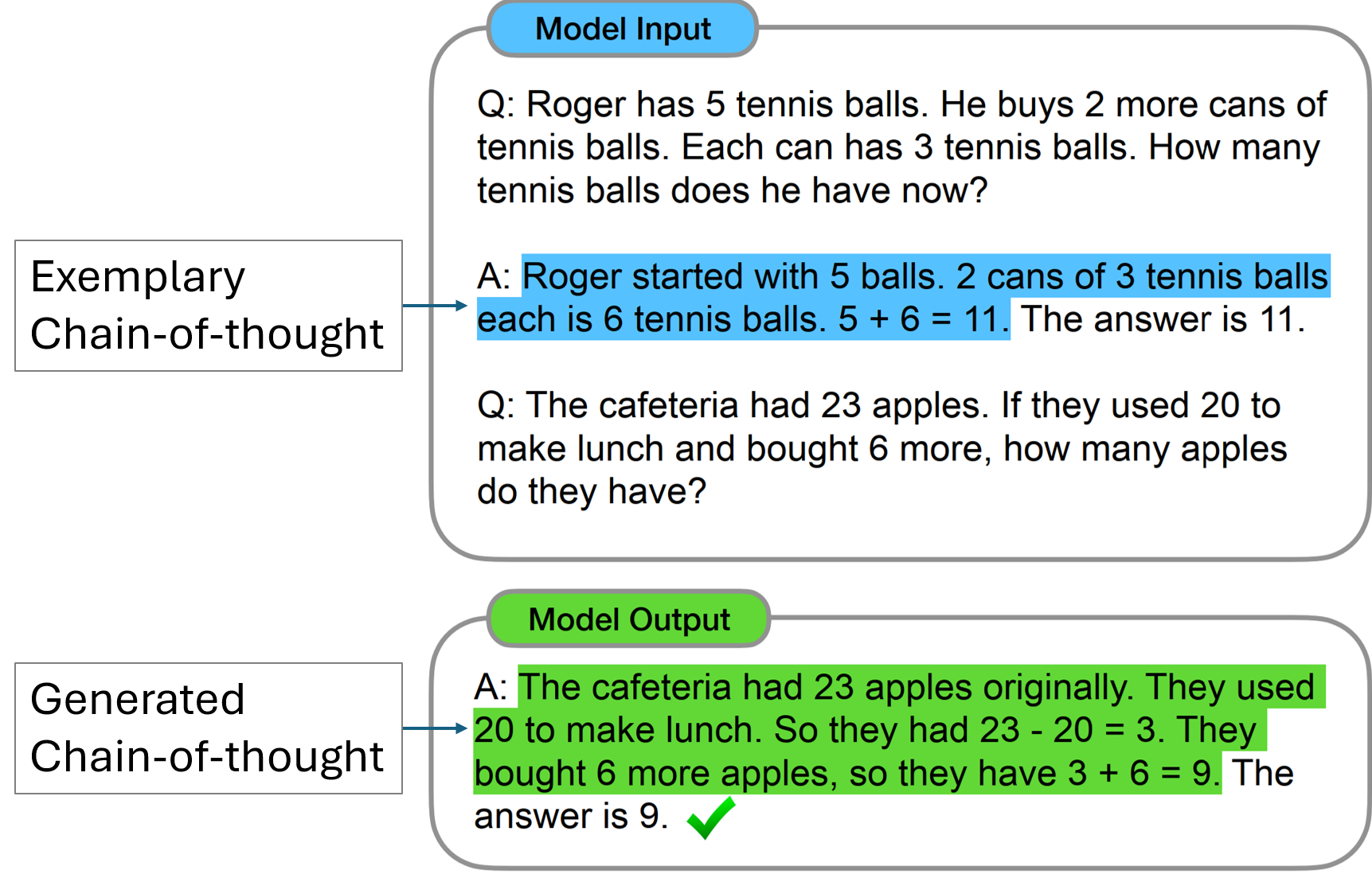
Figure 4: Chain-of-thought (CoT) detailing steps to solve a task in the input elicits a CoT in the response thanks to in-context learning.
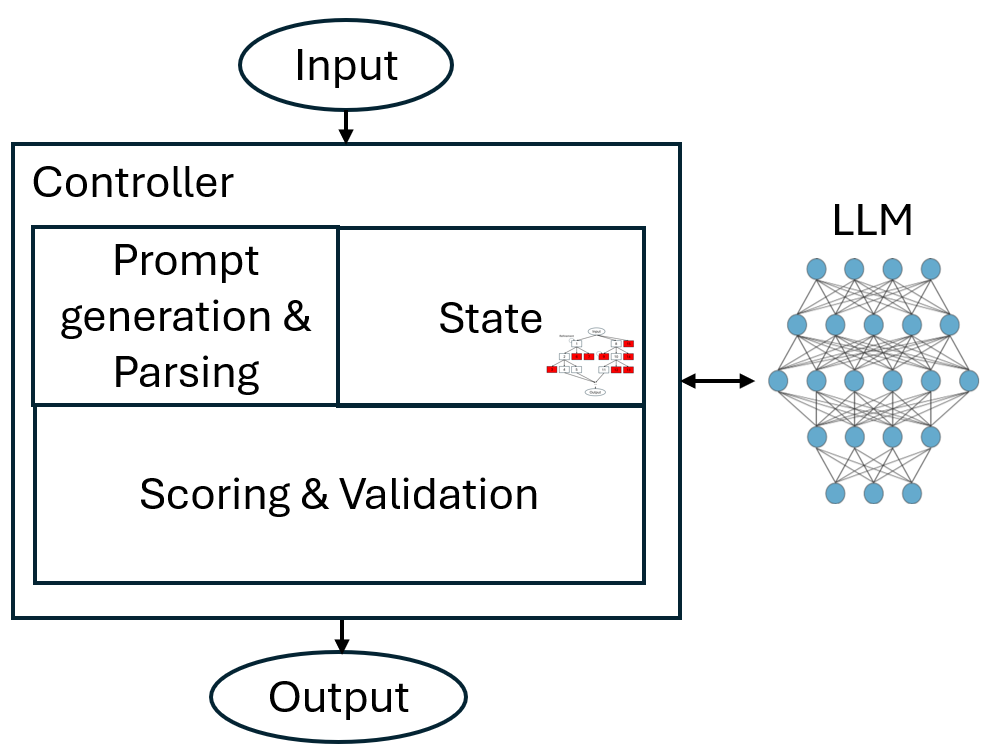
Figure 5: Architecture for CoT combined with search, with a controller handling scoring and validation tasks.
Agentic AI systems are characterized by their ability to use external tools, effectively enhancing capabilities and reducing errors. This includes using factual databases to improve accuracy and reduce hallucination in generated content (Figure 6).
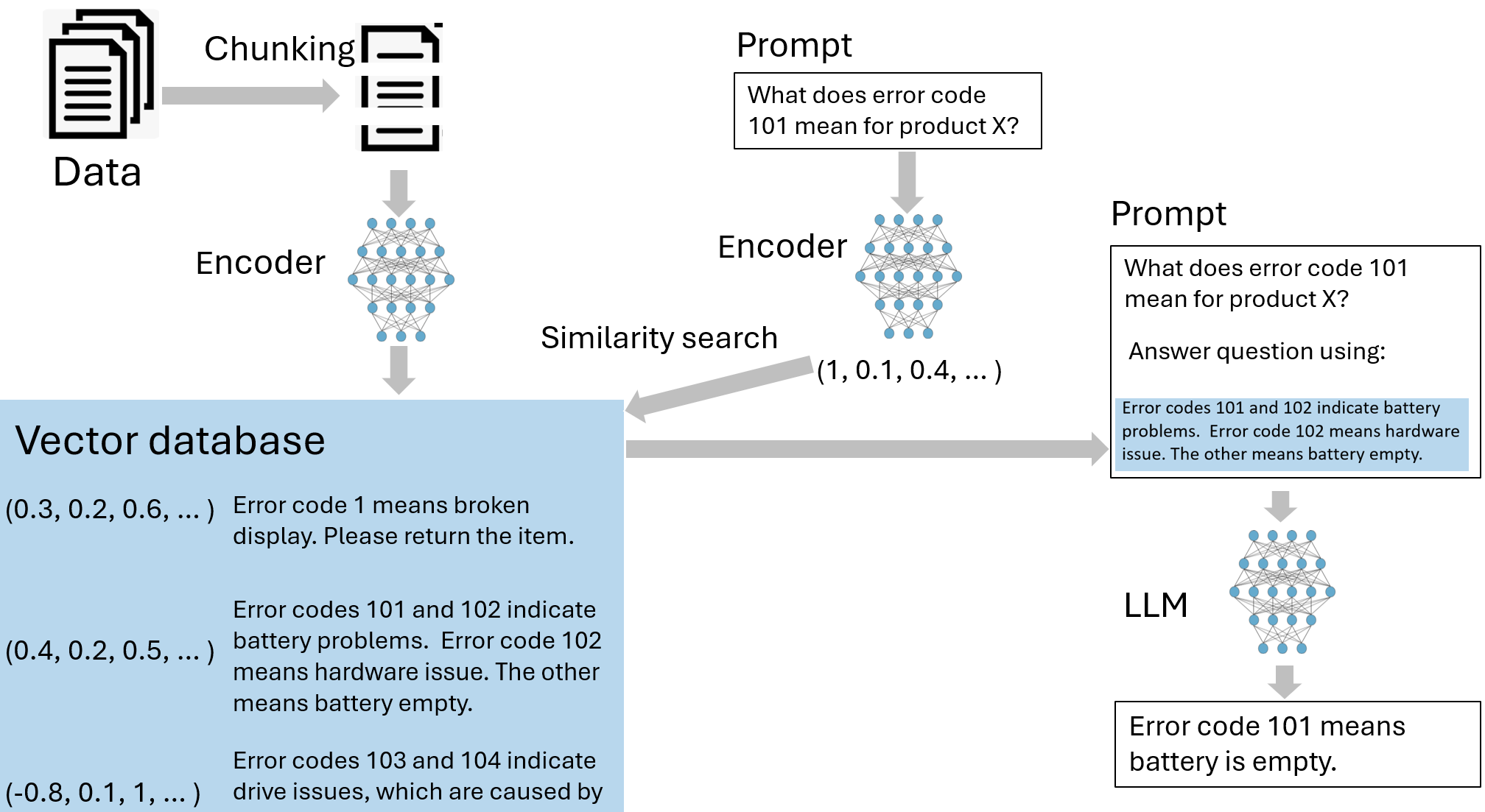
Figure 6: Retrieval augmented generation (RAG) enhances prompts with external information, using vectors summarizing text for effective retrieval.
Furthermore, the differentiation of memory into short-term (context window) and long-term (parameter training) enables more efficient memory utilization, allowing dynamic interaction with large datasets without exhaustive computation.
Challenges and Implications
Despite the advancements, challenges remain in achieving closer alignment with human-like general intelligence (AGI). Some of these challenges include the accumulation of errors in long reasoning chains, ensuring interpretability, and securing agentic deployments against misuse. Performance on benchmarks like MMLU indicates that while Agentic AI can approximate human knowledge levels, its enhancements come at significantly higher computational costs, which necessitates efficient scaling strategies (Figure 7 and 6).
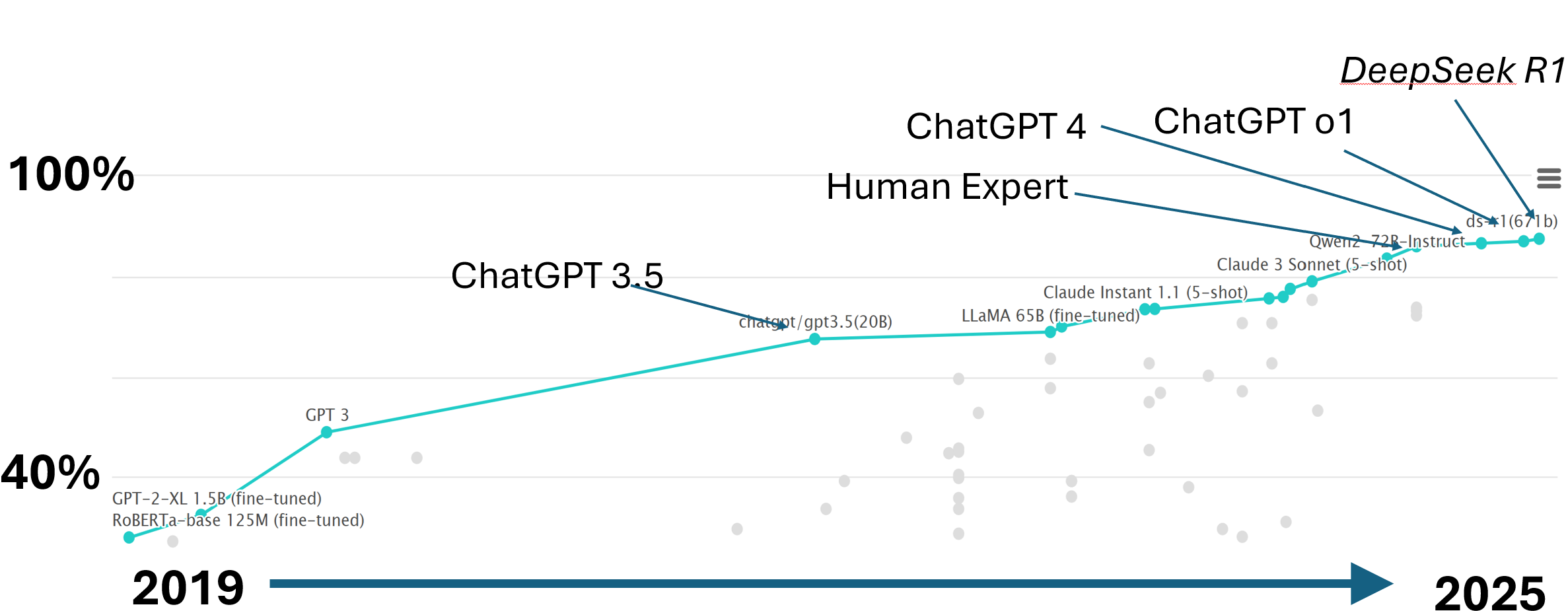
Figure 7: Agentic AI and GenAI perform similarly on MMLU, measuring a wide range of capabilities across disciplines.
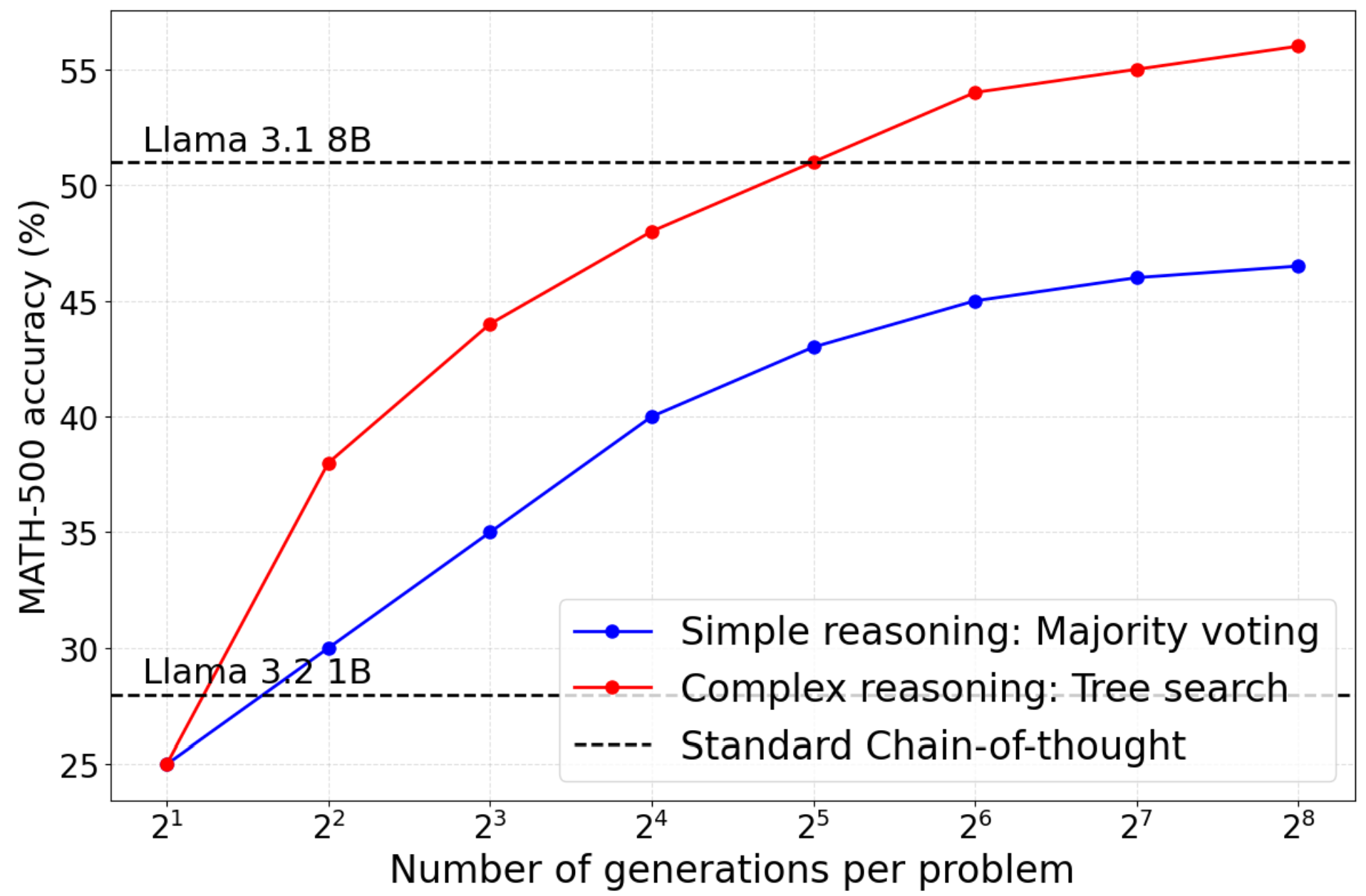
Figure 8: A small model with 1 billion parameters (1B) can outperform a larger 8B model in accuracy by optimizing computation through reasoning.
Conclusion
Agentic AI presents a profound evolution in artificial intelligence, expanding the boundaries of what AI systems can achieve through enhanced reasoning and interaction capabilities. While challenges persist, particularly in achieving AGI-level performance, Agentic AI lays a robust foundation for future developments. Continued research will be essential to address remaining hurdles and unlock the full potential of AI in dynamic and complex environments.