- The paper presents a novel agent-centric IR approach using dynamic multi-step reasoning to achieve target information states.
- It details key methods like prompt engineering, retrieval-augmented generation, and reinforcement fine-tuning to optimize the agent policy.
- Applications in life, business, and coding assistants demonstrate the practical potential and future impact of Agentic IR.
Agentic Information Retrieval (Agentic IR) represents a novel paradigm shift in the field, leveraging breakthroughs in LLMs to redefine how information retrieval tasks are approached. This essay examines the theoretical underpinnings and practical implications of Agentic IR, highlighting its architectural innovations, key methodologies, and specific applications. It offers a detailed analysis of the paradigm's implications for the future of digital ecosystems.
Traditional vs. Agentic IR
Traditional information retrieval (IR) systems have historically relied on predefined architectures to retrieve, rank, and select items according to a query. Web search engines and personalized recommender systems epitomize such architecture-centric approaches, where items are filtered from a fixed set based on learned ranking functions.
Agentic IR, as proposed in the paper, diverges significantly from this model by employing AI agents capable of dynamic, multi-step reasoning and interaction with environments to accomplish complex tasks.
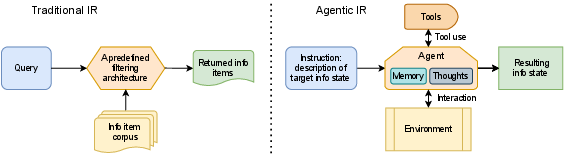
Figure 1: The paradigms of traditional IR vs. agentic IR.
The transition from a rigid filtering paradigm to one characterized by agentic reasoning signifies a shift towards flexibility and task inclusivity. Agentic IR utilizes advanced methods such as prompt engineering and retrieval-augmented generation, allowing for a broader scope of tasks and a unified architecture applicable across diverse scenarios.
Architecture and Key Methods
Agentic IR envisions information retrieval as a dynamic process where an AI agent iterates through observation, reasoning, and action steps, aiming to achieve a target information state, s∗. The formulation of this task involves defining agent policy π(at∣x(st)), which guides interaction with the environment.
Agent Architecture
The central module of Agentic IR is the agent policy, fed with transformed text inputs, interacting iteratively to reach targeted outcomes. The modular architecture includes memory (Mem), thought (Tht), and external tools (Tool), enabling nuanced manipulation and access to external resources.
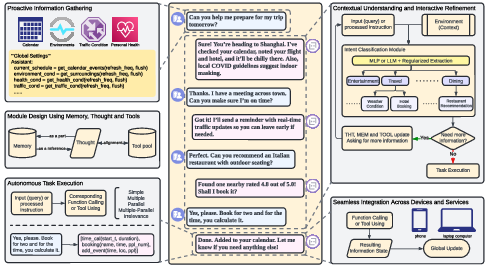
Figure 2: Illustration of agentic IR in life assistant scenarios.
Key Methods
Agentic IR employs sophisticated methodologies to optimize performance:
- Prompt Engineering: Utilization of task-specific language prompts to guide LLMs, enhancing their task-solving capabilities.
- Retrieval-Augmented Generation (RAG): Incorporates relevant demonstrations into decision-making processes, enabling more robust task fulfillment.
- Reinforcement Fine-Tuning (RFT): Direct optimization of agent policy using reinforcement learning methods such as PPO, seeking optimal reward outcomes.
These methods collectively contribute to a refined, adaptable agentic IR framework capable of handling complex, multi-faceted tasks with precision.
Application Scenarios
The disruptive capability of Agentic IR is demonstrated through applications in life assistant, business assistant, and coding assistant scenarios.
Life Assistant
Life assistants benefit from Agentic IR by harnessing proactive information gathering and decision-making to support users in daily activities.
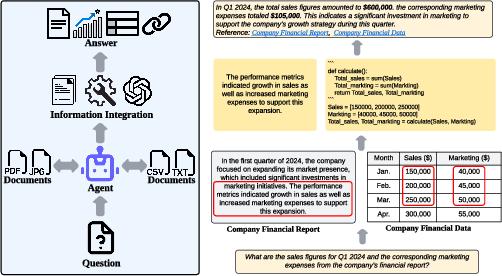
Figure 3: Illustration of agentic IR in business assistant scenarios.
Business Assistant
Business assistants leverage agentic IR to deliver insights and synthesize information from diverse documents and datasets, enhancing decision-making efficiency in enterprises.
Coding Assistant
Coding assistants, powered by Agentic IR, facilitate contextual understanding and code generation, aiding developers through interactive programming environments.
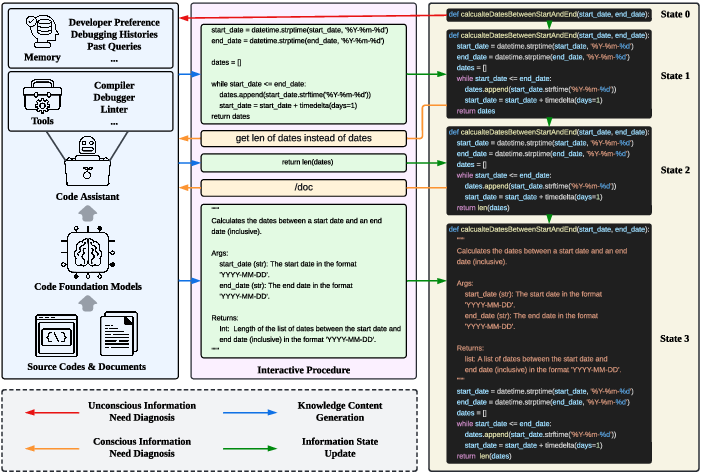
Figure 4: Illustration of agentic IR in coding assistant scenarios.
Challenges and Future Directions
Agentic IR faces several challenges, including data acquisition complexities, inference costs, and the need for robust safety alignment. Addressing these will be crucial for realizing its full potential in diverse applications.
The evolution and maturation of Agentic IR methodologies hold promise for reshaping digital interactions, with profound implications for research and industry applications. Continued interdisciplinary efforts will be essential to tackle existing technical hurdles and unlock new capabilities for agent-driven information retrieval systems.
Conclusion
Agentic Information Retrieval heralds a transformative era in information retrieval, propelled by the innovative use of AI agents for complex task resolution and dynamic interaction. While challenges persist, the conceptualization and deployment of Agentic IR offer a glimpse into the future of intelligent digital ecosystems, providing a versatile framework for next-generation retrieval architectures.