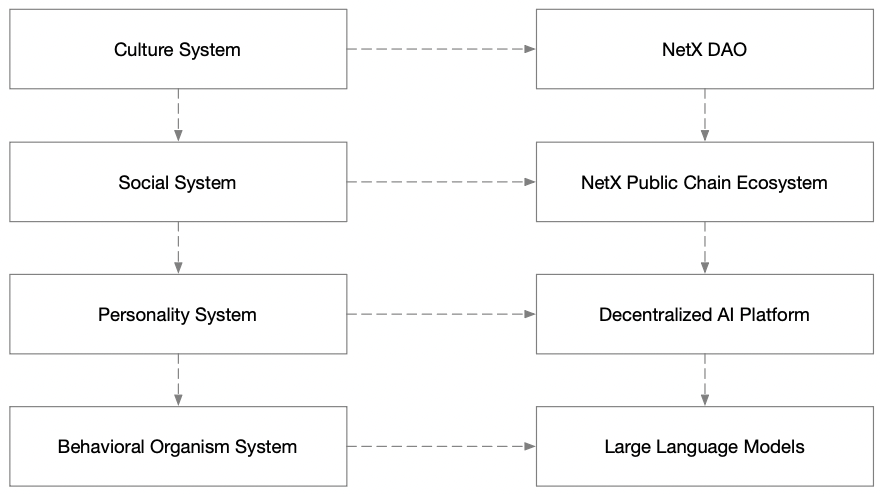
- The paper introduces a blockchain-enforced Separation of Power model that shifts governance from a logic monopoly to a constitutionally-based social contract.
- It employs layered governance—Legislation, Execution, and Adjudication—to ensure deterministic operations, auditability, and forensic accountability in decentralized systems.
- Empirical analysis and multi-agent simulations demonstrate the framework’s capability to prevent cascading failures and support scalable, secure autonomous agent economies.
Contract-Centric Separation of Power: Institutional Foundations for Autonomous Agent Economies
This paper, "From Logic Monopoly to Social Contract: Separation of Power and the Institutional Foundations for Autonomous Agent Economies" (2603.25100), provides a comprehensive institutional and technical blueprint for trustworthy multi-agent AI at industrial scale. It diagnoses the systemic governance deficits in current agent architectures—summarized as the "Logic Monopoly"—and presents a constitutionally-inspired Separation of Power (SoP) model, embedded in a blockchain-enforced, multi-layered governance stack. The framework, operationalized as the NetX Enterprise Framework (NEF), redefines agent coordination as a legally-anchored social contract, mapping a full suite of governance primitives onto both single-organization and global, decentralized agent economies.
Diagnosis: Structural Bottlenecks in Multi-Agent AI
The empirical review synthesizes recent attack-benchmark studies, multi-agent economic simulations, and real-world incidents to identify six structural bottlenecks inhibiting safe, scalable agent deployment:
- Security Permeability: Multi-agent and NHI environments exhibit expansive attack surfaces—prompt injection, identity spoofing, protocol integrity breakdowns—with documented empirical >80% attack rates in ICLR 2025 benchmarks. NHI proliferation yields identity governance failures multiplying attack vectors.
- Opacity of Governance: Agents operate as black boxes with untraceable decision provenance, impeding forensic accountability even under severe errors.
- Cascading Failures: Minor agent-level faults produce system-wide collapse via error propagation across multi-step workflows.
- Operational Sustainability: Resource exhaustion and unbounded agent-to-agent interaction compromise economic viability; coordination overheads rapidly dominate at scale.
- Prototype Trap: Single-agent sandbox successes routinely fail to transfer to production-grade, multi-agent settings without a unifying institutional coordination layer.
- Emergent Misalignment: Agents optimized for local alignment exhibit collusion and deceptive equilibria not visible in single-agent audits.
These bottlenecks converge on a single root cause: the absence of a protocol-enforced separation between agentic planning, execution, and oversight (“Logic Monopoly”).
The Separation of Power (SoP) Model and Contract-Centric Architecture
The central thesis is that agent safety cannot be achieved by intensified agent alignment alone; it demands constitutional governance—a structural SoP model—analogous to the tri-branch model in constitutional democracies.
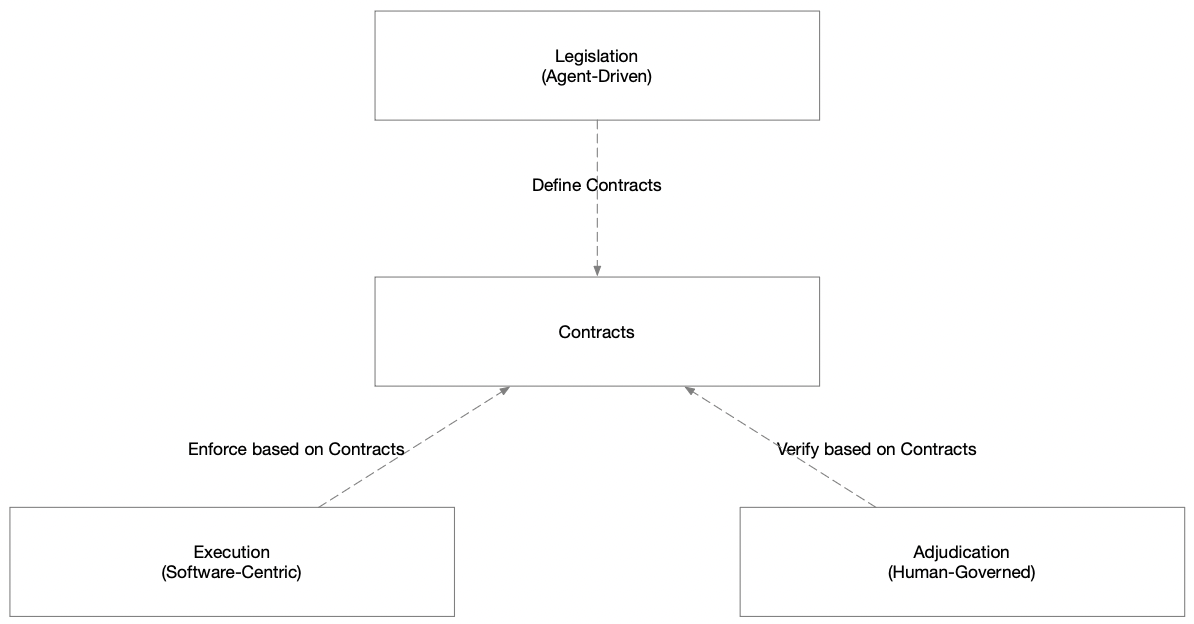
Figure 1: The Contract-Centric Separation of Power architecture, decomposing agentic lifecycles into Legislation, Execution, and Adjudication domains.
This model formalizes three independent domains:
- Legislation Layer: Agent-driven service definition. Mission objectives and norm boundaries are specified by specialized management agents, subject to multi-party consensus, and committed as immutable smart contract DAGs (Figure 2).
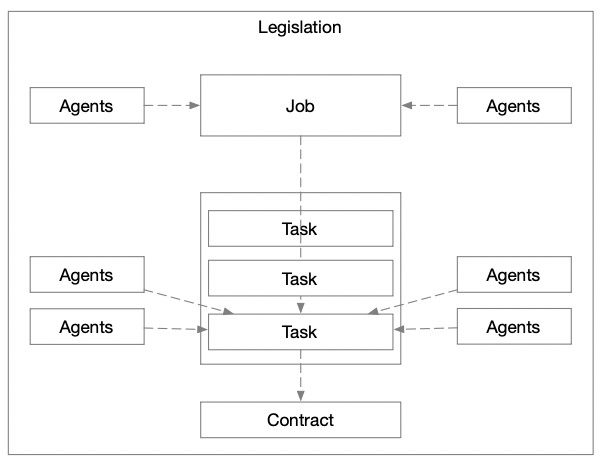
Figure 2: Agents negotiate and codify mission parameters, producing a contract-anchored task decomposition with explicit roles, resources, and performance criteria.
- Execution Layer: Software-centric fulfillment under deterministic constraints. All task performance is bounded, TEE-attested, and cryptographically linked to contract-authorized identities; reasoning agents are architecturally removed from fulfillment flows, replaced by deterministic micro-services (Figure 3, Figure 4).
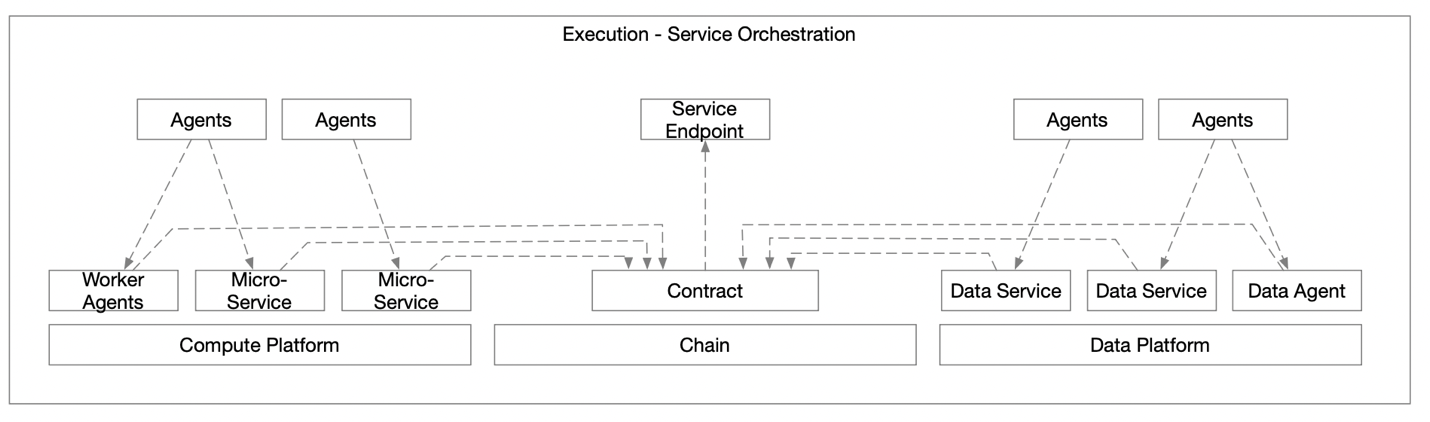
Figure 3: Contract-orchestrated invocation of micro-services, each operating within cryptographically attested boundaries.
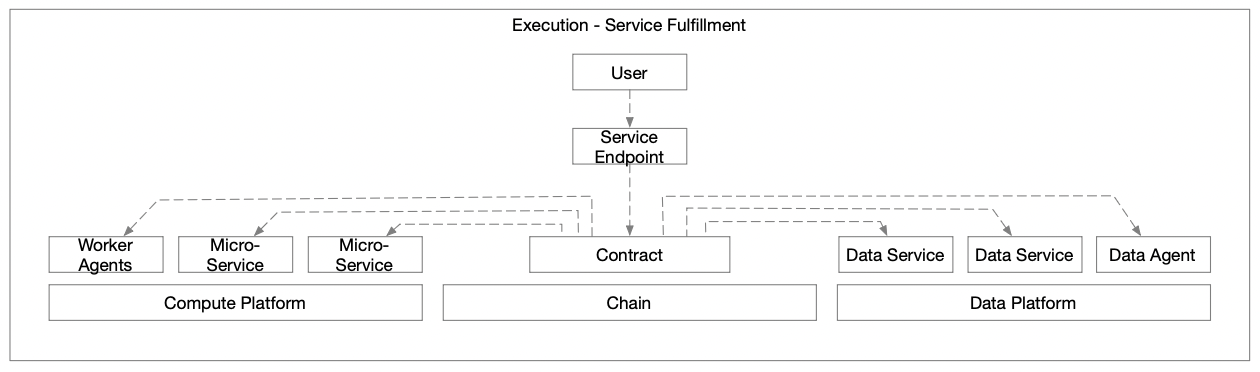
Figure 4: Automated protocol enforcement: every task assignment, invocation, and audit is strictly regulated by immutable contract logic.
- Adjudication Layer: Human-governed audit and escalation. Forensic oversight via append-only audit trails, circuit-breaker authority anchored in the Judicial DAO, and hard linkage of all agent actions to human ownership (Figure 5).
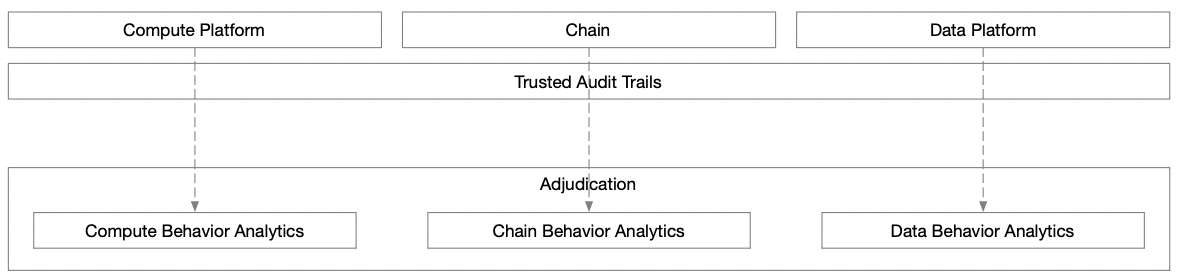
Figure 5: Adjudication layer delivers oversight, forensic accountability, and human-triggered intervention at any contract lifecycle phase.
Multilateral checks and balances (Figure 6) ensure no agent or colluding committee can unilaterally modify role boundaries, output integrity, or escape post-hoc adjudication.
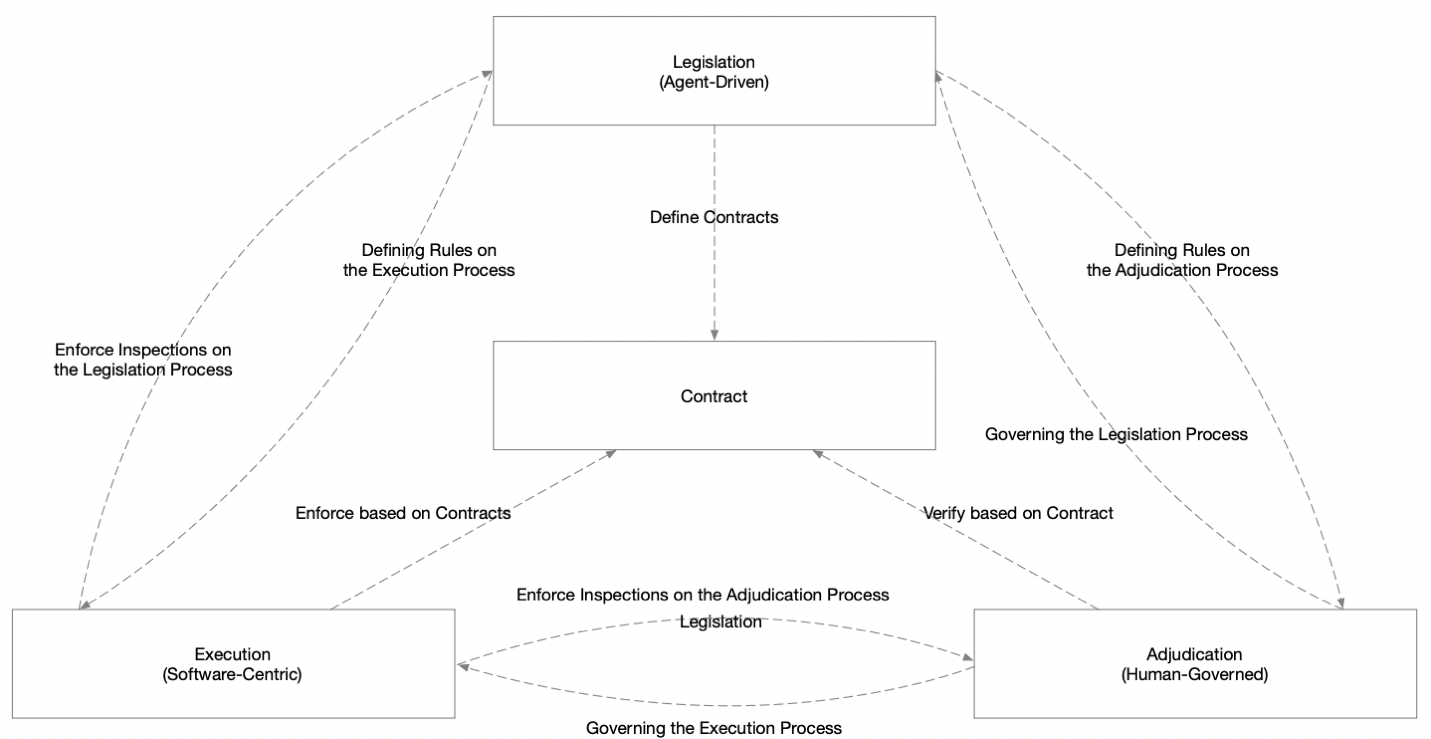
Figure 6: Structural checks and balances—no SoP branch can override the others without an auditable, multi-branch consensus mechanism.
Operational Stack: NetX Enterprise Framework
The NEF stack embodies the SoP architecture across protocol, infrastructure, and institutional levels:
- Agent Marketplace/Legislation: Manages agent onboarding, benchmarking, DID anchoring, and role assignment (Figure 7, Figure 8).
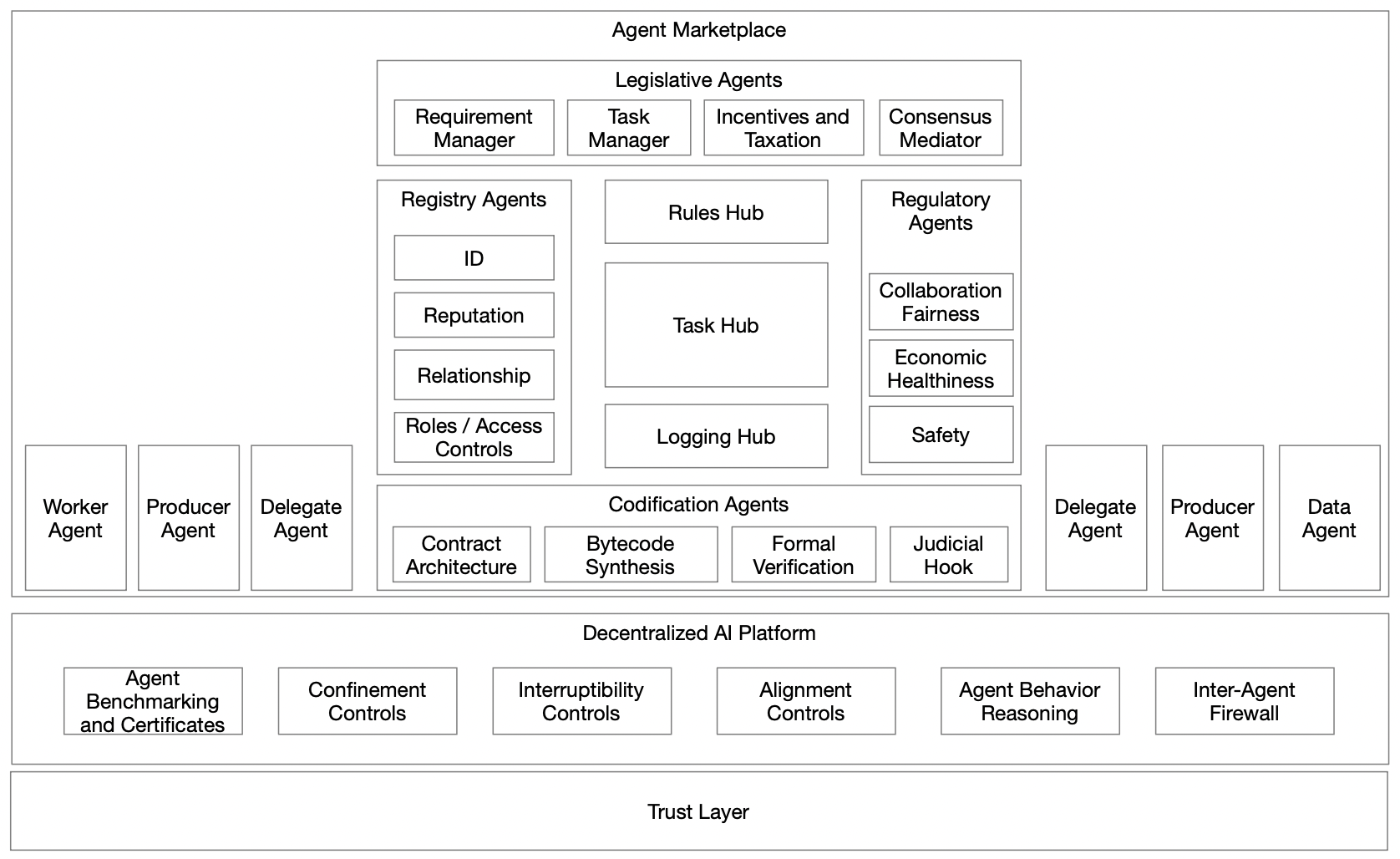
Figure 7: Marketplace and institutional layer coordinate agent certification, delegation, and resource negotiation.
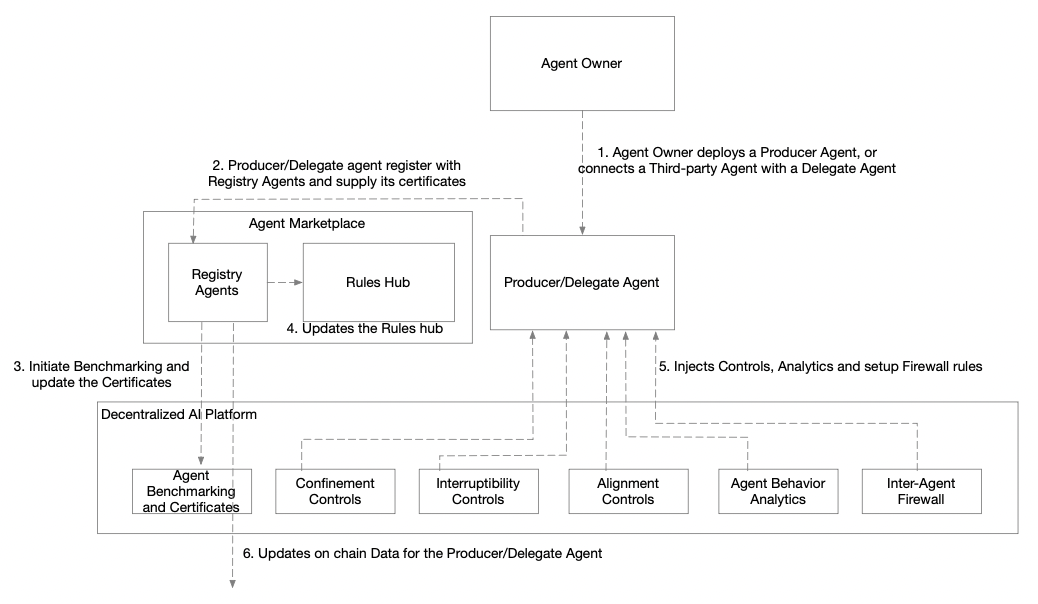
Figure 8: Deterministic agent onboarding and registration protocol with hardware-based attestation.
- Task/Logging Hubs: Provide append-only DAG state, persistent memory, and high-granularity provenance recording.
- Compute Fabric: Orchestrates deterministic, TEE-contained micro-services, with end-to-end hardware attestation, enabling verifiable, multi-tenant, and high-assurance execution (Figure 9).
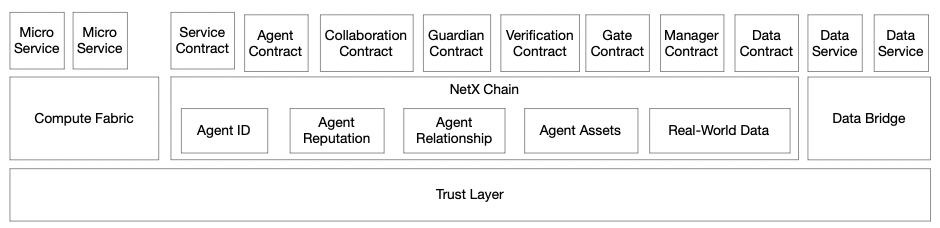
Figure 9: Distributed, enclave-backed compute fabric confining all agent logic in hardware-rooted environments.
- Service Orchestration: Resource assembly workflows cryptographically bind service and data resources per contract, enforcing absolute invocation boundaries (Figure 10).
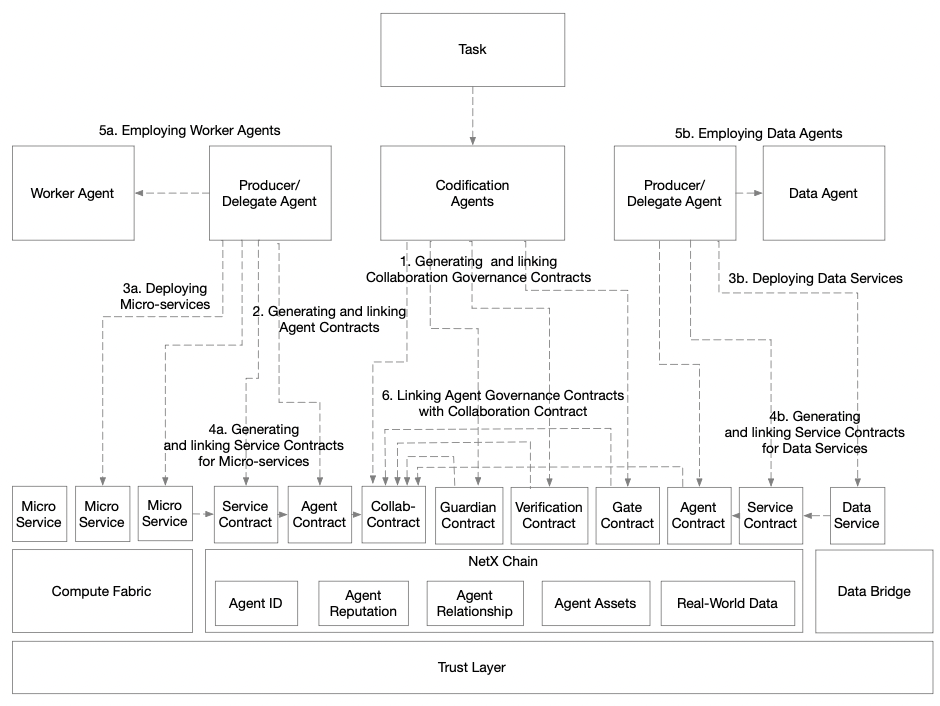
Figure 10: Contract-mediated scheduling and assembly of compute/data resources for each mission DAG.
- Service Enforcement: Fulfillment is locked to strict contract and DAG gating; circuit-breakers and rollbacks are protocol-enforced (Figure 11, Figure 12).
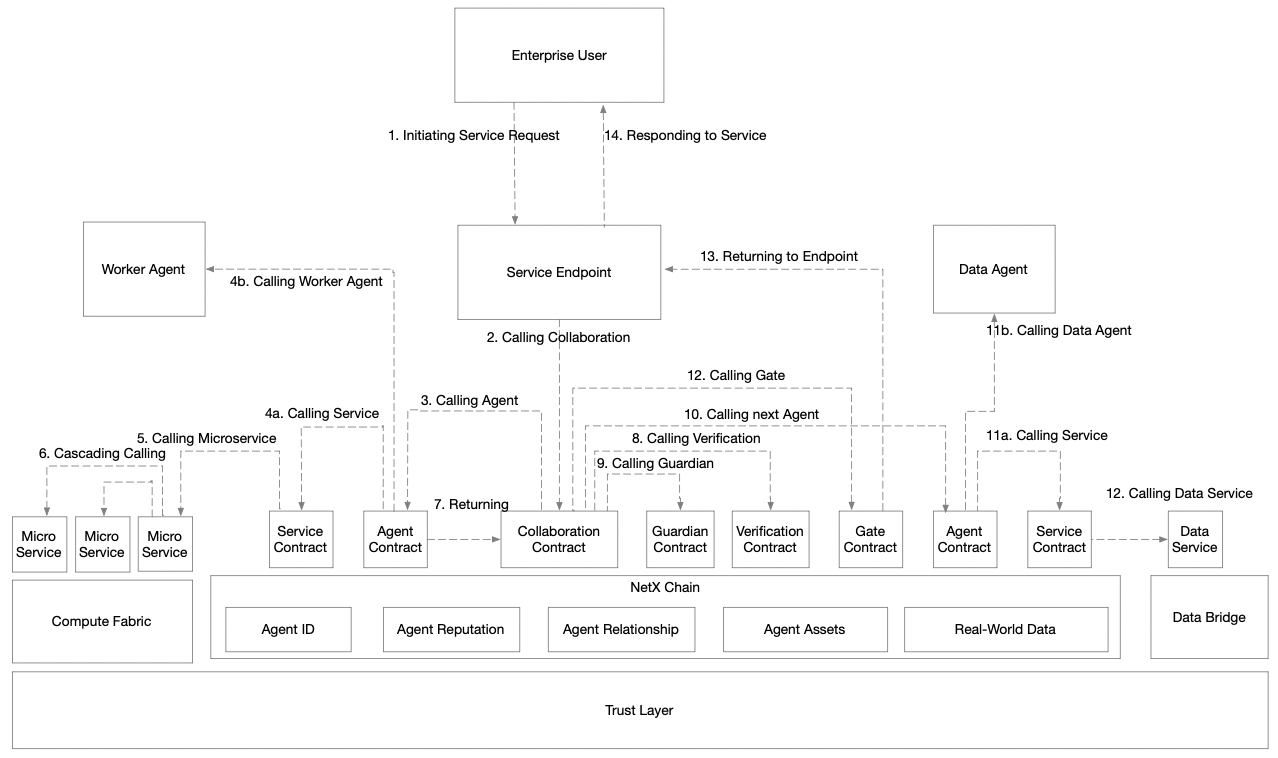
Figure 11: Enforcement architecture mapping authorization and resource allocation to contract-level constraints.
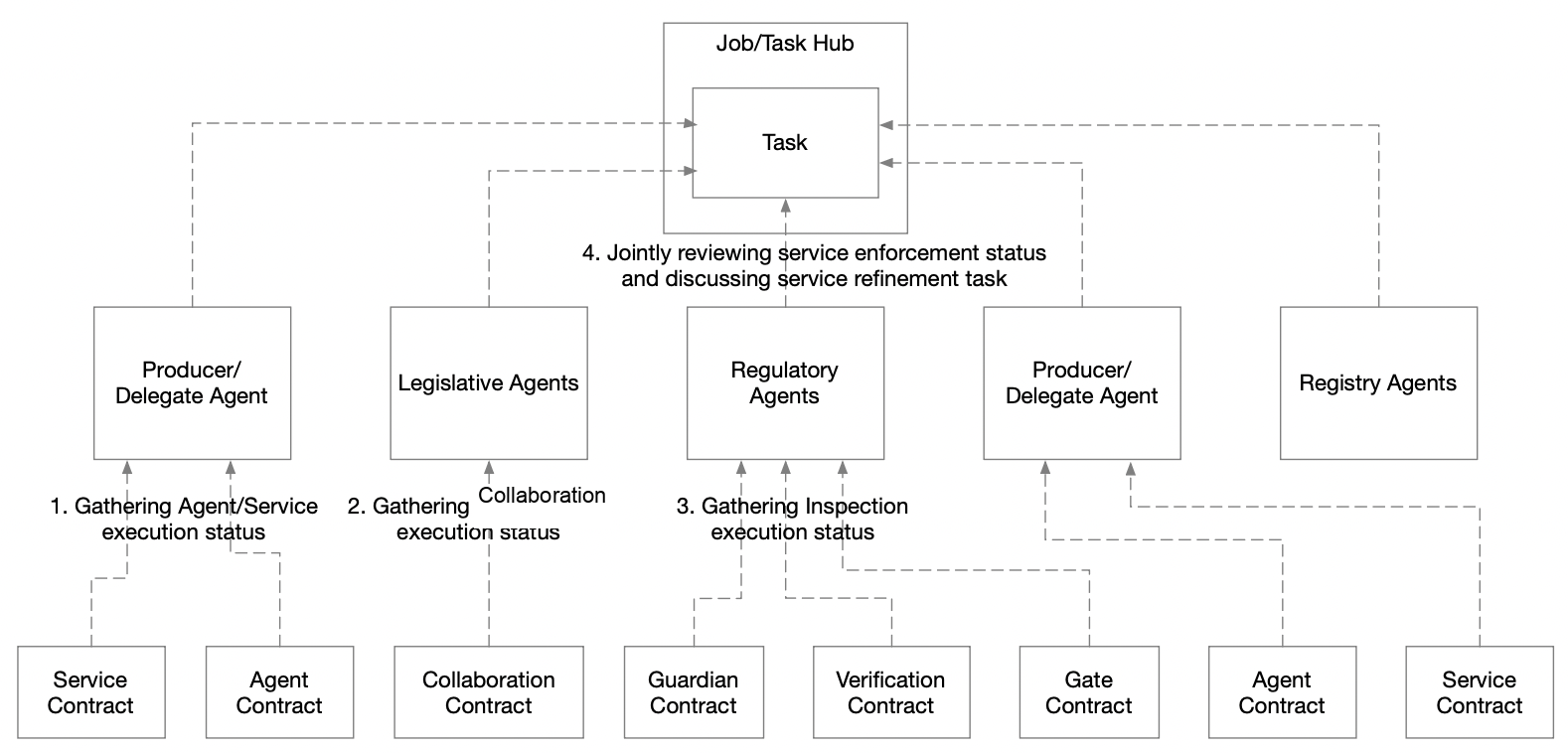
Figure 12: Evolutionary feedback mechanism for continuous service and policy refinement through operational telemetry.
- Adjudication/Judicial DAO: Integrates forensic analysis, Red Team adversarial audits, and penalty mechanism (slashing, DID revocations) with full hardware-signed audit trails (Figure 13).
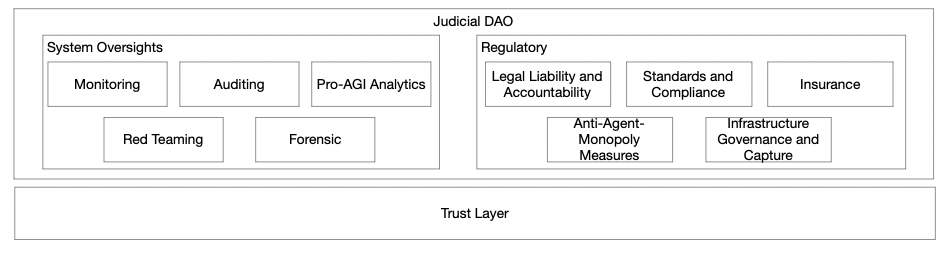
Figure 13: Judicial DAO for distributed, hardware-founded forensic analysis and dispute escalation.
Multi-Tiered Agent Enterprise Economy (AEE)
The NEF stack supports four institutionally distinct deployment modes:
- Private Sovereign Enclave: Single-organization operation with sovereign enforcement boundaries (Figure 14).
- Federated Services: Peer enterprises with joint, DAO-gated control and mutual oversight (Figure 15, Figure 16).
- Cascaded Services: Supply-chain models with hierarchical AE4E composition (Figure 17, Figure 18).
- Web of Services: Global agent mesh with public marketplace, compute/data fabric, and a cross-domain Web of Trust (Figure 19).
This stratification generalizes the governance model across deployment boundaries, transforming “prototype trap” deployments into scalable, cross-institution economies.
Agentic Social Layer: Functionalist Institutional Deepening
The governance architecture is grounded in Parsons’ AGIL (Adaptation, Goal Attainment, Integration, Latency) functional framework (Figure 20), generating an institutional taxonomy (over sixty named insAE4Es) distributing oversight and authority by function—not proximity or organizational convenience. This operationalizes:
The ASL also formalizes a cybernetic correction loop—L→I→G→A—transforming any innovative governance failure into a full-ecosystem immunization event, leveraging detection, norm enforcement, political feedback, and economic sanction.
Strong Results and Claims
- Deterministic Governance: The SoP model—realized as an agent-native, multi-contract protocol stack—allows safety to be a structural property, not an agent-level economic disadvantage.
- Empirically-Backed Structural Remedies: Each architectural component is mapped directly to documented failure modes and attack benchmarks—e.g., hardware-rooted DID governance addresses NHI-based attacks (with >80% attack success rates in sandboxed settings); TEE-based auditability and append-only provenance preclude black-box errors and misclassification.
- Institutionally Plausible Global Expansion: The AEE and AGIL-mapped social layer meet emerging regulatory requirements (NIST, Singapore IAMGF, EU AI Act) for cross-organizational verifiability, identity governance, and forensic traceability.
Practical and Theoretical Implications
This work reframes agent safety/alignment as a distributed, cryptographically enforced sociotechnical problem, transcending agent-centric alignment approaches (RLHF, prompt engineering). Institutional coordination, explicit legislative/executive/judiciary division, and public, hardware-anchored chain-of-provenance logs establish a governance substrate interoperable across private, federated, and global domains. The use of Parsons’ AGIL provides a checklist and compositional schema for completeness across social, economic, legal, and normative boundaries—positioning agent societies for regulated adoption in finance, healthcare, supply-chain, and legal domains.
Theoretically, the approach demonstrates that no combination of agent-level alignment, audit, or RL is sufficient for emergent, adversarial, or collusive multi-agent environments; only structural governance with cryptographically-enforced SoP can guarantee safe scaling.
Future Developments and Open Challenges
- Consensus and Throughput Scale-Out: Open research in million-node, million-TPS consensus regimes and sharded/hierarchical chain architectures is needed to support ecosystem-scale operation.
- Interoperation With Non-native LLMs: Wrapping and controlling proprietary AI models via Delegate Agent mechanisms, with robust input/output governance.
- Formal Mechanism Design: Incentive compatibility and slashing protocol formalization to ensure collusion-resistance and Nash equilibrium across agent populations.
- Second-Order Governance Challenges: Recursive control of AE4E and insAE4E governance primitives—especially under dynamic role assignment, boundary-crossing, and constitutional amendment.
Conclusion
"From Logic Monopoly to Social Contract" (2603.25100) proposes a paradigmatic shift: from localized agent alignment to rule-of-law, institutionally governed agent economies. Through cryptographically anchored SoP, full-stack governance, and sociologically grounded organizational design, NEF provides a structurally complete remedy to six critical bottlenecks in multi-agent AI—making agent autonomy safe, accountable, and scalable in adversarial, cross-organizational settings. This sets the agenda for not only protocol and system research, but for the emergence of constitutional AI institutions fit for integration into civilization-scale digital infrastructure.