- The paper demonstrates a stripline transmission method combined with full-wave modeling to extract complex permittivity and conductivity of vapor cells.
- It employs calibrated S-parameter TRL techniques to accurately assess the electromagnetic behavior of various cell materials like quartz, borosilicate, and sapphire.
- Findings reveal material-dependent dispersive and conductive effects that inform design improvements for optimized RF field detection in quantum sensors.
Introduction
The research details the extraction and characterization of the electromagnetic material properties of vapor cells used in Rydberg electrometer quantum sensors, specifically within the 10-300 MHz frequency range. Atomic vapor cells, often filled with rubidium, cesium, or sodium, are crucial components of these sensors, aiding in the detection of RF fields by interacting with electromagnetic waves. The study ventures into the lesser-explored frequency field below 1 GHz, where the packaging and material properties of vapor cells markedly influence sensor performance by modulating field strength and uniformity.
A stripline transmission line method, combined with full-wave electromagnetic modeling, is employed to extract effective dielectric parameters of various commercially available vapor cells. This method is pivotal in understanding the dielectric and conductive behavior of vapor cells, which subsequently informs potential improvements in sensor design, material selection, and packaging strategies.
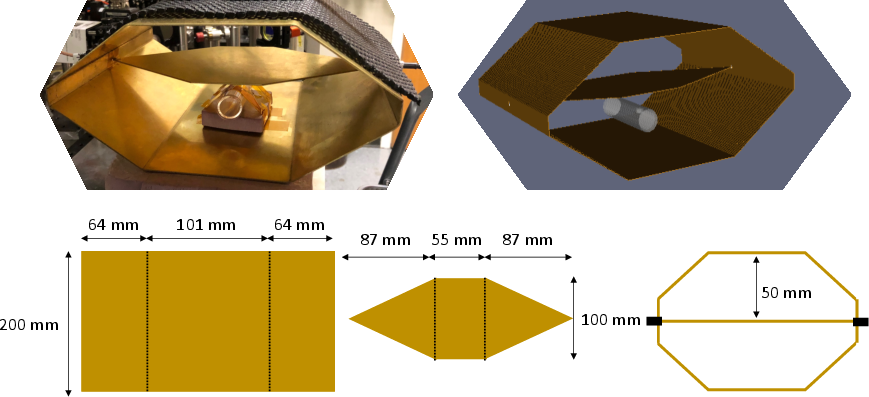
Figure 1: Stripline waveguide designed for measuring atomic vapor cells from 10-300~MHz. Both a photo of a prototype and a rendering of the FDTD model are shown.
Methods
A comprehensive experimental setup utilizing a stripline waveguide in TEM mode is described in the study, facilitating the effective extraction of RF material properties. The investigation encompasses several commercially-off-the-shelf vapor cells, including different quartz, borosilicate, and sapphire cells, each filled with various alkali metals. Calibration of S-parameters through TRL methods ensures accurate removal of waveguide response, allowing for precise extraction of complex permittivity and conductivity.
Central to the methodology is the modeling of vapor cells as a single effective material, where complex RF permittivity and conductivity are iteratively adjusted to align with calibrated S-parameter measurements. This approach aids in discerning the individual and combined contributions of atomic interactions and vapor cell materials to the overall electromagnetic behavior.
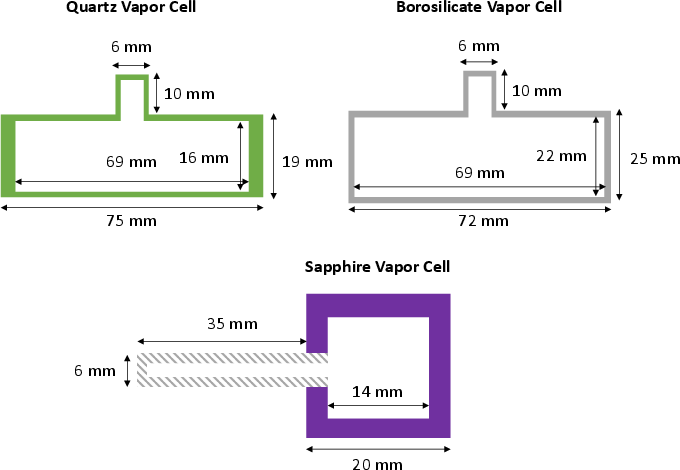
Figure 2: Approximate physical dimensions of the various vapor cells.
Results and Analysis
The extracted complex permittivities reveal substantial dispersive and conductive characteristics, predominantly due to the interaction between atomic vapor and cell walls. Quartz-filled vapor cells, particularly those with rubidium, exhibit significant electrical conductivity effects attributable to interactions at the vapor-wall boundary. In contrast, sapphire cells demonstrate minimal interaction-induced dispersion above 25 MHz, suggesting superior material characteristics for reducing electromagnetic shielding in this frequency range.
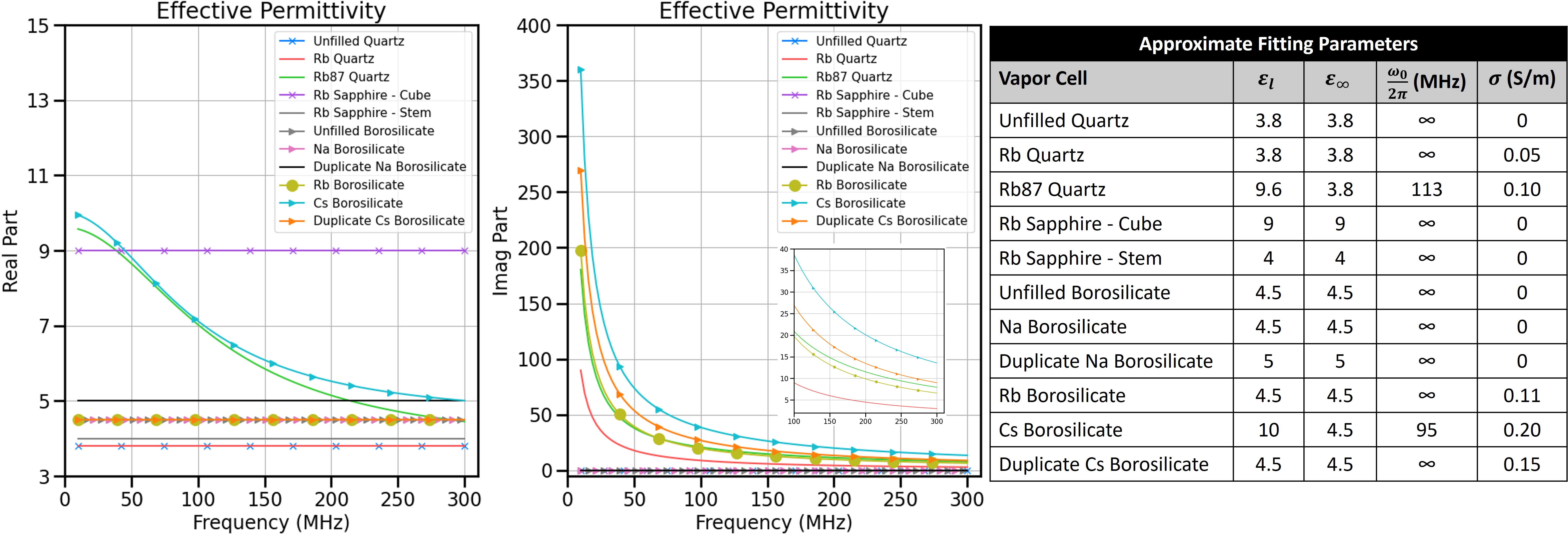
Figure 3: Effective complex RF permittivity of the different vapor cells and a table of the fitting parameters used for each vapor cell.
Interestingly, while all alkali-filled cells presented conductive characteristics, only certain configurations exhibited notable dispersive properties, hinting at possible variations in molecular interactions or vapor pressure distributions. These findings underscore usage-dependent variabilities and facilitate informed decisions regarding material and cell design for optimal sensor performance.
Implications and Future Work
The implications of accurately characterizing vapor cell electromagnetic properties are manifold. Understanding and mitigating the RF shielding effect enhances sensor accuracy, especially in applications like electric field measurements and direction finding. The study opens avenues for innovative vapor cell designs, possibly through material coatings or optimized geometries, to attenuate shielding effects while maintaining high sensitivity.
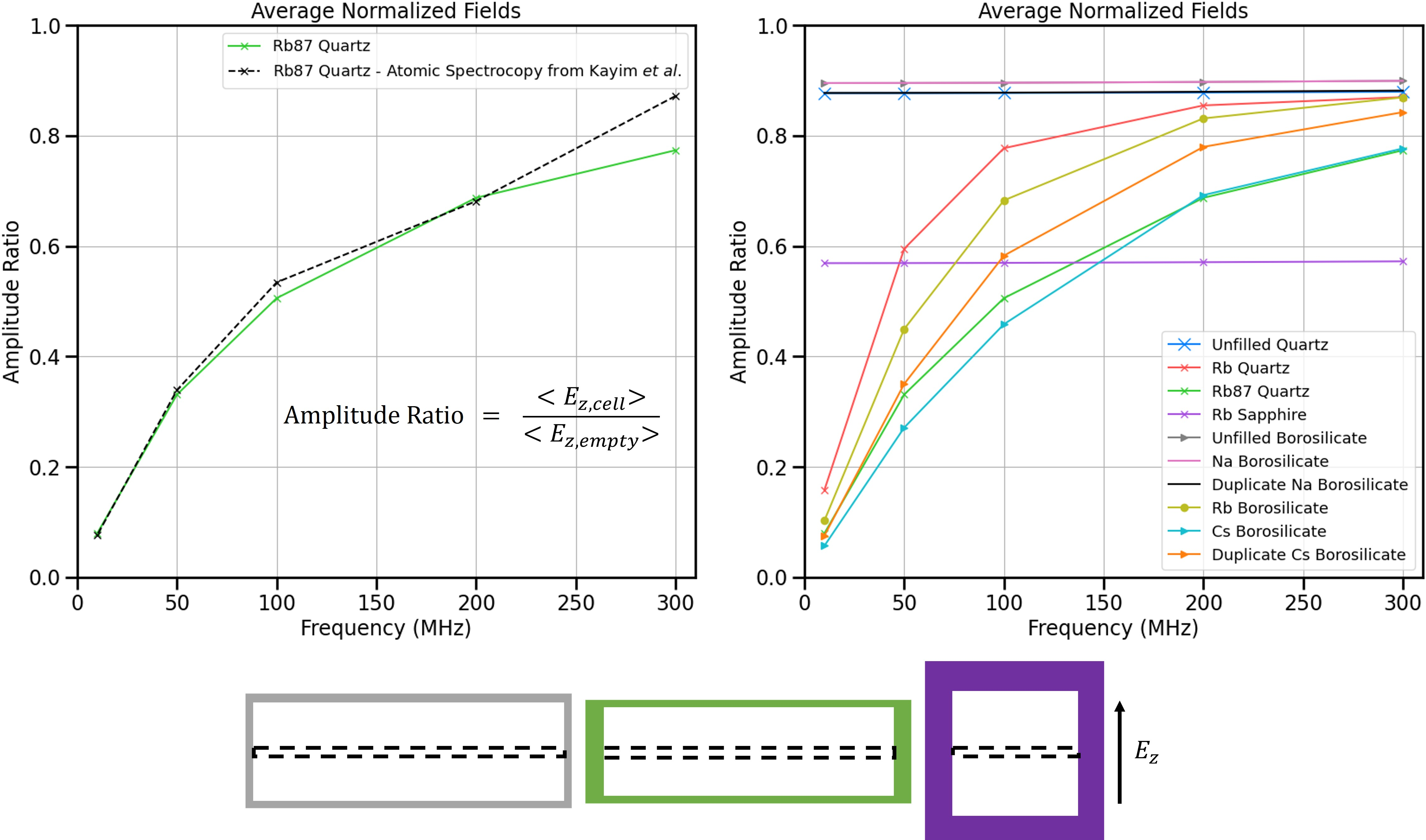
Figure 4: Field reduction within the vapor cells due to the RF electromagnetic shielding effect.
Future research may explore frequency-dependent interactions at higher frequencies, explore alternative alkali metals, or assess the dynamic response of quantum sensors under active measurement conditions. Moreover, expanding this research to investigate potential influences of Rydberg state excitation on electromagnetic properties could further refine sensor accuracy and efficacy.
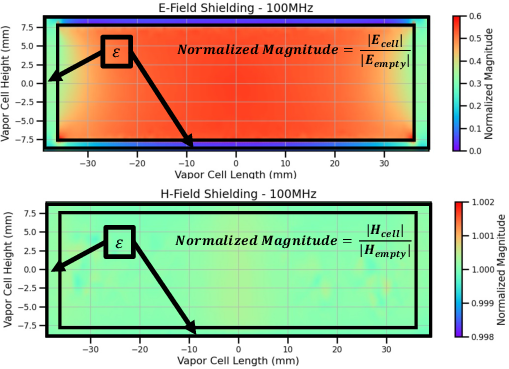
Figure 5: Normalized magnitude of the electric and magnetic fields in a cross section centered on the rubidium87-filled quartz vapor cell.
Conclusion
The detailed assessment of Rydberg electrometer vapor cells within this work lays a crucial foundation for enhancing quantum sensor technology across a broad frequency spectrum. By demystifying the electromagnetic interactions within these cells, the study provides valuable insights into material selection and design strategies that could profoundly impact the development of next-generation quantum sensors. This rigorous examination offers a pathway forward in tuning sensing elements to achieve unparalleled precision and reliability in complex electromagnetic environments.